

 USA TODAY National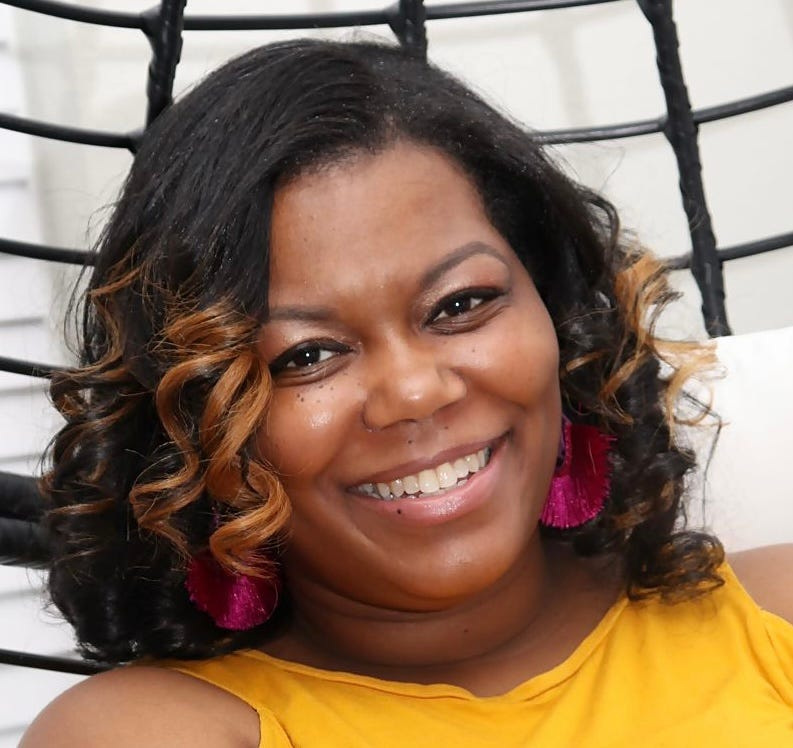
Masonia Traylor folded into a ball in the corner of the patient room. "No," the 23-year-old screamed, over and over again. She was HIV-positive.
It came as a surprise to the now 38-year-old from Decatur, Georgia. She built a rapport at her local OBGYN office and always stayed on top of her health as best she could. This included HIV testing; she always wanted to set a good example for her loved ones. A Black woman shared her story of almost dying from HIV complications at a school assembly years back. Someone who looked like her warned that anyone could get HIV – not just gay and bisexual men. Traylor thought, "You can't tell that girl got it. Like, she looks so pretty, healthy, everything.'"
Despite novel developments in the treatment and prevention of HIV – people can live healthy, long lives with HIV undetectable in their bloodstream – tens of thousands of new cases are diagnosed in the United States each year. And a lot of those diagnoses occur in certain parts of the country and among certain populations. A group often forgotten about in the discussion of HIV – despite research pointing to an ongoing crisis – is Black women. Specifically those who live in the South. Why?
"The convergence of gender-based power dynamics, economic vulnerability and limited access to prevention resources creates a perfect storm of HIV risk," according to AIDSVu, an interactive online mapping tool from Emory University’s Rollins School of Public Health in partnership with Gilead Sciences. Gilead makes preexposure prophylaxis, or PrEP medications Truvada and Descovy, whose out-of-pocket costs can be tens of thousands of dollars (though insurance coverage and other support programs are available to make it free or more affordable). The Food and Drug Administration approved the company's twice-a-year injectable HIV prevention drug lenacapavir (Yeztugo) earlier in 2025.
In 2023, more than 39,000 HIV cases in people ages 13 and older were diagnosed in the United States and its territories; of these, 81% were men, 38% were Black and 51% lived in the South. Black women made up half of HIV diagnoses in women, though they make up only 13% of the female U.S. population. Still, the overall case number is a far cry from the worst of the epidemic in the mid-1980s, which saw more than 130,000 cases a year. Case counts have generally stabilized over the last few years.
It's easy for many, from sexually active people to medical providers, in the United States to dismiss HIV given how much cases have declined. But a decline does not mean a disappearance, and federal funding cuts to HIV prevention programs are only compounding the problem.
"We're in a really interesting inflection point, because, we've had amazing strides in addressing the HIV epidemic in the United States, and I think some of that will be eroded given where we are with our current emphasis and deterioration of our public health infrastructure," says Athena Cross, vice president and chief program officer at AIDS United.
'I'm just a walking red flag' for HIV
Men who have sex with men have been the primary faces of HIV since the AIDS crisis began in the 1980s, and they remain the ones most likely to take PrEP and otherwise seek sexual health treatment.
PrEP use increased 17% year over year in the U.S. from 2023 to 2024. But Black people made up only 12% of PrEP users, and the South at large only 39%. Only 9% of PrEP users are women, according to AIDSVu.
"I'm just a walking red flag when it comes to risk assessment (for HIV)," says Tori Cooper, director of community engagement at the Human Rights Campaign. She's a Black woman who lives in the South and has rarely been offered an HIV test over the years.
Providers still have HIV stigma, as do patients. That's where a quality support network comes in. "You have to find some people who have a judgment-free view of HIV," she says. "You have to have people who simply love and support you, and for many people, that's a challenge."
Traylor went public with her status after struggling to find support groups for people like her; she yearned for a community of people who could lift her out of her shame. "I cannot carry this fear or this guilt. Like, I didn't do anything wrong, they didn't do anything wrong," she says.
Another impetus? A former classmate of hers who died from HIV complications.
"I realized that maybe if I had shared my status sooner, that the gentleman that passed away, maybe he would still be alive," Traylor says, "because I know exactly how he felt. Like you feel isolated, you feel alone, feel like nobody else is going to understand."
'A lot of stigma culturally across the South' with HIV
As of 2023, the South accounted for more than half of HIV diagnoses and 56% of HIV deaths, despite being roughly one-third of the U.S. population.
"The burden of HIV in the South is overwhelming," Cross says. "Not only are there risks, there's also not necessarily the education and awareness around HIV prevention. There is still a lot of stigma culturally across the South that prevents people from being willing to access care, or even be able to follow through on a diagnosis."
Fewer hospitals and fewer health care providers in the rural South – along with a layer of anti-LGBTQ+ stigma across the region – furthers ignorance about HIV. "HIV is not an evenly distributed virus. It really does impact some of the most vulnerable communities. And that was true four decades ago, and it's still true today," says Rashad Burgess, vice president of corporate responsibility at Gilead Sciences.
The concentration of HIV cases in the South makes sense to Cooper. The social and sexual networks are smaller for Black people and other people of color, she says, and there's a lack of reliable information around sex, HIV and other chronic illnesses – especially information specific to those communities (many resources focus on men who have sex with men). This all makes it easier for HIV to proliferate among those communities.
When Black women and HIV are mentioned together, we only talk about Black women with HIV, Cooper says. Even in those cases, you're hearing about these worst-case scenarios and shattered livelihoods, which increases stigma. "What we don't hear is women who happen to get an HIV diagnosis, who are thriving and doing well and supporting people in their communities, who live happy, healthy lives," Cooper says.
Traylor, now a renowned activist, is CEO and founder of nonprofit Lady BurgAndy Inc., which helps women and young people affected by HIV/AIDS.
Other efforts to combat stigma include AIDS United's Melanated Movement, which supports young women leading educational programs on HBCU campuses. "It allows young women to create the sort of communication and the educational pieces to appeal to other young women," Cross says. Additionally, SisterLove is a women’s HIV, sexual and reproductive justice organization in the southeastern United States that has been around for 35 years and counting.
The main way this gets better is by talking about it, and making clear to people that an HIV diagnosis is no longer a death sentence – with the right and ongoing health supports.
(This story was updated with more information.)
This article originally appeared on USA TODAY: An unsuspecting group of women is getting HIV. Geography is in part to blame.
Reporting by David Oliver, USA TODAY / USA TODAY
USA TODAY Network via Reuters Connect

 America News
 Raw Story
 The List
 People Human Interest
 Associated Press US and World News Video
 Reuters US Top
 Defense One
 KCTV5 News Kansas Sports
 Newsweek Video