

 The Conversation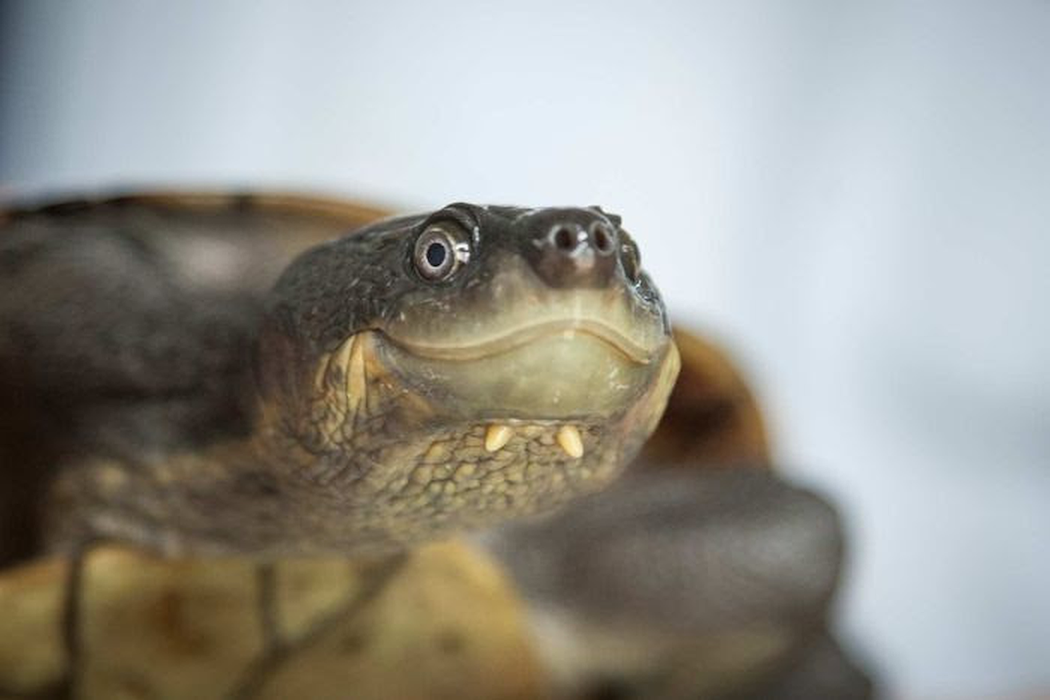
If someone mentions criminal gangs, you might think of drug trafficking or financial crime. But one of the most persistent illegal trades in the world flies largely under the radar: wildlife smuggling.
The illegal wildlife trade drains plants and animals from their ecosystems and fuels organised crime. Australia is now considered a global hotspot for reptile smuggling. Enforcement agencies scramble to answer the most basic question — has an animal been taken from the wild? In courtrooms, that question often determines whether a prosecution succeeds or falls apart.
Our latest research suggests there might be a way to determine where an animal came from with scientific confidence. By examining the chemical traces inside a turtle’s claw, we can tell whether the animal grew up in the wild or in captivity. The claw is a small piece of tissue, but it carries an environmental signature that’s surprisingly difficult to fake. And this is potentially transformative for smuggling law enforcement.
A claw is a chemical diary
Stable isotope analysis is a technique used across fields as varied as archaeology, climate science and forensic anthropology.
It allows us to measure the ratios of different isotopes (atoms with the same number of protons but different numbers of neutrons) in bones or teeth. Using scientific knowledge about how these isotopes occur in nature, we can trace them to their source. Animals absorb those chemical markers through what they eat and drink.
Keratin — the material that forms hair, nails, feathers and claws — preserves this chemical history especially well. Because it grows slowly, it records the conditions an animal has lived in over many months. For turtles, claws are an ideal window into their past. This technique could be used in other animals too.
Wild turtles forage widely, eating insects, plants and crustaceans. They move through landscapes like wetlands and billabongs, which have their own chemical imprint. In comparison, captive turtles are generally fed a narrow diet of pellets or farmed fish, and drink treated water. Those differences show up in the isotopes of carbon, nitrogen, hydrogen and other elements in their claw keratin.
so for other animals could we use their claws too?

Admissible in court?
Any forensic method has to be reliable. Courts expect a sound scientific method, reproducible results, and a clear chain of custody — proof that the sample tested is the same one taken from the seized turtle.
Stable isotope analysis already meets the first two requirements. It’s a mature field grounded in decades of peer-reviewed research. The equipment used — isotope-ratio mass spectrometers — is standard in many research and forensic labs. Our testing methods have been documented in detail so the test can be reproduced anywhere the right equipment exists.
The legal side is equally important. A claw trimming is easy for wildlife officers to collect, label and preserve without harming the animal. In a courtroom, isotope results could sit alongside DNA evidence, seizure records and expert testimony, providing a clearer picture of where an animal actually came from.

A problem for Australia
Australians tend to think of wildlife trafficking as something that happens elsewhere — African ivory, South-East Asian pangolins, South American parrots. But Australia is now considered a global hotspot for reptile smuggling.
Official data show the number of live animals seized by the Australian government has tripled since 2017. And researchers emphasise that seizure records capture only a small fraction of the real trade. Global analyses suggest seizures may represent less than 10% of all illegal wildlife trafficking, meaning most animals smuggled from Australia are never detected at the border.
Australian reptiles – including freshwater turtles – are highly sought in the international pet trade. A recent analysis found 170 Australian reptile and amphibian species for sale overseas, particularly in Asian markets. Australian authorities note native reptiles are highly prized in the Hong Kong illicit pet trade, and attract far higher prices than locally.

Prosecutions are rare
Hong Kong is a major destination and transit hub for smuggled wildlife. One case involved 658 pig-nosed turtle hatchlings (a species native to northern Australia and New Guinea) worth about HK$500,000 (A$100,000) seized from a traveller’s luggage.
Despite this, prosecutions in Australia are rare. Globally, smugglers often insist their animals were legally bred — a claim that is almost impossible to challenge without scientific evidence. This is precisely the gap isotope forensics can fill. A claw sample that reveals a wild origin undermines the “captive-bred” defence and gives prosecutors a stronger case.
This matters for another reason. Australia invests heavily in turtle conservation, such as nest protection, wetland restoration and community science networks like 1 Million Turtles. When breeding adults are poached from rehabilitated habitats, these efforts are undermined. A tool that can trace animals back to the wild strengthens enforcement and conservation.
Where to next?
Australia’s laws are strong, and permits are required for any movement of native reptiles. The problem is proving origin once animals leave the country. A stable-isotope database would let authorities overseas show that animals sold as “captive-bred” were actually removed from Australian environments. Funding could come from the federal environment portfolio, ideally in partnership with forensic laboratories and academic institutions that already have the equipment.
What has been missing is the link between field ecology and courtroom evidence. A turtle’s claw, it turns out, may provide this. In a trade that has depended on secrecy and false paperwork, a chemical signature that cannot easily be altered may give authorities a fighting chance.
Wildlife crime is notoriously difficult to prove. For species that take decades to reach maturity, losing even a few adults to illegal trade can erase years of conservation gains. But a technique that reveals an animal’s true provenance has the potential to reshape enforcement in Australia and beyond.
This article is republished from The Conversation, a nonprofit, independent news organization bringing you facts and trustworthy analysis to help you make sense of our complex world. It was written by: Ricky Spencer, Western Sydney University and Yik Hei Sung, University of Suffolk
Read more:
- In 1939, a Royal Commission found burning forests leads to more bushfires. But this cycle of destruction can be stopped
- Africa’s longest-running grassland research project offers up a wealth of knowledge
- Britain’s ponds are disappearing – here’s why restoring them is vital for wildlife and climate resilience
The authors do not work for, consult, own shares in or receive funding from any company or organisation that would benefit from this article, and have disclosed no relevant affiliations beyond their academic appointment.


 EMS1
EMS1 Local News in D.C.
 People Top Story
 Daily Voice
 Raw Story
 AlterNet
 CBS News
 5 On Your Side Sports