

 Reuters US Top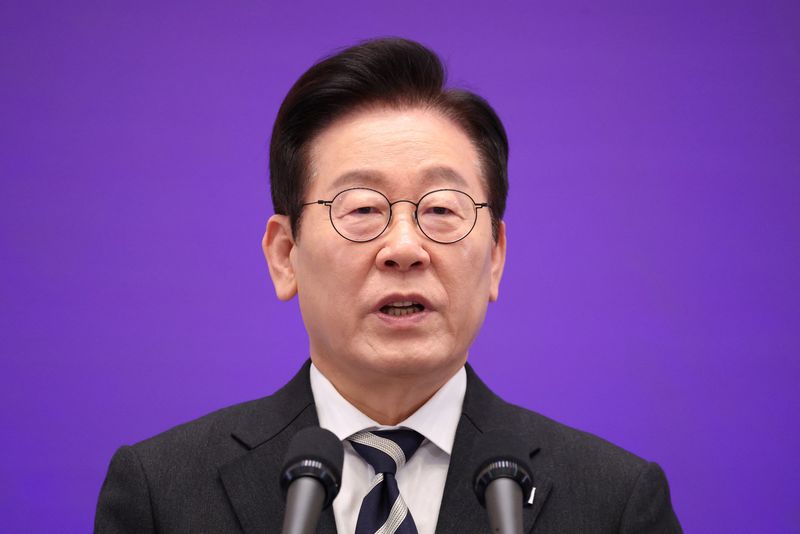
By Joyce Lee, Ju-min Park and Heejin Kim
SEOUL, Dec 3 (Reuters) - South Korean President Lee Jae Myung said on Wednesday there was still work to be done to address the fallout from the failed martial law bid by his predecessor a year ago, and the country needed to ensure the perpetrators are brought to justice.
Marking the first anniversary of the shock announcement of martial law on December 3, 2024, Lee said former president Yoon Suk Yeol's action had threatened an irreparable setback to the country, but the people rose up and stopped it with bare hands.
"The recklessness of those who tried to destroy constitutional order and even plan a war all for their personal ambitions must be brought to justice," he said.
"The December 3 coup d'etat was not just a crisis for democracy in one country. If democracy in South Korea collapsed, it would have meant a setback...for world democracy."
Yoon's martial law declaration plunged a country considered a powerful democratic success story into months of turmoil, just as U.S. President Donald Trump's decision to impose tariffs on trading partners rattled South Korea's export-reliant economy.
Yoon was later ousted and Lee, who lost to him in a 2022 presidential vote, won a snap election in June with a mandate to steer the country out of the shock of martial law, as those who were accused of being involved were arrested and put on trial.
Since coming to office, Lee has managed to strike a U.S. tariff deal after two summits with Trump, but there remain deep fissures in society and concerns over whether the conservative side feels it is being persecuted.
Lee warned that reforming the country following the martial law crisis would be painful and time-consuming.
"But just as treating cancer by removing the cancer cells that have taken root deep inside the body, it cannot be completed that easily," he said.
NOBEL PEACE PRIZE?
Yoon has remained defiant. In written comments to Japan's Yomiuri newspaper published on Wednesday, he said his short-lived martial law was necessary to alert the public to a "national crisis", and that he had complied with parliament's demand to lift the decree.
The late-night declaration was overturned within hours by a majority parliamentary vote backed by Lee's Democrats and some members of Yoon's conservative party.
On trial for insurrection and facing life imprisonment or even potentially the death penalty, Yoon has denied ordering the arrest of opposition lawmakers and political enemies and argued that the martial law declaration caused no harm.
Former cabinet members and military officers are also among those on trial or under investigation. Yoon's wife, Kim Keon Hee, is being tried on corruption and bribery charges, for which prosecutors asked for a 15-year jail sentence on Wednesday.
Some members of the conservative People Power Party have apologised for not blocking the martial law decree, but divisions remain as hardliners continue to accuse Lee and his party of stoking conflict for political purposes.
Lee proposed designating December 3 a national holiday to celebrate the role of the people in thwarting martial law and added that he believed they deserved to be considered for the Nobel Peace Prize.
For security reasons, Lee scrapped a plan to join a citizens' march Wednesday evening to mark the anniversary.
Parliament Speaker Woo Won-shik guided a tour of citizens and journalists recalling the night a year ago when hundreds of soldiers descended on the parliament grounds. He showed the fence he scaled to enter the compound to lead a vote to cancel the martial law decree, muttering, "This is nuts, this is nuts."
(Reporting by Ju-min Park, Joyce Lee, Heejin Kim; writing by Jack Kim; editing by Ed Davies, Michael Perry and Mark Heinrich)

 Chicago Tribune
 America News
 AlterNet
 Raw Story
 Associated Press US and World News Video