

 The Conversation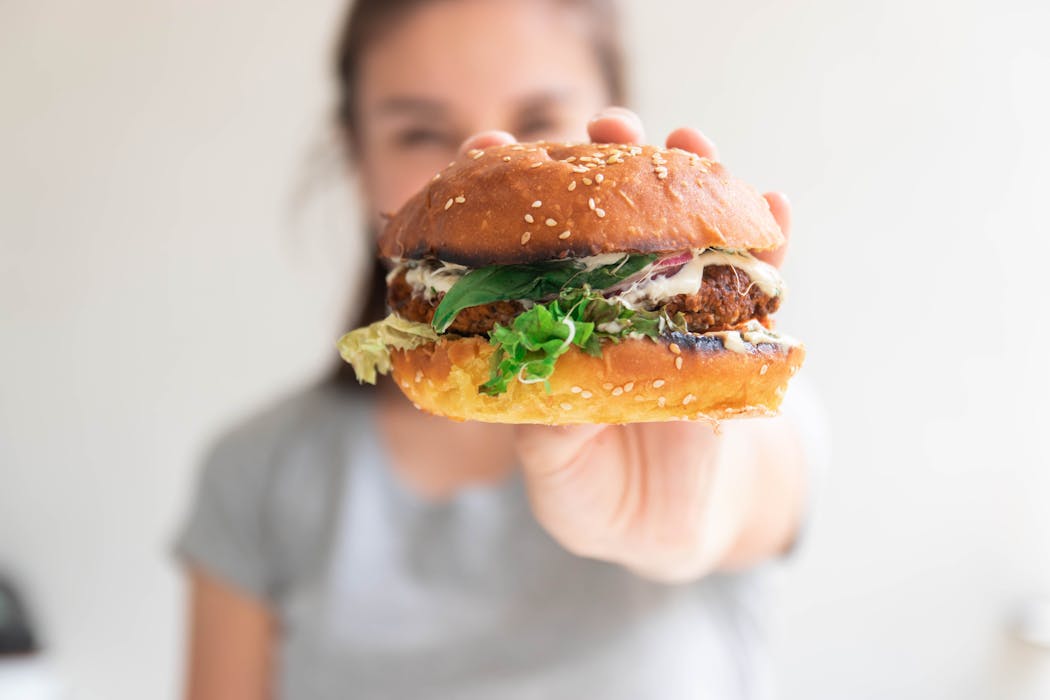
The European parliament recently backed changes to the rules around the labelling and marketing of plant-based meat alternatives. New definitions specify that words like “burger”, “sausage” or “steak”, refer exclusively to animal protein. To get to the meat of the matter, this may mean that Europeans’ favourite soy-based patty can no longer be called a burger.
The vote took place amid a long-running European debate over the designation of plant-based alternatives to animal protein and the associated “linguistic gymnastics”.
A previous proposal to prohibit comparisons between dairy and plant-based foods was rejected. But the EU did decide to reserve the term “dairy” for products derived from animal milk. As a result, companies must now refer to their products as “almond drink” or “plant-based slices”, for example.
In the case of meat, the labelling propositions are part of a broader set of amendments to EU agricultural and food market regulations. These are supposed to strengthen the position of farmers in the food supply chain. Farmers in Europe have long expressed concerns that plant-based substitutes could threaten traditional farming practices.
But what about the role of the consumer in debates over how meat and its plant-based substitutes should be labelled?
Before the vote, MEPs had discussed a perceived lack of transparency for consumers. It was suggested that terms such as “veggie burger” or “tofu steak” obscure the distinction between meat and plant-based or lab-grown alternatives. These ambiguities, it was argued, could confuse or mislead consumers.
While member states must still negotiate the amendments detailing the labelling changes, the consequences could be significant. Some retailers, like supermarket chain Lidl, are working to increase sales of plant-based foods. This aligns with what the science says about sustainable diets.
After initial growth in the market for plant-based alternatives, sales have plateaued. Many producers fear they may now also face additional costs associated with rebranding and relabelling their products.
In response, a coalition of food producers and retailers have argued that avoiding familiar terms like “steak” or “burger” could actually create more confusion among consumers.
But how misled are consumers really?
Despite concerns on both sides of the debate, our research shows a different reality – one in which many consumers are much more knowledgeable than they are made out to be.
We studied how people reacted to a marketing campaign by Swedish chicken producer Kronfågel. The campaign implied that climate action is the consumer’s responsibility, suggesting that shoppers should switch from beef to chicken to “do something simple for the climate”.
As part of the campaign, an emissions calculation underscored this shift, even leaving the impression it could offset air travel – based on just one meal. While the campaign drew from standardised carbon footprinting, the calculation left more questions than answers.
Through analysis of comments on social media and complaints to the Swedish consumer protection agency, we studied how people reacted to the campaign – rejecting it vehemently. They took issue for a range of reasons, including the corporation’s use of climate science and debates about what constitutes sustainable food consumption and what does not.
The various sources of disagreement illustrate the polarisation over food consumption and production. Many people were critical of the suggestion to “offset” flying by eating chicken, while others questioned the appropriateness of a chicken producer, with suppliers in the agricultural sector, demonising beef production.
The company responded by saying that its intention was to “help consumers navigate” the difficulties of lowering their consumption-related carbon footprint. It also said that it took consumer criticisms about the campaign being misleading to heart and would learn from them. We know of no investigation into the campaign, but we sense a shift towards softer messaging more broadly as companies’ fears of greenwashing accusations increase.
Read more: Quick climate dictionary: what actually is a carbon footprint?
Our research shows that many consumers are well informed about their choices, actively scrutinising food products about their health effects, climate impact and production processes. And in debating the advantages and disadvantages of meat and plant-based alternatives, we found that they would openly disagree with each other.
These discussions reveal that there are many relevant perspectives and values involved in choosing the “best” diet – and consumption choices are deeply tied to identity, emotion and culture. In light of this complexity, our research serves as a warning for businesses and other organisations, including political parties, to approach climate messaging with care and to make sure their claims are credible.
So what then to make of the labelling debate? It is of course important to safeguard consumers from harmful or deceptive marketing. However, research has illustrated how powerful people and organisations may stereotype citizens. This may be, for instance, as “responsible”, “misled” or “duped” consumers – often the purpose is to serve their own commercial or political interests.
Politicians, food producers and retailers should be cautious about claims that consumers cannot differentiate meat from plant-based alternatives. Shoppers are often much more switched on than some in the EU debate suggest.
This article is republished from The Conversation, a nonprofit, independent news organization bringing you facts and trustworthy analysis to help you make sense of our complex world. It was written by: Friederike Döbbe, University of Bath and Emilia Cederberg, Stockholm School of Economics
Read more:
- Meat and dairy industry giants hold the plant power behind many vegan brands
- Is a veggie burger still a burger? A linguist explains
- Many plant-based brands are struggling – they should follow the marketing examples of big tech
The authors do not work for, consult, own shares in or receive funding from any company or organisation that would benefit from this article, and have disclosed no relevant affiliations beyond their academic appointment.


 Chicago Tribune
 America News
 CNN
CNN Reuters US Top
 AlterNet
 Raw Story
 Associated Press US and World News Video