

 USA TODAY National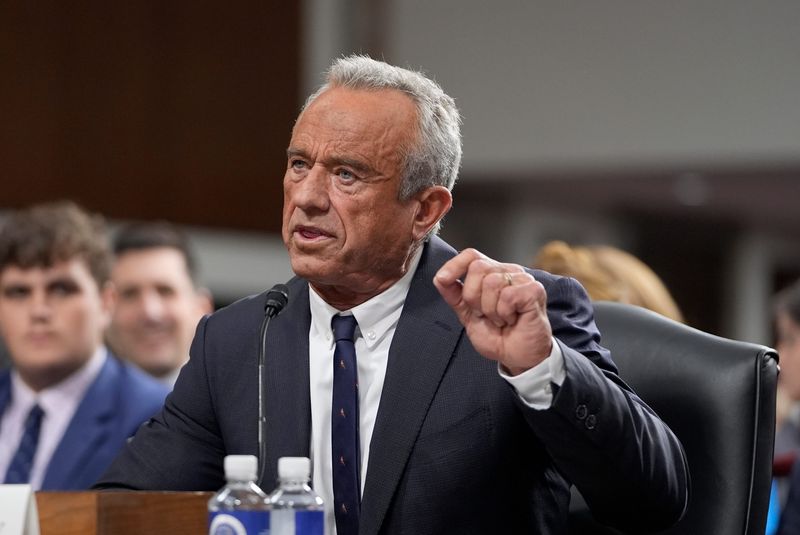
Health and Human Services Secretary Robert F. Kennedy Jr.'s vaccine advisory panel will debate and possibly delay a key immunization that protects babies from the hepatitis B virus.
The influential Advisory Committee on Immunization Practices will meet Dec. 4 and 5 to debate changes to the immunization schedule, which calls for routine vaccines at set intervals for newborns and young children. The vaccines protect children against diseases such as polio, measles and whooping cough.
On the panel's agenda for Thursday: Discussing the hepatitis B vaccine, collecting public comments and voting.
Public health experts warn any delay to the first dose of the hepatitis B vaccine, given to newborns within 24 hours of birth, could threaten decades of progress.
Since the current three-dose regimen was adopted in 1991, hepatitis B infections among children and teens have dropped 99%, preventing thousands of chronic hepatitis cases that can lead to cirrhosis and liver cancer, according to a 2023 study in the official journal of the U.S. Surgeon General.
"The birth dose is really the single most effective tool we have to prevent lifelong chronic hep (hepatitis) B infection," said Dr. Phil Huang, director of Dallas County Health and Human Services.
Why do RFK Jr. and President Trump want to change the vaccine schedule?
Kennedy, who founded the anti-vaccine group Children's Health Defense, is a longtime vaccine skeptic. He fired all 17 original members of the Advisory Committee on Immunization Practices and appointed new members, including some vaccine skeptics.
When the committee met in September, it tabled a vote that would've recommended the first vaccine dose be delayed at least one month after birth for babies who are born to mothers who test negative for hepatitis B.
While the committee meets Thursday, it's unclear if or how long it will recommend postponing the first dose of the hepatitis B vaccine. Committee chair Kirk Milhoan told the Washington Post the timing of the delay in the first dose is "still being finalized."
In September, President Donald Trump said hepatitis B is often sexually transmitted so the vaccine should be delayed until age 12. But the virus also can be transmitted through sharing personal items such as razors and toothbrushes or exposure to blood though cuts or sores, according to the Centers for Disease Control and Prevention.
Doctors say maintaining the birth dose is important to protect newborns. Mothers might not know they have hepatitis B or lack access to testing and prenatal care.
"It's a virus that is transmitted from mother to baby, so we want to ensure that infants are not exposed at that point," said Dr. Raynard Washington, director of the Mecklenburg County Public Health in North Carolina. "Protecting kids from birth is really vital."
Kelly Gebo, dean of the George Washington University Milken Institute School of Public Health, said vaccination has all but eliminated chronic hepatitis B in children.
Gebo added while prescription drugs can cure hepatitis C, there are no cures for hepatitis B, which can cause chronic illness requiring lifetime therapies.
"Infants could become infected and not know it and have significant (health risks) from that," Gebo said.
'Political mischief' driving vaccine skepticism?
On Friday, the committee will more broadly discuss vaccine policy, including the childhood and adolescent immunization schedule. The agenda also calls for addressing CDC's vaccine monitoring and vaccine "adjuvants and contaminants."
Public health officials said national conversation about vaccine skepticism and funding cuts already have harmed public health.
Vaccine-preventable diseases such as measles and whooping cough are on the upswing in Chicago, said Dr. Olusimbo Ige, commissioner of the Chicago Department of Public Health.
"We are seeing infectious diseases that we haven't seen in decades, and people just want to know who to trust," Ige said.
Washington, of Mecklenburg County, said an overwhelming number of Americans support vaccinations. In his own community, which includes Charlotte, Washington noted a concerning trend. More parents are requesting exemptions from the state's requirement that children be vaccinated to attend school.
He said families have requested exemptions for about 3% of school-age children, double the rate from five years ago.
"The fact that than number has doubled in such as a short window of time continues to be concerning," Washington said.
"It is a shame that we're in a space and time where it seems that political mischief is driving the narrative around vaccines," Washington said. "But the truth of the matter is, we know vaccines are saving lives."
If RFK's panel recommends changes, how will that impact families?
The committee makes recommendations on vaccinations but does not have regulatory authority to force immunization changes. States, however, often require vaccination as a condition of attending school.
If the committee changes recommendation around vaccination, some states and insurance companies that pay for vaccinations might choose to change policies.
If a vaccine is no longer recommended, "there's always the concern they (hospitals) will not get paid to (administer) vaccines and insurance will not cover it," said Ige.
Washington said if the committee changes vaccine recommendations, it could drive disparities. Some states might maintain existing policies while others could decide to immediately adopt the committee's recommendations.
"Then we are creating clear equity issues from one state to the next," Washington said.
This article originally appeared on USA TODAY: RFK Jr.'s vaccine panel could soon upend the hepatitis B vaccine. What to know
Reporting by Ken Alltucker, USA TODAY / USA TODAY
USA TODAY Network via Reuters Connect

 The Hill
 Reuters US Domestic
 104FM WIKY
 Associated Press US News
 Local News in D.C.
 America News
 CNN
CNN Reuters US Politics
 Raw Story
 AlterNet
 The Conversation