

 Reuters US Domestic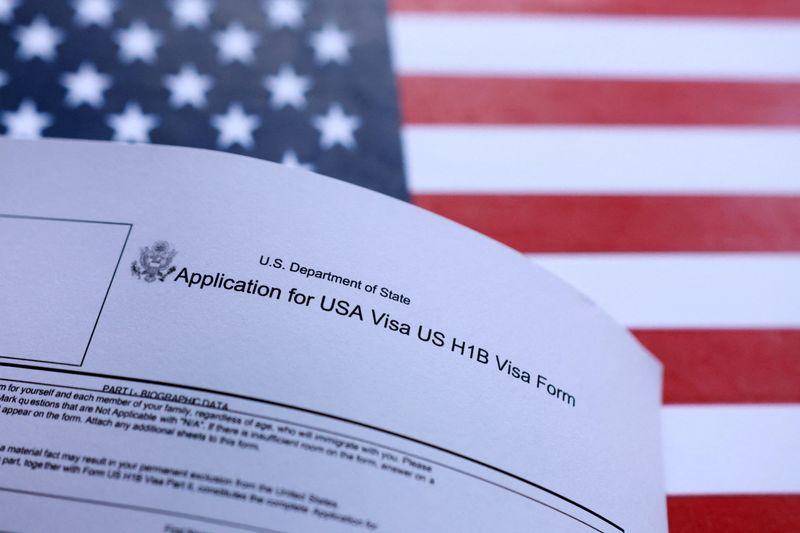
By Humeyra Pamuk
WASHINGTON, Dec 3 (Reuters) - The Trump administration on Wednesday announced increased vetting of applicants for H-1B visas for highly skilled workers, with an internal State Department memo saying that anyone involved in "censorship" of free speech be considered for rejection.
H-1B visas, which allow U.S. employers to hire foreign workers in specialty fields, are crucial for U.S. tech companies which recruit heavily from countries including India and China. Many of those companies' leaders threw their support behind Trump in the last presidential election.
The cable, sent to all U.S. missions on December 2, orders U.S. consular officers to review resumes or LinkedIn profiles of H-1B applicants - and family members who would be traveling with them - to see if they have worked in areas that include activities such as misinformation, disinformation, content moderation, fact-checking, compliance and online safety, among others.
"If you uncover evidence an applicant was responsible for, or complicit in, censorship or attempted censorship of protected expression in the United States, you should pursue a finding that the applicant is ineligible," under a specific article of the Immigration and Nationality Act, the cable said.
Details on the enhanced vetting for H-1B visas, including the focus on censorship and free speech, have not been previously reported. The State Dept did not respond to a request for comment on the contents of the cable.
The cable said all visa applicants were subject to this policy, but sought a heightened review for the H-1B applicants given they frequently worked in the technology sector "including in social media or financial services companies involved in the suppression of protected expression."
"You must thoroughly explore their employment histories to ensure no participation in such activities," the cable said.
The new vetting requirements apply to both new and repeat applicants.
The Trump administration has made free speech, particularly what it sees as the stifling of conservative voices online, a focus of its foreign policy.
Officials have repeatedly weighed in on European politics to denounce what they say is suppression of right-wing politicians, including in Romania, Germany and France, accusing European authorities of censoring views like criticism of immigration in the name of countering disinformation.
In May, Rubio threatened visa bans for people who censor speech by Americans, including on social media, and suggested the policy could target foreign officials regulating U.S. tech companies.
The Trump administration has already significantly tightened its vetting of applicants for student visas, ordering U.S. consular officers to screen for any social media posts that may be hostile towards the United States.
As part of his wide-ranging crackdown on immigration, Trump in September imposed new fees on H-1B visas.
Trump and his Republican allies have repeatedly accused the administration of Democratic former President Joe Biden of encouraging suppression of free speech on online platforms, claims that have centered on efforts to stem false claims about vaccines and elections.
(Reporting by Humeyra Pamuk; Editing by Don Durfee and Stephen Coates)

 CNN
CNN America News
 Reuters US Politics
 Local News in D.C.
 AlterNet
 Reuters US Top
 Raw Story
 Breitbart News