

 Reuters US Top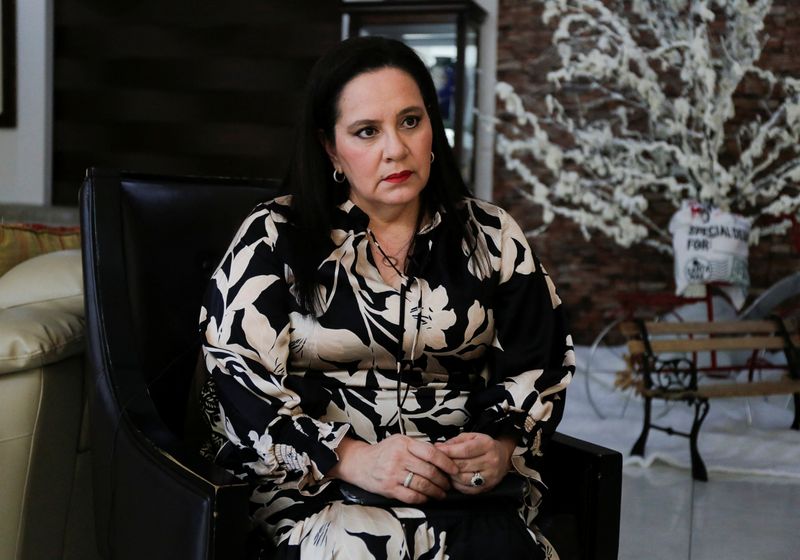
By Laura Garcia
TEGUCIGALPA, Dec 4 (Reuters) - Former Honduran President Juan Orlando Hernandez will not immediately return to the Central American country after leaving this week the U.S. prison where he was serving a sentence for drug trafficking, his wife told Reuters, citing security reasons for the decision.
On Monday, Hernandez left Hazelton prison in West Virginia after President Donald Trump signed his pardon nearly four years after he was arrested in the capital Tegucigalpa and extradited to the United States on charges of drug and weapons trafficking. Hernandez, from the conservative National Party, governed the impoverished Central American nation for two consecutive terms between 2014 and 2022.
"Because of the many decisions Juan Orlando made as president, and because many criminals agreed to testify in the trial and some of them have already been released, there is a very unsafe situation in (Honduras) for him," Hernandez's wife, Ana Garcia, said in an interview with Reuters on Wednesday at her home in an upscale area of Tegucigalpa.
"It's not the right time for him to be exposed here," she added. "Starting next year, with a new government that we are certain will be from the National Party... we will see what the conditions are."
By Wednesday afternoon, preliminary results from Sunday's presidential elections showed a slight lead by the Liberal Party candidate Salvador Nasralla over the National Party's Nasry Asfura, with about 20% of votes still to be counted.
In March 2024, a U.S. jury found Hernandez guilty of accepting millions of dollars in bribes to protect cocaine shipments bound for the U.S. that belonged to traffickers he had once publicly vowed to fight. The former president, a 57-year-old lawyer, was sentenced in June last year to 45 years in prison.
"It was an unfair trial, without evidence, there was never any proof against Juan Orlando, never any scientific evidence," Garcia, 56, said.
Garcia, a lawyer married to Hernandez since 1990 and the mother of their three children, said the trial was based on "the testimony of confessed drug traffickers seeking revenge and to get out of prison."
Hernandez wrote an extensive letter to Trump in which he called himself a political target of former President Joe Biden's administration, comparing himself to Trump, a former New York businessman who faced several trials after his first term.
Garcia, who herself finished second in the National Party primaries to choose its presidential candidate for Sunday's elections, insisted that if any criminal case were opened against Hernandez in Honduras, they would face it without fleeing the country.
"I stayed in this country from the day they took my husband. I didn't leave Honduras, I didn't hide, I didn't run away, I've always been here, willing to face whatever comes," Garcia said. "So we're going to face any situation, but we will not tolerate my husband being abused as he already was."
Garcia said her husband is in a "safe place" in the United States and that Trump's administration has provided protection. Hernandez is in good health and "spiritually very well, with very high morale," she said.
Critics have said Trump's pardon for Hernandez interfered in Sunday's presidential elections, tipping the scales toward the National Party candidate, Asfura, whom Trump urged voters to support.
"(Trump), as a regional partner and someone who knows the global landscape, decided to speak in favor of democracy in Honduras, to prevent a regime like Venezuela's or Cuba's from definitively taking over our country. The president helped the country protect democracy," Garcia said.
The United States, Honduras' largest trading partner and home to more than 1.2 million Hondurans, has been deeply involved in the Central American nation's politics for years.
In the early 1980s, the Pentagon and U.S. intelligence agencies maintained close ties with Honduras' military dictatorship and used the country as a platform to intervene in neighboring nations, particularly Nicaragua, where Washington strongly supported the right-wing counterinsurgency.
In 2017, the U.S. government backed Hernandez's reelection despite massive fraud allegations confirmed by election observers.
(Reporting by Laura Garcia, writing by Cassandra Garrison, editing by Diego Ore and Lincoln Feast )

 CNN
CNN America News
 Local News in D.C.
 Reuters US Politics
 Raw Story
 Associated Press US News
 AlterNet
 Crooks and Liars