

 The Atlantic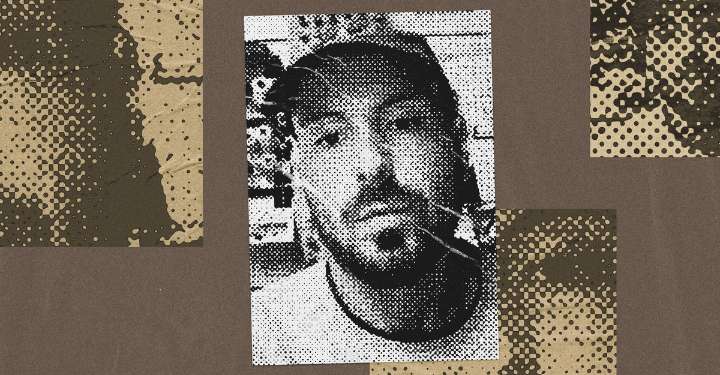
Before Sam Kirchner vanished, before the San Francisco Police Department began to warn that he could be armed and dangerous, before OpenAI locked down its offices over the potential threat, those who encountered him saw him as an ordinary, if ardent, activist.
Phoebe Thomas Sorgen met Kirchner a few months ago at Travis Air Force Base, northeast of San Francisco, at a protest against immigration policy and U.S. military aid to Israel. Sorgen, a longtime activist whose first protests were against the Vietnam War, was going to block an entrance to the base with six other older women. Kirchner, 27 years old, was there with a couple of other members of a new group called Stop AI, and they all agreed to go along to record video on their phones in case of a confrontation with the police.
“They were mainly there, I believe, to recruit people who might be willing to engage in nonviolent civil disobedience, which they see as the key to stopping super AI,” Sorgen told me, a method she thought was really smart. Afterward, she started going to Stop AI’s weekly meetings in Berkeley and learning about the artificial-intelligence industry, adopting the activist group’s cause as one of her own. She was impressed by Kirchner and the other leaders, who struck her as passionate and well informed. They’d done their research on AI and on protest movements; they knew what they were talking about and what to do. “They were committed to nonviolence on the merits as well as strategically,” she said.
They followed a typical activist playbook. They passed out flyers and served pizza and beer at a T-shirt-making party. They organized monthly demonstrations and debated various ideas for publicity stunts. Stop AI, which calls for a permanent global ban on the development of artificial superintelligence, has always been a little more radical—more open to offending, its members clearly willing to get arrested—than some of the other groups protesting the development of artificial general intelligence, but Sorgen told me that leaders were also clear, at every turn, that violence was not morally acceptable or part of a winning strategy. (“That’s the empire’s game, violence,” she noted. “We can’t compete on that level even if we wanted to.”) Organizers who gathered in a Stop AI Signal chat were given only one warning for musing or even joking about violent actions. After that, they would be banned.
Kirchner, who moved to San Francisco from Seattle and co-founded Stop AI there last year, publicly expressed his own commitment to nonviolence many times, and friends and allies say they believed him. Yet they also say he could be hotheaded and dogmatic, that he seemed to be suffering under the strain of his belief that the creation of smarter-than-human AI was imminent and that it would almost certainly lead to the end of all human life. He often talked about the possibility that AI could kill his sister, and he seemed to be motivated by this fear.
“I did perceive an intensity,” Sorgen said. She sometimes talked with Kirchner about toning it down and taking a breath, for the good of Stop AI, which would need mass support. But she was empathetic, having had her own experience with protesting against nuclear proliferation as a young woman and sinking into a deep depression when she was met with indifference. “It’s very stressful to contemplate the end of our species—to realize that that is quite likely. That can be difficult emotionally.”
Whatever the exact reason or the precise triggering event, Kirchner appears to have recently lost faith in the strategy of nonviolence, at least briefly. This alleged moment of crisis led to his expulsion from Stop AI, to a series of 911 calls placed by his compatriots, and, apparently, to his disappearance. His friends say they have been looking for him every day, but nearly two weeks have gone by with no sign of him.
Though Kirchner’s true intentions are impossible to know at this point, and his story remains hazy, the rough outline has been enough to inspire worried conversation about the AI-safety movement as a whole. Experts disagree about the existential risk of AI, and some think the idea of superintelligent AI destroying all human life is barely more than a fantasy, whereas to others it is practically inevitable. “He had the weight of the world on his shoulders,” Wynd Kaufmyn, one of Stop AI’s core organizers, told me of Kirchner. What might you do if you truly felt that way?
“I am no longer part of Stop AI,” Kirchner posted to X just before 4 a.m. Pacific time on Friday, November 21. Later that day, OpenAI put its San Francisco offices on lockdown, as reported by Wired, telling employees that it had received information indicating that Kirchner had “expressed interest in causing physical harm to OpenAI employees.”
The problem started the previous Sunday, according to both Kaufmyn and Matthew Hall, Stop AI’s recently elected leader, who goes by Yakko. At a planning meeting, Kirchner got into a disagreement with the others about the wording of some messaging for an upcoming demonstration—he was so upset, Kaufmyn and Hall told me, that the meeting totally devolved and Kirchner left, saying that he would proceed with his idea on his own. Later that evening, he allegedly confronted Yakko and demanded access to Stop AI funds. “I was concerned, given his demeanor, what he might use that money on,” Yakko told me. When he refused to give Kirchner the money, he said, Kirchner punched him several times in the head. Kaufmyn was not present during the alleged assault, but she went to the hospital with Yakko, who was examined for a concussion, according to both of them. (Yakko also shared his emergency-room-discharge form with me. I was unable to reach Kirchner for comment.)
On Monday morning, according to Yakko, Kirchner was apologetic, but seemed conflicted. He expressed that he was exasperated by how slowly the movement was going and that he didn’t think nonviolence was working. “I believe his exact words were ‘the nonviolence ship has sailed for me,’” Yakko said. Yakko and Kaufmyn told me that Stop AI members called the SFPD at this point to express some concern about what Kirchner might do, but that nothing came of the call.
After that, for a few days, Stop AI dealt with the issue privately. Kirchner could no longer be part of Stop AI, because of the alleged violent confrontation, but the situation appeared manageable. Members of the group became newly concerned when Kirchner didn’t show at a scheduled court hearing related to his February arrest for blocking doors at an OpenAI office. They went to Kirchner’s apartment in West Oakland and found it unlocked and empty, at which point they felt obligated to notify the police again and to also notify various AI companies that they didn’t know where Kirchner was and that there was some possibility that he could be dangerous.
Both Kaufmyn and Sorgen suspect that Kirchner is likely camping somewhere—he took his bicycle with him, but left behind other belongings, including his laptop and phone. They imagine he’s feeling wounded and betrayed, and maybe fearful of the consequences of his alleged meltdown. Yakko told me that he wasn’t sure about Kirchner’s state of mind but that he didn’t believe that Kirchner had access to funds that would enable him to act on his alleged suggestions of violence. Remmelt Ellen, an adviser to Stop AI, told me that he was concerned about Kirchner’s safety, especially if he is experiencing a mental-health crisis.
Almost two weeks into his disappearance, Kirchner’s situation has grown worse. The San Francisco Standard recently reported on an internal bulletin circulated within the SFPD on November 21, which cited two callers who warned that Kirchner had specifically threatened to buy high-powered weapons and to kill people at OpenAI. Both Kaufmyn and Yakko told me that they were confused by that report. “As far as I know, Sam made no direct threats to OpenAI or anyone else,” Yakko said. From his perspective, the likelihood that Kirchner was dangerous was low, but the group didn’t want to take any chances. (A representative from the SFPD declined to comment on the bulletin; OpenAI did not return a request for comment.)

 ABC News
 Associated Press US and World News Video
 People Top Story
 Local News in Virginia
 New York Post
 KMBC
KMBC CNN
CNN Savannah Morning Sports