

 The Conversation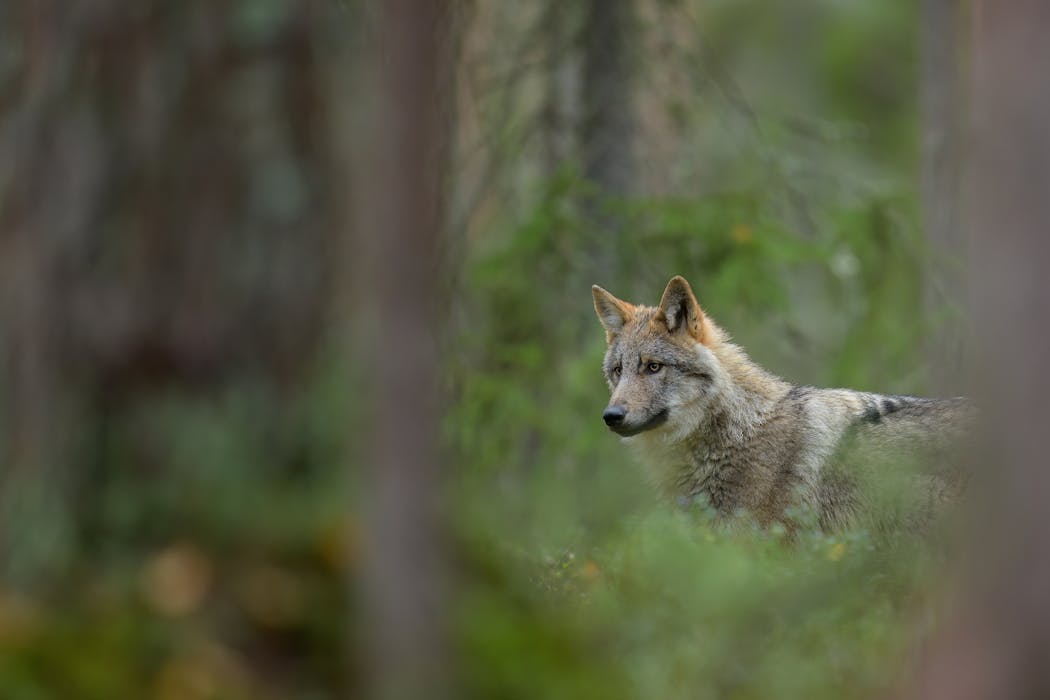
There are many things people have love-hate relationships with in Britain and Ireland, from Brussels sprouts to cricket or sea swimming. Another item can now be added to this list: the reintroduction of lynx and wolves to the countryside.
Lynx and wolf reintroductions are ecologically feasible in parts of Great Britain and may be in parts of Ireland in the future. Such reintroductions may provide significant ecological benefits, especially through influencing deer numbers and behaviour.
However, no governments in either of the two islands or nations has yet approved any proposals to reintroduce the animals. And ultimately, it is human nature much more than nature that will shape the feasibility and viability of such proposals. That’s why it’s vital to understand how people think and feel about the idea.
As part of my ongoing research on the subject, I asked over 4,000 ten to 11-year-olds and over 1,000 16-year-olds in Northern Ireland about their attitudes to lynx, wolves and their potential return to the UK and the Republic of Ireland.
For political and ecological reasons, Northern Ireland appears the least likely part of either nation to see these happen in the future. But its unique geopolitical status means its population can provide insights into what British and Irish people think.
My research highlights the complexity of feeling among young people on this subject in four key ways.
First, perspectives may vary. The strongest single result from the five main survey responses to proposed reintroductions was the “neither agree nor disagree” category across both species and age groups. This was chosen by approximately a fifth to a quarter of young people: 21% and 26% for lynx among children and teenagers, and 22% and 24% respectively for wolves.
This uncertainty is summarised by Freddie, a 16-year-old from rural County Antrim: “As a young farmer who keeps sheep and other livestock, I’d be pretty worried about bringing lynx and wolves back.”
Second, Little Red Riding Hood still has a lot to answer for, as there was less support for the return of wolves compared to lynx. In my survey, just under one-third (32%) of ten to 11-year-olds and just over one third (35%) of 16-year-olds “agreed” or “strongly agreed” with the idea of lynx reintroductions to parts of the UK and Republic of Ireland.
That figure was lower for wolf reintroductions, with 30% of ten to 11-year-olds and 31% of 16-year-olds supporting the idea.

These levels were notably lower than the range of 36-52% support among surveys of British adults that I outline in my recent book, and considerably lower than the 72% support for lynx reintroductions in a study from northern England and southern Scotland published earlier this year. As Clara, an 11-year-old from Belfast, said: “I would definitely encourage the reintroduction of lynx … with regards to wolves I am uncertain.”
Read more: Farmers told me what they really think about reintroducing lynx and wolves to Britain and Ireland
Third, for many teenagers “lynx” is primarily known as a brand of deodorant. Despite the illegal release of four lynx into the Scottish Highlands in January of this year, there is still less awareness of the species than of wolves.
This was reflected in the survey results among both ten to 11- and 16-year-olds, with many more choosing “I don’t know” for lynx (29% and 25% respectively) than for wolves (19% and 17% respectively). Freddie continued: “I don’t actually know a lot about how these animals hunt, so I am not sure how much danger they would really be.”
Fourth, knowledge is not enough. Among the 16-year-olds, those who knew what nature restoration or, especially, rewilding were, were much more supportive of lynx and wolf reintroductions.
But among the ten to 11-year-olds, beliefs that lynx and wolves were “beautiful”, “good” or “scary” also linked to attitudes to their possible return. When it comes to coexisting with these species, as similar research from Germany has shown, feelings matter as well as facts.
Young people, like people of all ages, have complex attitudes about the return of these complex creatures because of our complex relationship with them. On any love-hate issue, and especially with something as socially complex as lynx and wolf reintroductions, treading carefully is a wise course of action. As Freddie wisely summed it up: “Overall, I’d need more information before I could make a proper judgement.”
Don’t have time to read about climate change as much as you’d like?
Get a weekly roundup in your inbox instead. Every Wednesday, The Conversation’s environment editor writes Imagine, a short email that goes a little deeper into just one climate issue. Join the 47,000+ readers who’ve subscribed so far.
This article is republished from The Conversation, a nonprofit, independent news organization bringing you facts and trustworthy analysis to help you make sense of our complex world. It was written by: Jonny Hanson, Queen's University Belfast
Read more:
- How Hollywood horror’s ‘killer wolf’ trope is sabotaging rewilding efforts
- Farmers told me what they really think about reintroducing lynx and wolves to Britain and Ireland
- Restoring native predators can control invasive species – if they pass these tests
Jonny Hanson has received research funding in the past from the Economic and Social Research Council, the University of Cambridge, the Snow Leopard Conservancy, the Co-op Foundation and the Nuffield Farming Scholarships Trust. He is an affiliate of the Snow Leopard Conservancy.


 Local News in Arizona
 People Human Interest
 The radio station 99.5 The Apple
 KTAR News 92.3
 Reason Magazine
 US Magazine
 AlterNet
 The Christian Post