

 Associated Press US News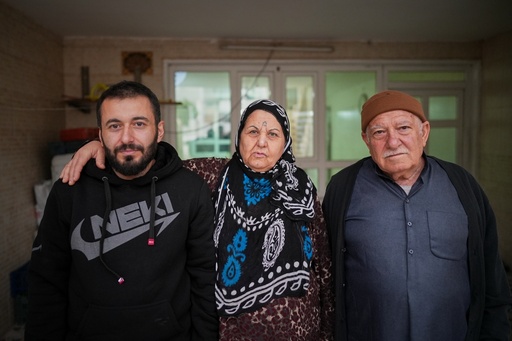
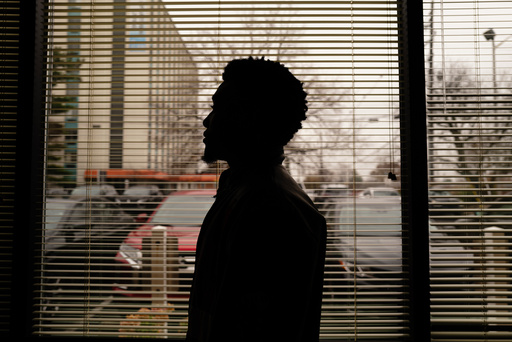
When President Donald Trump suspended the refugee program on day one of his current administration, thousands of people around the world who had been so close to a new life in America found themselves abandoned.
Many had already sold possessions or ended leases in preparation for travel. They had submitted reams of documents supporting their cases, been interviewed by U.S. officials and in many cases already had tickets to fly to America.
As part of Trump's crackdown on both legal and illegal migration, the Republican president has upended the decades-old refugee program that has served as a beacon for those fleeing war and persecution. In October, he resumed the program but set a historic low of refugee admissions at just 7,500 — mostly white South Africans.
A litany of new restrictions was announced after an Afghan national became the suspect in the shooting of two National Guard members last week. The Trump administration also plans a review of refugees let in during the Democratic Biden administration. Trump's administration has cited economic and national security concerns for its policy changes.
About 600,000 people were being processed to come to the U.S. as refugees around the world when the program was halted, according to the administration. Dozens of white South Africans have been let in this year. But only about 100 others have been admitted as a result of a lawsuit by advocates seeking to restart the refugee program, said Mevlüde Akay Alp, a lawyer arguing the case.
“It’s important that we don’t abandon those families and that we don’t abandon the thousands of people who were relying on the promise of coming here as refugees,” said Akay Alp, with the International Refugee Assistance Project.
The Associated Press spoke to three families whose lives have been thrown into disarray because of the changing policies.
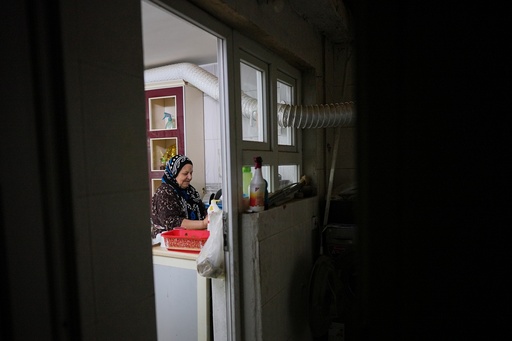
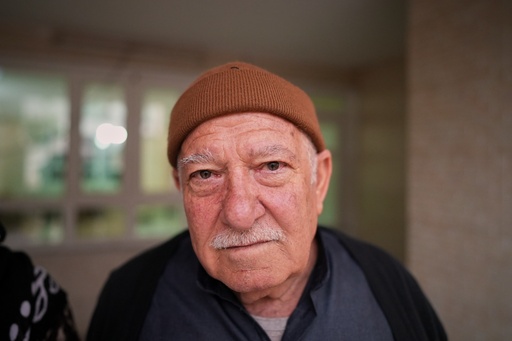
The Dawoods had waited years for the opportunity to come to the U.S. After fleeing civil war in Syria, they settled in northern Iraq. They hoped to find a home that could provide better medical care for a daughter who had fallen from the fourth floor of the family’s apartment building.
After they were accepted as refugees to the U.S., son Ibrahim and his sister Ava relocated to New Haven, Connecticut, in November 2024. His parents and one of his brothers were scheduled to fly in January.
But just two days before they were to board their flight, mother Hayat Fatah fainted at a medical check and her departure was postponed. Mohammed, another sibling, didn't want to leave his parents behind.
“I said: ‘This is it. The chance is gone.’ But I had to stay with my father and mother," Mohammed said.
Nearly a year later, he and his parents are still waiting. Without a residency card, Mohammed can't work or travel outside of their home in the city of Irbil. The family gets by on money sent from relatives abroad.
Mohammed had dreams for his hoped-for new life in America: starting a business or finishing his studies to become a petroleum engineer; getting married and building a family.
“Whether it was now, a year from now, two years later or four years, I will wait and hope that I will go," he said.
In America, Ibrahim often wakes up early to tutor people online before going to his job as a math teacher at a private school, and then he takes care of his sister when he gets home. He said his mother often cries when they talk because she wishes she were in America to help care for her daughter.
Ibrahim said one solace has been the welcome he's received in the U.S. Volunteers have stepped in to take him and his sister to frequent doctor appointments and helped them adjust to their new lives.
“I really appreciate the kindness of the people here,” he said.
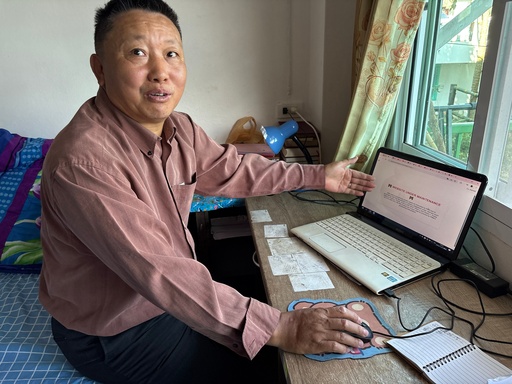
Chinese Christian Lu Taizhi fled to Thailand more than a decade ago, fearing persecution for his beliefs. He’s lived in legal limbo since, waiting to be resettled in the United States.
Lu said he has long admired the U.S. for what he calls its Christian character — a place where he feels he and his family “can seek freedom.” He said he was disappointed that people like him and his family who applied for refugee status legally face so many difficulties in going to the U.S.
“I oppose illegal immigration. Many are fake refugees, or illegal immigrants, they’ve never faced oppression. I’m opposed to this,” Lu said. “But I hope America can accept people like us, real refugees who faced real oppression. … It’s really disappointing.”
Lu comes from a long lineage of dissent: He was born into a family branded as “hostile elements” by the Chinese Communist Party for its land ownership and ties to a competing political party. A teacher and poet, Lu grew interested in history banned by the Chinese state, penning tributes to the bloody 1989 Tiananmen crackdown on pro-democracy protests in Beijing.
In 2004, Lu was arrested after police found poems and essays he secretly published criticizing Chinese politics and the education system. After his release, Lu became a Christian and began preaching, drawing scrutiny from local authorities. Year after year, officers knocked on his door, warning him not to organize protests or publish commentary criticizing the Party.
With Chinese leader Xi Jinping’s rise to power, controls tightened. When Beijing arrested hundreds of rights lawyers in 2015, Lu took his family and fled, worried police would come for him. After traveling across Southeast Asia, Lu and his family settled in Thailand, where they applied for refugee status with the United Nations.
Eight years later, the U.N. notified Lu the U.S. had accepted his application. But their first flight, in April 2024, was postponed because Lu's sons' passports had expired. A second, scheduled for Jan. 22, 2025, was canceled without explanation, and the most recent one, scheduled for Feb. 26, was canceled shortly after Trump’s inauguration. His application has been put on hold indefinitely, Lu said.
Today, Lu is scraping a meager living as a teacher and pastor in Northern Thailand. He’s separated from his wife and children in Bangkok, Thailand’s capital, but says he has no choice if he wants to earn money and support his family.
“I am very supportive of all of Trump’s policies because I think only President Trump can dismantle the CCP,” Lu said, using an acronym referring to the Chinese Communist Party. “So I don't have any complaints. I just wait silently.”
Louis arrived in the United States as a refugee in September 2024. He left his wife and two children in East Africa, hoping they could soon be reunited in the U.S.
But that dream faded a few months later with Trump's return to the presidency.
Louis, who insisted on being identified only by his first name out of concern that speaking publicly could complicate his case, was told in January that a request he had made to bring his family to the U.S. had been frozen due to changes in refugee policies.
Now, the family members live thousands of miles apart without knowing when they will be reunited. His wife, Apolina, and the children, 2 and 3 years old, are in a refugee camp in Uganda. Louis is in Kentucky.
“I don’t want to lose her, and she does not want to lose me,” said Louis, who resettled in Kentucky with the help of the International Rescue Committee. “The hope that I had went slowly down. I thought that we would never meet again,” he said referring to the moment when he received the notice.
Louis and Apolina's families applied for refugee status after fleeing war in the Democratic Republic of Congo.
Louis' application, initiated by his parents, was approved, Apolina's, made separately by her parents, was not. They hoped if Louis applied for family reunification in the U.S., that would ease the way to bring over Apolina and the two children.
Apolina thought that, as the wife of a refugee, it would take her no more than one year to reunite with her husband, who now works in an appliance factory and has already applied for permanent residency.
The separation hasn’t been easy for her and the children, who live in a tent in the refugee camp. The younger one, who was 7 months old when Louis left, cries every time he sees his father in a video call. The older one keeps asking where Louis is and when he will see him.
Apolina fears that as time drags on, the children will forget their father.
“I feel terrible because I miss my husband very much,” said Apolina in a phone interview from Uganda. “I pray for him that God enables him to be patient until we meet again.”
___
Santana reported from Washington, Kang from Beijing and Salomon from Miami. Associated Press writers Evelyne Musambi in Nairobi, Kenya, and Salar Salim in Irbil, Iraq, contributed to this report.

 Raw Story
 America News
 AlterNet
 The Conversation