

 Space.com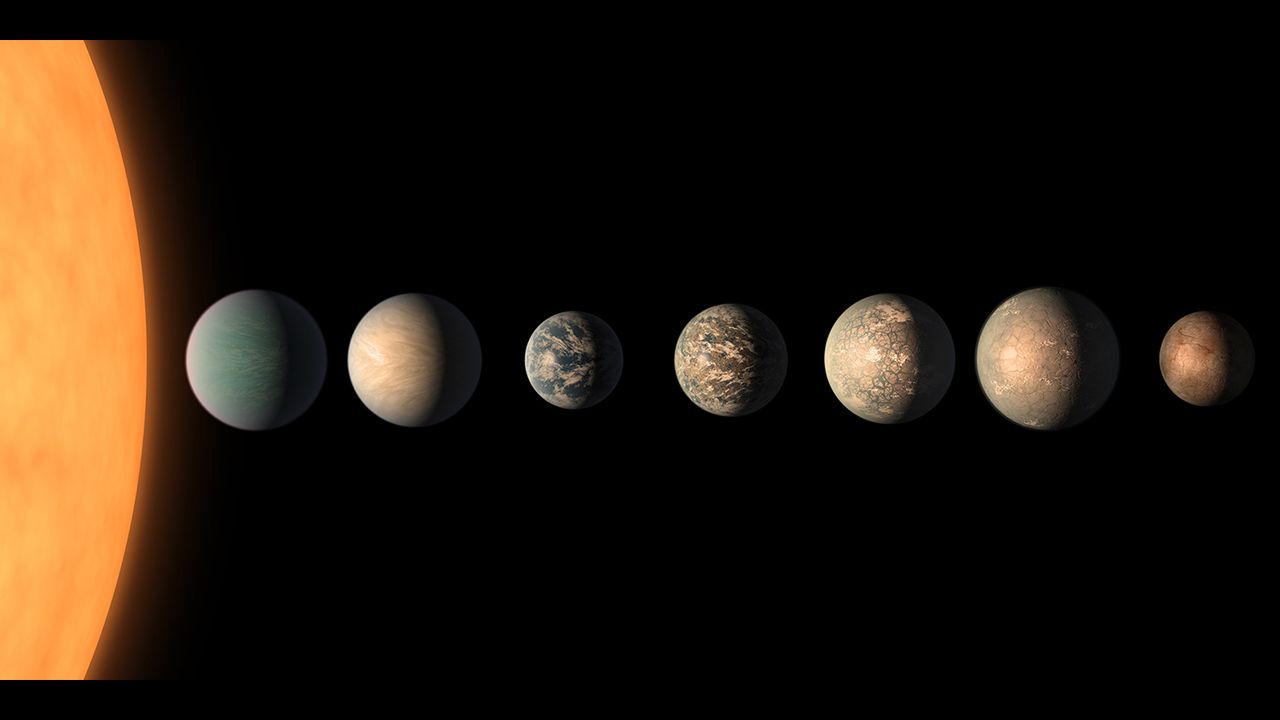
New observations of one of the famous TRAPPIST-1 planets are once again teasing scientists with tantalizing clues about a world that may — or may not — harbor an atmosphere capable of sustaining life-friendly liquid water.
TRAPPIST-1e is one of seven Earth-size exoplanets tightly packed around a cool red dwarf star smaller and dimmer than our sun that's about 40 light-years away. It orbits in the system's "habitable zone," where temperatures could allow liquid water to exist — but that's only if the planet has an atmosphere. Early James Webb Space Telescope (JWST) observations even hinted at a possible atmosphere, revealing faint signatures of methane, which, on Earth, results from living organisms and is tied to complex chemistry on Saturn's haze-shrouded moon Titan.
But those first gli

 CNN Health
 America News
 CBS News
 The Atlantic
 New York Post
 Reuters US Top
 AlterNet
 Gainesville Sun Sports
 OK Magazine
 The Conversation