

 Gizmodo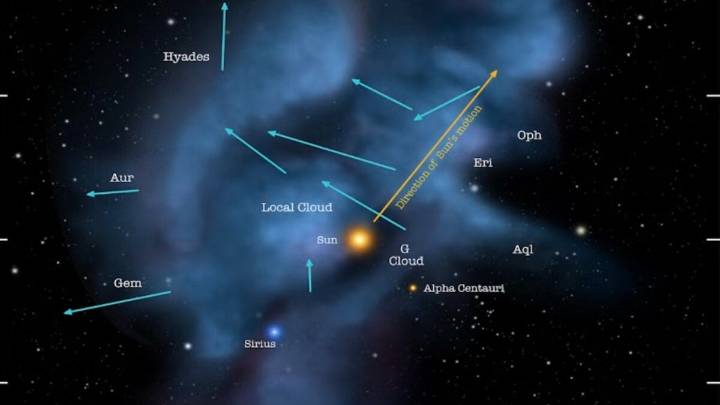
In the early 1990s, the Hubble Space Telescope picked up something odd in the local clouds that surround our solar system. An unusually large number of electrons had been ripped apart from the atoms found in the clouds of gas and dust, a process known as ionization. Now, researchers have traced the ionization of the local interstellar cloud to a close encounter between the Sun and two hot, fast, and massive stars.
In a new study published in The Astrophysical Journal, a group of researchers from the University of Colorado Boulder revealed that two stars raced past our host star 4.4 million years ago, coming as close as 30 light-years away from the Sun. At that distance, the two stars would have been visible from Earth.
In their wake, the stars emitted powerful radiation, which ionized

 CNN Health
 America News
 Desert Sun News
 CBS News
 The Atlantic
 New York Post
 Associated Press Top News
 Space War
 Raw Story