

 USA TODAY National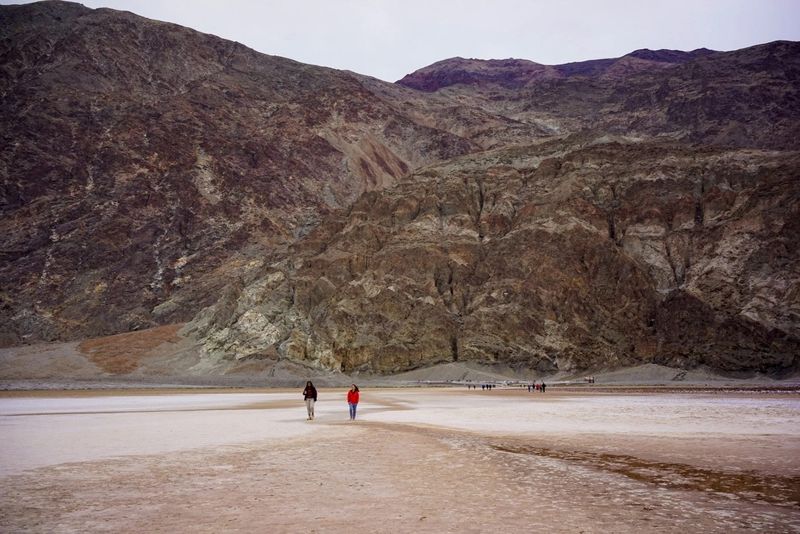
An ancient lake has reemerged after Death Valley National Park experienced record-breaking rainfall this fall.
From September to November, Death Valley, located in California and Nevada, received 2.41 inches of rain, making it the national park's wettest fall, according to a news release on the park's website. In November alone, the park received 1.76 inches of rain, breaking the previous record of 1.7 inches set in 1923.
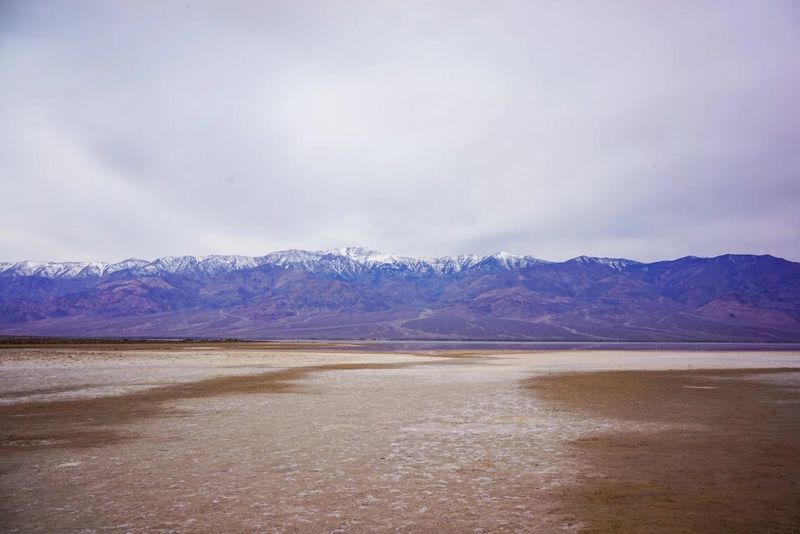
Due to the rains, Lake Manly, which dates back to the Ice Age, has formed once again in the Badwater Basin, the lowest point in North America, which lies 282 feet below sea level. But the lake isn't very deep.
"The lake, colloquially known as 'Lake Manly,' is much smaller and shallower than the one that formed after the remnants of Hurricane Hilary passed through the park in 2024," the national park said. "The water is about a mile from the Badwater parking lot and in most places would not rise above the tops of your shoes."
Here's what to know about the record-breaking rains.
What is Lake Manly?
In California, less than 100 miles away from the California-Nevada border, Badwater Basin, which is normally a dry salt flat, became home to the shallow lake locally known as Lake Manly due to the record rainfall.
The lake dates back to the ice age, and is the remains of a prehistoric lake that was once 80 miles long and 600 feet deep, according to the Palm Springs Desert Sun, a part of the USA TODAY Network. The lake was filled by glacial meltwater and seasonal streams.
It was home to a flourishing ecosystem, but today, it barely tops a few inches and is located in one of the country's harshest environments.
"Normally, the amount of water flowing [into Death Valley is] much less than the evaporation rate," park ranger Abby Wines previously said in a statement in 2024 after the valley floor received 4.9 inches of rain in six months.
Usually, the Death Valley National Park receives an average of 2 inches of rain per year, according to the National Park Service.
Rain brings on road closures
The fall storms have brought flooding, which covered paved roads with debris, making them impassable and forcing them to close. But many of the popular areas of the parks remain open and accessible.
"Visitors should be aware that unpaved roads may be impassable due to storm damage," the press release stated. "If traveling on backcountry roads, visitors should proceed with caution, be prepared to self-rescue, and always check current conditions before visiting."
Is Death Valley National Park still open after record rainfall?
The park is still open, and popular areas, like Zabriskie Point, Dantes View, Badwater Basin, and Mesquite Sand Dunes, are open and accessible to the public.
Will the rain bring in another superbloom?
The record-breaking rains bring up questions about whether the park will see another superbloom, when an unusually large amount of wildflowers bloom, a rare desert botanical phenomenon.
The last superbloom occurred in 2016, according to the park. Before that, it happened in 2005 and 1998.
In 2025, there weren't many wildflowers in the park due to extreme heat, but it is still too soon to tell whether the rains signal the possibility of a superbloom in 2026, according to the national park.
Contributing: Palm Springs Desert Sun, USA TODAY Network
Julia is a Trending reporter for USA TODAY and covers scientific studies and trending news. Connect with her on LinkedIn, X, Instagram, and TikTok: @juliamariegz, or email her at jgomez@gannett.com
This article originally appeared on USA TODAY: Prehistoric Lake Manly returns to Death Valley after record rainfall
Reporting by Julia Gomez, USA TODAY / USA TODAY
USA TODAY Network via Reuters Connect

 New York Post
 The Fayetteville Observer
 Associated Press US and World News Video
 ABC News
 Law & Crime
 WEIS Radio
 KWQC
KWQC The Fayetteville Observer Sports