

 Bozeman Daily Chronicle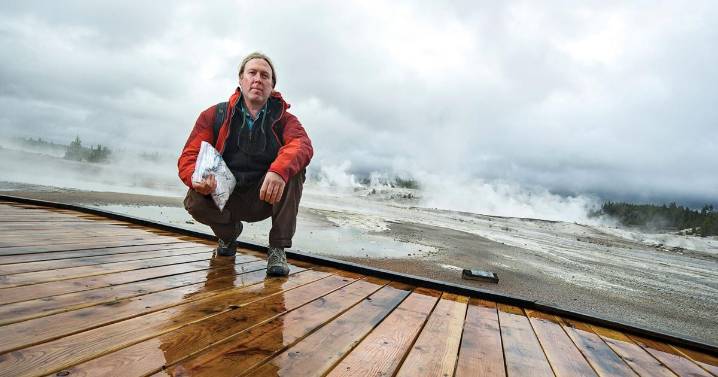
In Yellowstone National Park, earthquakes are an everyday occurrence whether humans feel them or not. In fact, data shows that as many as 3,000 quakes of various magnitudes occur in the park each year.
That regularity makes Yellowstone a perfect place to study the many impacts of seismic activity on ecosystems, said Montana State University professor Eric Boyd. In a new paper published this week in the journal PNAS Nexus, Boyd explores how Yellowstone’s earthquakes impact some of the planet’s earliest lifeforms, and what such lifeforms could tell us about life on other planets.
“I think it's one of the more significant findings that I have ever been a part of,” said Boyd, who has conducted research in Yellowstone for more than two decades as part of MSU’s Department of Microbiology and C

 Essentiallysports Motorsports
 Essentiallysports Golf
 Associated Press Top News
 The Babylon Bee
 AlterNet