

 USA TODAY National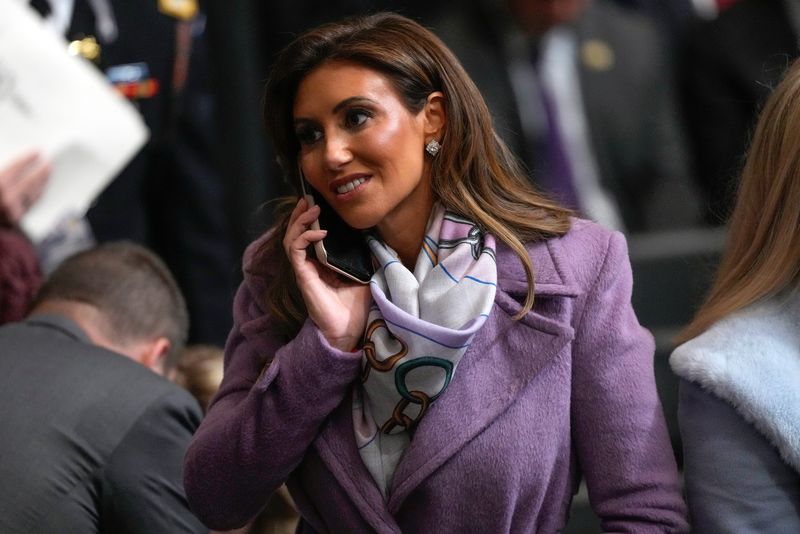
WASHINGTON – Alina Habba, a former personal lawyer to President Donald Trump, has been unlawfully serving as the top federal prosecutor in New Jersey, a federal appeals court ruled Dec. 1.
The unanimous ruling by a three-judge panel of the Philadelphia-based 3rd U.S. Circuit Court of Appeals was the latest blow to Trump and his Justice Department as they seek to install loyalists to oversee key U.S. Attorney's offices around the country.
The decision upheld U.S. District Judge Matthew Brann's August ruling that the Trump administration violated a federal appointments law in naming Habba as acting U.S. Attorney in New Jersey. Brann disqualified Habba from participating in ongoing cases.
"It is apparent that the current administration has been frustrated by some of the legal and political barriers to getting its appointees in place," appellate Judge D. Michael Fisher wrote in the Dec. 1 ruling. "Its efforts to elevate its preferred candidate for U.S. Attorney for the District of New Jersey, Alina Habba, to the role of Acting U.S. Attorney demonstrate the difficulties it has faced."
Habba's appointment was challenged by multiple criminal defendants in New Jersey. Lawyers for one of the defendants, Cesar Pina, said in a joint statement that the Dec. 1 ruling marks "the first time an appellate court has ruled that President Trump cannot usurp longstanding statutory and constitutional processes to insert whomever he wants in these positions."
"We will continue to challenge President Trump's unlawful appointments of purported U.S. Attorneys wherever appropriate," the lawyers, Abbe David Lowell, Gerry Krovatin and Norm Eisen, said in the statement.
The Justice Department didn't immediately respond to a request for comment.
The ruling will likely affect scores of active federal criminal cases in New Jersey, forcing the Justice Department to find a new prosecutor to supervise those cases. The administration could appeal the decision to the U.S. Supreme Court.
How Habba ruling could affect James Comey, Letitia James cases
While the 3rd Circuit appeals court only governs federal cases in New Jersey, Pennsylvania and Delaware, the decision is still bad news for the Trump administration as it fights in court to install loyalists who haven't undergone Senate confirmation in key offices across the country.
Attorney General Pam Bondi has already pledged to appeal a ruling that she unlawfully tried to install another former personal lawyer to Trump, Lindsey Halligan, to lead the U.S. Attorney's Office for the Eastern District of Virginia. That ruling threw out charges against former FBI Director James Comey and New York Attorney General Letitia James, both critics of the president. The appeal would go to the 4th U.S. Circuit, another federal appeals court.
"The DOJ tried to do the same thing with Lindsey Halligan in the Eastern District of Virginia," Mitchell Epner, a former assistant U.S. attorney for New Jersey, told USA TODAY. "If the DOJ moves forward with their promised appeal, they will now have the 3rd Circuit already having written on this question and making it absolutely clear that, as far as the 3rd Circuit is concerned, this is an open-and-shut case."
Issues with Habba appointment
In Habba's case, Trump nominated her to serve as the interim U.S. attorney for New Jersey in March, and then nominated her on June 30 to serve permanently in the role. That permanent nomination requires Senate confirmation, which never happened for Habba.
On July 22, as the 120-day window on Habba's interim appointment was set to close, a panel of judges declined to appoint Habba to head the office permanently. The judges ruled that, under a law that gives judges the power to fill vacancies after the 120-day term expires, Desiree Grace, who was the first assistant U.S. attorney in New Jersey, would become the interim U.S. attorney once Habba's term expired.
In response, the Trump administration fired Grace, withdrew Habba's nomination before the Senate, and appointed Habba as the first assistant U.S. attorney for New Jersey. Justice Department lawyers argued that meant Habba automatically became acting U.S. attorney. The administration also appointed Habba as a special attorney with the powers of a U.S. attorney, as a second avenue to achieve Habba's appointment.
However, the 3rd Circuit ruled that Habba couldn't automatically become the acting U.S. attorney because she was installed as first assistant after, rather than before, the U.S. attorney role became vacant.
The panel added that, even if that issue didn't exist, Habba would still be ineligible because the law governing federal vacancies also states that someone whose presidential nomination has been submitted to the Senate can't serve as an acting officer.
"Just because the President later may withdraw the nomination does not erase the fact that he submitted it," wrote Judge Fisher.
Contributing: Reuters
This story has been updated with additional information.
This article originally appeared on USA TODAY: Appeals court rejects Trump appointment of New Jersey prosecutor Habba
Reporting by Aysha Bagchi, USA TODAY / USA TODAY
USA TODAY Network via Reuters Connect

 Bloomberg Law
 Jurist
 Reuters US Top
 AlterNet
 Raw Story
 Associated Press US News
 CBS News