

 Reuters US Economy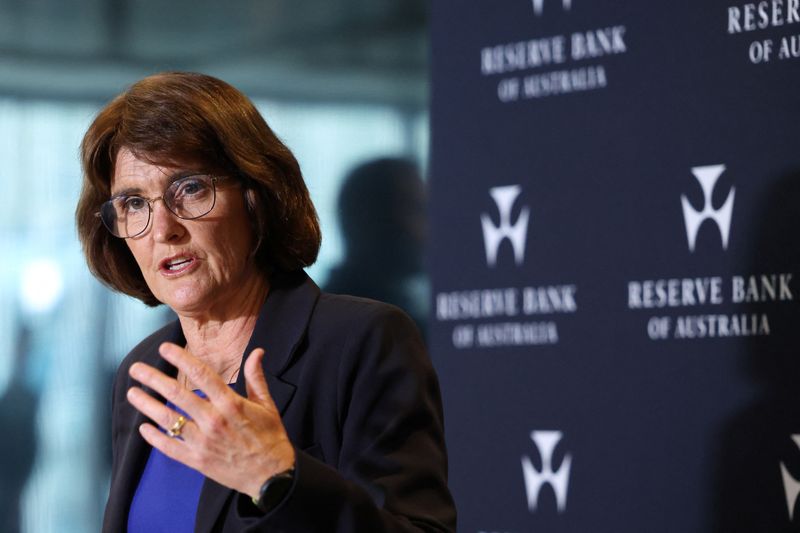
By Peter Hobson and Stella Qiu
CANBERRA/SYDNEY, Dec 3 (Reuters) - Australia's top central banker said on Wednesday the economy was likely already at its potential growth limit and, should inflation turn out to be more persistent than expected, that would have implications for interest rates.
Speaking before lawmakers, Reserve Bank of Australia Governor Michele Bullock said the labour market was still a bit tight as the central bank had forecast, but inflation has surprised on the upside.
"The board is looking very hard at these recent numbers to determine the extent to which it is temporary or the extent to which it is giving us a signal that there's some more permanent inflation pressures in the economy," said Bullock.
Australia's consumer inflation accelerated to 3.8% in October, while the trimmed mean measure of core inflation also climbed back above the target band of 2-3%. Together with a hot third-quarter result, that led markets to price out any chance of more policy easing next year.
Bullock said the central bank can look through if the pickup in inflation is temporary.
"If it's not, and it's more persistent... then that's suggesting to us the demand pressures are persisting and that might have implications for the future path of monetary policy," she added.
Data later on Wednesday are likely to show the economy expanded by 0.7% in the third quarter, the fastest pace in nearly three years, driven by a jump in business and government investments after three rate cuts this year.
That would translate into an annual growth rate of 2.2%, above the RBA's estimate of trend growth of 2%.
"We think that the output gap probably has closed but it is uncertain, but it does mean that we are in a position where if we are in balance, there are upside risks if the economy grows a bit quickly," said Bullock.
The pick-up in growth is one reason inflation has proved hotter than hoped for in recent months, leading some economists to call for the next move in interest rates would be up, rather than down.
The board meets next week and is considered certain to hold rates at 3.60%, and perhaps turn more hawkish on the outlook for further easing.
(Reporting by Stella Qiu and Wayne Cole; Editing by Leslie Adler and Lincoln Feast.)

 CBS Colorado Business
 The Conversation
 Raw Story
 The Fashion Spot
 TODAY Health
 The Hill
 Los Angeles Times Politics
 The Rink Live