

 USA TODAY National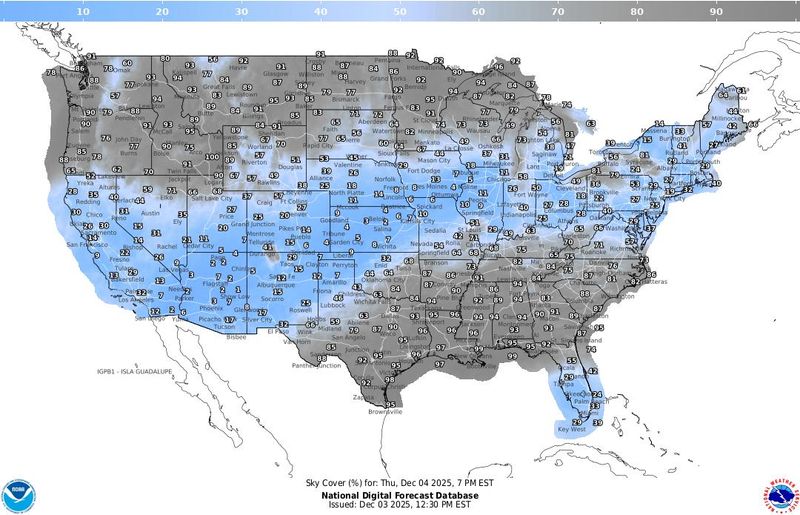
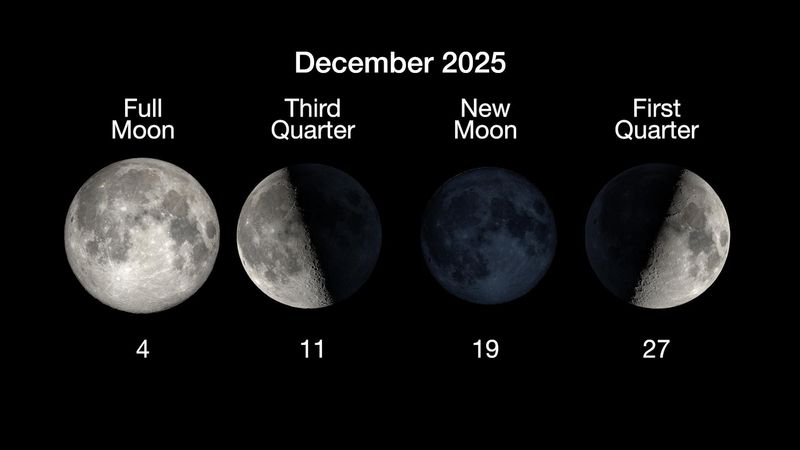
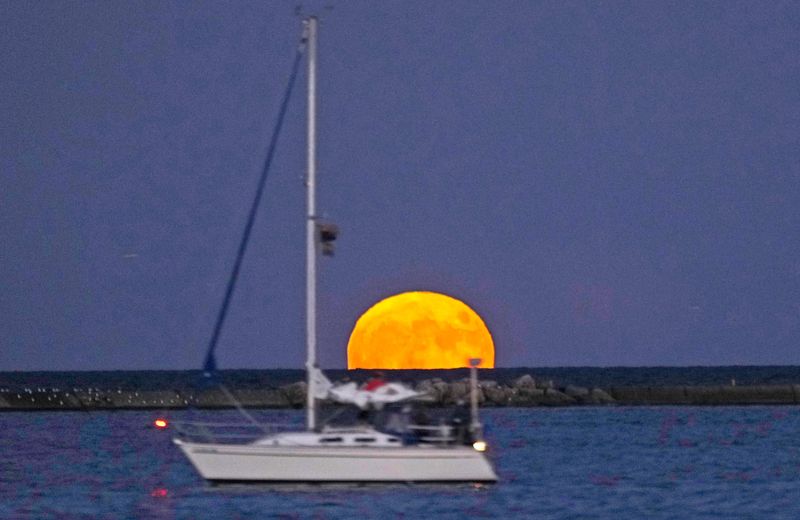
December is bringing us the last supermoon of 2025.
On Thursday, Dec. 4, the supermoon will take over the sky, according to NASA.
December's moon, also known as the Cold Moon, will light up the night sky, and the supermoon will look around 30% brighter and up to 14% larger.
Days after the supermoon takes over the sky, there will be a Moon-Jupiter conjunction, which means the celestial bodies will appear close together even though they are far apart, according to NASA.
Here's what you should know about the full moon in December.
When will December's full moon reach its peak?
The full moon will be at its peak on Thursday, Dec. 4, at 6:14 p.m. ET, according to NASA.
When will be the best time to see the December's supermoon?
The moon's peak will occur before sunset in some parts of the country, but backyard astronomers shouldn't worry.
The moon will still look bright and beautiful the night of Thursday, Dec. 4, and Friday, Dec. 5. The moon will also look full for several days after it peaks.
What is a supermoon?
Supermoons happen when a new moon or a full moon is at its closest to Earth all month, according to NASA. The phenomenon is known as "perigee."
Because of that, the moon will look 30% brighter and up to 14% larger than it usually does.
When is the next supermoon?
The next supermoon will take place on Jan. 3, 2026, according to the Old Farmer's Almanac.
Another will occur on Nov. 24, 2026, and Dec. 23, 2026.
Will you be able to see December's supermoon?
As of Wednesday, Dec. 3, the National Weather Service is predicting that most of the U.S. will have heavy sky coverage throughout the night of Dec. 4.
Maps of sky coverage
Moon-Jupiter conjunction
Just days after the December supermoon, Jupiter will be spotted right next to the moon on Dec. 7, according to NASA.
The two will be spotted in the eastern sky, with Jupiter hanging around north east of the moon at around 11 p.m. ET.
Does the supermoon cause higher-than-usual tides?
Yes, supermoons can cause higher-than-usual tides known as king tides.
"You might know that especially high tides, sometimes called king tides, tend to fall in the day or so after the full moon for November through January," according to Jim Todd, director of space science education for the Oregon Museum of Science and Industry in Portland, Oregon. "A king tide is a non-scientific term for a very high tide that occurs when the sun, moon, and Earth are aligned, creating a strong gravitational pull on the ocean."
King tides occurred during November's supermoon in parts of the country, and the December supermoon will bring another round of king tides.
Where does the Cold Moon get its name?
December's full moon is called the Cold Moon.
The name Cold Moon is said to have originated from the Mohawk tribe and was also known as the "long night moon" by the Mohicans, based on the frigid conditions that often occur in December, according to the Old Farmer's Almanac.
The Cold Moon is also called the following, according to the almanac:
- Winter Maker Moon
- Little Spirit Moon
- Moon of the Popping Trees
- Frost Exploding Trees Moon
Julia is a Trending reporter for USA TODAY and covers all things Labubu and Pop Mart, scientific studies and trending news. Connect with her on LinkedIn, X, Instagram, and TikTok: @juliamariegz, or email her at jgomez@gannett.com
This article originally appeared on USA TODAY: Want to see the last supermoon of 2025? Here's what to know.
Reporting by Julia Gomez and Ginnie Sandoval, USA TODAY / USA TODAY
USA TODAY Network via Reuters Connect

 Daily Voice
 Democrat and Chronicle
 KTNV Channel 13 Las Vegas Sports
 AlterNet
 Breitbart News
 Bored Panda
 @MSNBC Video
 The Daily Beast
 The Conversation
 The Shaw Local News Sports
 America News