

 USA TODAY National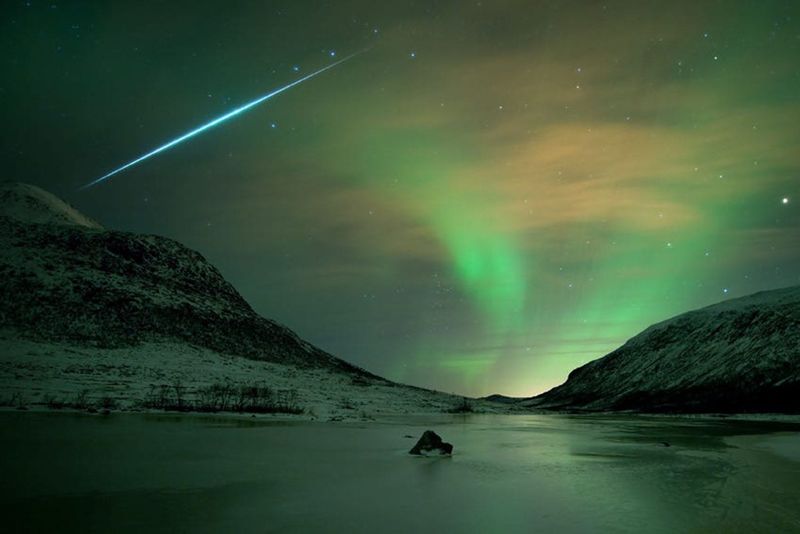
The Geminid meteor shower is underway and the peak is set to occur this weekend.
The shower is known for its vivid colors and high intensity. It can fall slowly and even produce fireballs. Many shooting stars show up as yellowish streaks.
The International Meteor Organization ranks the Geminids as the "best and most reliable of the major annual showers presently observable" on its Meteor Shower Calendar.
The meteors stem from the asteroid 3200 Phaethon, which takes 1.4 years to orbit the earth – according to NASA. It is potentially a "dead comet" as it does not develop a cometary tail when it passes by the sun and the bits and pieces that break off to form Geminid meteors are several times denser than cometary dust flakes.
The space agency says that the Geminid shower is considered one of the best opportunities for young viewers, since the shower starts around 9 or 10 p.m. nightly.
Here's what to know about the Geminid meteor shower.
When is the Geminid meteor shower?
The Geminid meteor shower will hit its peak the night of Saturday, Dec. 13, and continue into the morning hours of Sunday, Dec. 14. The shower began on Dec. 4 and will end on Dec. 17, according to the IMO.
Will you be able to see the Geminid meteor shower?
Yes.
The Geminid meteor shower will be visible in the night sky, with "Earthgrazers" potentially visible early in the evening of Dec. 13, according to Space.com. The site states that areas without light pollution may witness between 120 to 150 meteors per hour while brighter locales may see around 60 per hour.
Meteor showers get their names from the radiant's location, the point in the sky where the meteors appear. The radiant location is typically a star or constellation. The Geminid radiant is in the Gemini constellation.
Contributing: Janet Loehrke, USA TODAY
This article originally appeared on USA TODAY: The Geminid meteor shower is this week. See when it will peak.
Reporting by James Powel, USA TODAY / USA TODAY
USA TODAY Network via Reuters Connect

 Digital Trends
 Rockford Register Star
 CNN
CNN Space War
 WTOP
WTOP America News
 Raw Story
 Nola Entertainment
 AccuWeather Severe Weather