

 Reuters US Business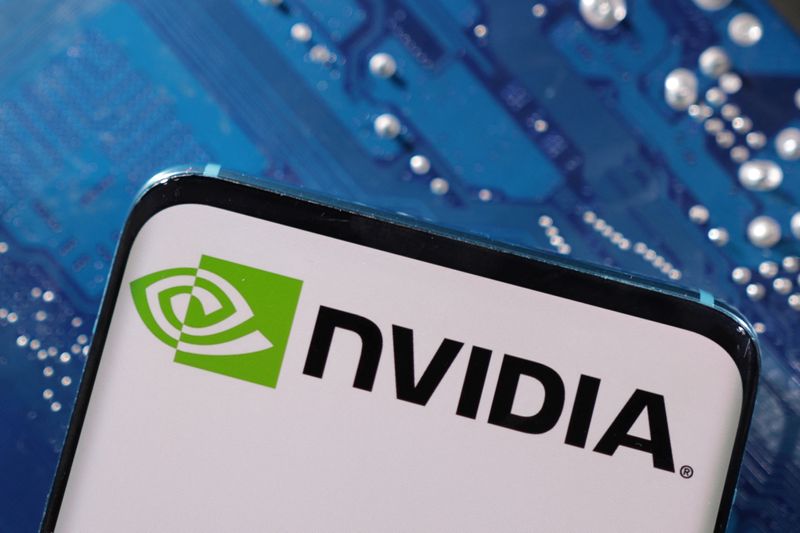
By Stephen Nellis and Karen Freifeld
WASHINGTON, Dec 8 (Reuters) - The U.S. Commerce Department is prepared to allow Nvidia's H200 chip to be exported to China, a person familiar with the matter told Reuters.
Nvidia shares rose 2.2% immediately after Semafor earlier reported the development.
Allowing the shipments could signal a friendlier approach to China, after U.S. President Donald Trump and Chinese leader Xi Jinping brokered a truce in the two countries' trade and tech war in Busan, South Korea, last month.
Administration officials consider the move a compromise between sending Nvidia's latest Blackwell chips to China, which Trump has declined to allow, and sending China no U.S. chips at all, which officials believe would bolster Huawei's efforts to sell AI chips in China, the person familiar with the matter said.
Nvidia and the Commerce Department did not immediately respond to requests for comment.
FEARS OF CHIPS STRENGTHENING CHINA'S MILITARY
China hawks in Washington are concerned that selling more advanced AI chips to China could help Beijing supercharge its military, fears that had first prompted limits on such exports by the Biden administration.
The Trump administration had been considering greenlighting the sale, sources told Reuters last month.
The H200 chip, unveiled two years ago, has more high-bandwidth memory than its predecessor, the H100, allowing it to process data more quickly.
According to a report released on Sunday by the non-partisan think tank the Institute for Progress, the H200 would be almost six times as powerful as the H20, the most advanced AI semiconductor that can legally be exported to China, after the Trump administration reversed its short-lived ban on such sales this year. Export of the chip would allow Chinese AI labs to build AI supercomputers that achieve performance similar to top U.S. AI supercomputers, albeit at higher costs, the report also said.
Faced with Beijing's muscular use of export controls on rare earth minerals, which are critical for producing a raft of tech goods, Trump this year threatened new restrictions on tech exports to China, but ultimately rolled them back in most cases.
(Reporting by Jasper Ward in Washington, Karen Friefeld in New York and Stephen Nellis in San Francisco; Writing by Doina Chiacu; Editing by Katharine Jackson, Susan Heavey, Leslie Adler, Rod Nickel)

 Crooks and Liars
 Political Wire
 New York Post
 KNAU
KNAU The Hill
 Space War
 AlterNet
 New York Magazine
 OK Magazine