

 Scroll.in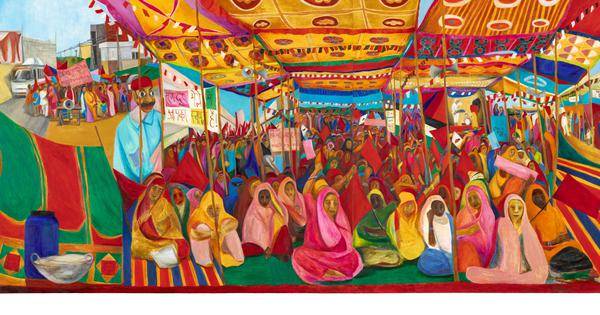
At first, you might mistake the image for a stage. The structural logic of the shamiana – three-sided, made of vividly coloured red, ochre and green canvas, and open on the fourth – creates the illusion of a recessed, room-like space, crowded with many actors, in short, a stage. What you see, however, is a site of dharna or a sit-in where the figures milling around, mostly women, veiled or with head covered, are staging a protest for better wages, the fulfilment of the promise of MGNREGA, and the implementation of speedier and more equitable laws.
The location could be interchangeable – from Singhu border on the edge of Delhi to Shaheen Bagh to Bhim in Rajasthan – but in every case, the workers’ presence speaks of a churn and an insistent message for change.
Aban Raza speaks back to hist

 IMDb Movies
 The Fashion Spot
 America News
 The Daily Mining Gazette
 Raw Story
 AlterNet
 Detroit Free Press
 Atlanta Black Star Entertainment
 ABC30 Fresno Sports