

 USA TODAY National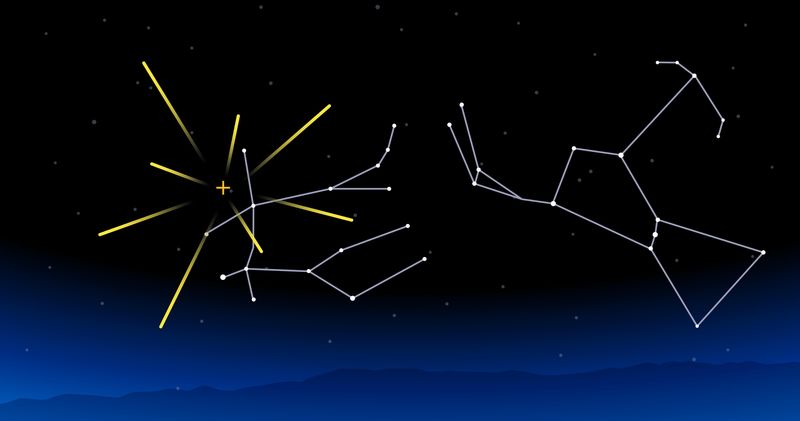
The Geminid meteor shower will peak this week, according to the American Meteor Society, offering skywatchers who are strong enough to face December's chilly temperatures with stunning views on Dec. 13 and Dec. 14.
"The Geminids meteor shower is considered to be one of the best and most reliable annual meteor showers," NASA said in a statement.
Under perfect conditions, the Geminids have been known to produce over 120 meteors per hour, NASA says. So, cuddle up with a warm drink and join a few friends to enjoy this magnificent sight, weather permitting of course.
Where to view the Geminid meteor shower
To get the best views, look east on Saturday night, Dec. 13, into the early morning hours of Sunday, Dec. 14, when the radiant reaches its highest point in the sky. You might expect to see some meteors as early as 9 p.m. or 10 p.m., local time and it will peak around 2 a.m. as it continues into Sunday morning.
Unable to view our graphics? Click here to see them.
Meteor showers get their names from the radiant's location, the point in the sky where the meteors appear. The radiant location is typically a star or constellation. The Geminid radiant is in the Gemini constellation.
The shower is known for its vivid colors and high intensity. It can fall slowly and even produce fireballs. Many shooting stars show up as yellowish streaks.
Where do the Geminid meteors come from?
This meteor shower is active every December, when Earth passes through a massive trail of dusty debris shed by a weird, rocky object named 3200 Phaethon, NASA said. The dust and grit burn up when they run into Earth's atmosphere in a flurry of "shooting stars."
Phaethon’s nature is debated. It’s either a near-Earth asteroid or an extinct comet, sometimes called a rock comet, according to NASA.
The Geminids were first noted as a minor meteor shower back in 1862, NASA reported. At the time of the Civil War, the shower's peak rate was about 30 meteors an hour.
How to get the best views of the Geminid meteor shower
Go to the darkest area you can find, sit back and enjoy a stunning view of the Geminid meteor shower. The key is to take in as much sky as you can and give your eyes at least half an hour to become used to the dark, so you don't need any special equipment like telescopes or binoculars. To protect your night vision, stay away from using your phone and make sure your flashlights are set to red, according to Space.com.
- No lights: Find a spot away from city lights. Your eyes will need to adjust to the darkness, which could take 15 to 20 minutes.
- Dress for the weather: Bring blankets or a camping chair to make the viewing comfortable.
- Locate the radiant: The higher the radiant is in the sky, the more meteors you are likely to see. Watching meteor showers can take time, so be patient – it's worth the wait.
2026 meteor shower calendar
If you miss this meteor shower, you'll have more chances to view showers in 2026:
Contributing: Doyle Rice
SOURCE American Meteor Society, EarthSky.org, Space.com, International Meteor Organization, NASA and USA TODAY research
This article originally appeared on USA TODAY: Geminid meteor shower is peaking soon: When and where to best view
Reporting by Janet Loehrke, USA TODAY / USA TODAY
USA TODAY Network via Reuters Connect

 Hattiesburg American
 Spectrum News Louisville
 WIS News 10
 NewsNation
 Reuters US Business
 AlterNet
 The Daily Beast
 Raw Story
 CBS19 News Crime
 CNN Politics
 New York Post