

 Associated Press Elections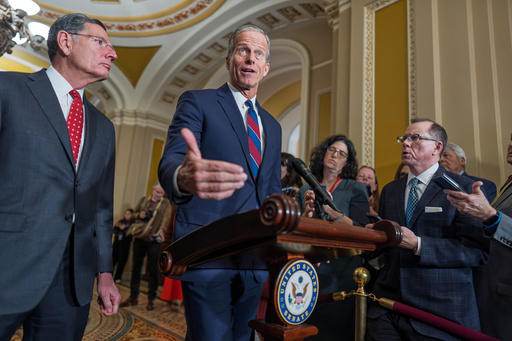

WASHINGTON (AP) — The Senate is poised on Thursday to reject legislation to extend Affordable Care Act tax credits for millions of Americans, a potentially unceremonious end to a monthslong Democratic effort to prevent the COVID-era subsidies from expiring on Jan. 1.
Despite a bipartisan desire to continue the credits, Republicans and Democrats have never engaged in meaningful or high-level negotiations on a solution. Instead, senators were voting on two partisan bills and were expected to defeat them both — essentially guaranteeing that many who buy their health insurance on the ACA marketplaces see a steep rise in costs at the beginning of the year.
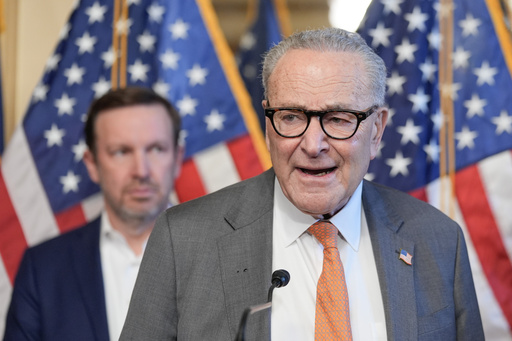
"If Republicans don't climb aboard, there won't be another chance to act," before premiums rise, Democratic leader Chuck Schumer of New York said before the votes.
Neither side has seemed interested in compromise.
Democrats who forced a government shutdown for 43 days on the issue have so far not wavered from their proposal to extend the subsidies for three years with none of the new limits that Republicans have suggested. Republicans are offering their own bill that would let the subsidies expire, even as some in the GOP conference have said they would support an extension. The GOP proposal would create health savings accounts to replace the tax credits, an idea that Democrats called “dead on arrival.”
Some Republicans have pushed their colleagues to extend the credits, including Sen. Thom Tillis of North Carolina, who said senators should vote for a short-term extension so they can find agreement on the issue next year.
The dueling votes are the latest political messaging exercise in a Congress that has operated almost entirely on partisan terms as Republicans pushed through a massive tax and spending cuts bill this summer using budget maneuvers that eliminated the need for Democratic votes. They also tweaked Senate rules to push past a Democratic blockade of all of President Donald Trump’s nominees.
A small group of moderate Democratic senators made a deal with Republicans to end the shutdown last month, raising some hopes for a health care compromise that quickly faded with a lack of real bipartisan talks.
The votes were also the latest salvo in the debate over the Affordable Care Act, former President Barack Obama’s signature law that Democrats passed along party lines in 2010 to expand access to insurance coverage.
Republicans have tried since then to repeal or overhaul the law, arguing that health care is still too expensive. But they have struggled to find an alternative. In the meantime Democrats have made the policy a central political issue in several elections, betting that the millions of people who buy health care on the government marketplaces want to keep their coverage.
“When people’s monthly payments spike next year, they’ll know it was Republicans that made it happen,” Schumer said in November.
Schumer has also been clear that Democrats would not seek a compromise.
Even if they view it as a political win, the failed votes would be a loss for Democrats who demanded an extension of the benefits as they forced a government shutdown for six weeks in October and November — and for the millions of people facing premium increases on Jan. 1.
While most Democratic senators pushed to keep the shutdown going as Republicans refused to negotiate, a small group of centrist Democrats struck a deal with Majority Leader John Thune, R-S.D., for a future health care vote, with no guarantee of success, in exchange for their votes to reopen the government.
Maine Sen. Angus King, an independent who caucuses with Democrats, said the group tried to negotiate with Republicans after the shutdown ended. But he said the talks became unproductive when Republicans demanded language adding new limits for abortion coverage that were a “red line” for Democrats.
“They’re going to own these increases,” King said of Republicans.
Republicans have used the looming expiration of the subsidies to renew their longstanding criticisms of Obamacare and to try, once more, to agree on what should be done. The GOP plan that the Senate is voting on would replace the tax credits with health savings accounts. Republicans said such an overhaul would put the money in the hands of consumers, not insurance companies that currently receive the current subsidies directly.
Thune announced Tuesday that the GOP conference had decided to vote on the bill led by Louisiana Sen. Bill Cassidy, the chairman of the Senate Health, Labor, Education and Pensions Committee, and Idaho Sen. Mike Crapo, the chairman of the Senate Finance Committee, even as several Republican senators proposed alternate ideas.
In the House, Speaker Mike Johnson, R-La., has promised a vote next week. Republicans weighed different options in a conference meeting on Wednesday, with no apparent consensus.
Moderates in the party who could have competitive reelection bids next year are pushing Johnson to find a way to extend the subsidies. But more conservative members want to see the law overhauled.
Rep. Kevin Kiley, R-Calif., has pushed for a temporary extension, which he said could be an opening to take further steps on health care.
If they fail to act and health care costs go up, the approval rating for Congress “will get even lower,” Kiley said.
___
Associated Press writers Kevin Freking and Joey Cappelletti contributed to this report.

 Asheville Citizen Times
 NBC10 Boston
 AP Breaking News
 ABC News
 Associated Press US News
 Raw Story
 AlterNet
 Associated Press US and World News Video
 NBC News