

 Reuters US Business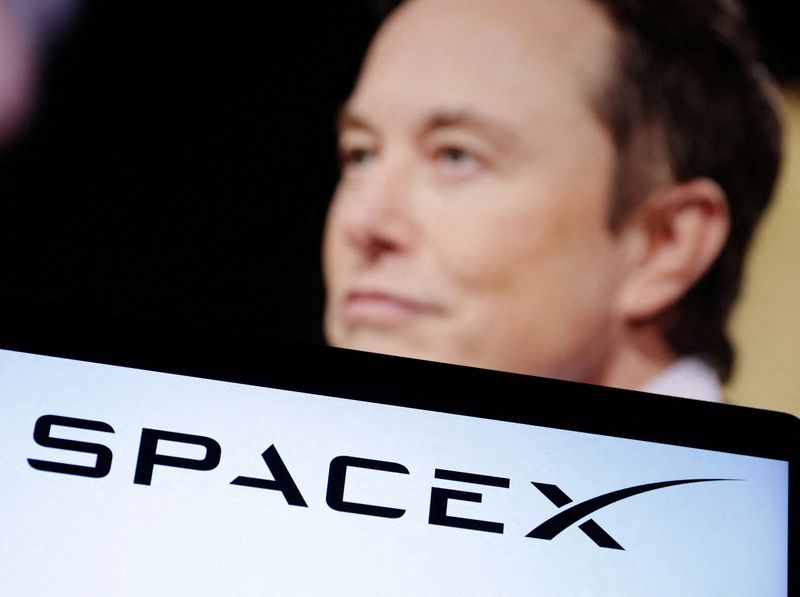
By Ross Kerber, Echo Wang and Joey Roulette
BOSTON/NEW YORK, Dec 11 (Reuters) - Investors welcomed reports that SpaceX was mulling a potential IPO that would help fund Elon Musk's Mars ambitions and value the rocket and satellite company at more than $1 trillion, as some have been waiting for years to buy into the company.
SpaceX is looking to raise more than $25 billion in an initial public offering that could come as early as June, a person familiar with the matter told Reuters.
Though it is a high-risk and capital-intensive business, the demand for shares from retail investors will be "substantial," Shay Boloor, chief market strategist for Futurum Equities Research, said in an interview.
"It's going to be the craziest IPO in the history of the stock market. If it's trying to go for $1.5 trillion, I wouldn't be surprised if it goes up to over $2 trillion once it gets open," Boloor said.
RISKS AND DRAMA
SpaceX CEO, chief designer and founder Musk's well-documented unorthodox management style and anti-establishment rhetoric are not a deterrent, investors and analysts said.
Of the five companies Musk currently leads, including infrastructure firm The Boring Company and artificial intelligence startup and X owner xAI, his oversight of the only publicly traded one – electric vehicle maker Tesla – has been fraught with civil fines and clashes with regulators.
He once called U.S. Securities and Exchange Commission officials "bastards" after they stripped him of his role as chairman at Tesla and restricted his social media use over his 2018 tweet saying he had "funding secured" to take Tesla private.
Musk, who is already the world's richest person with a net worth of more than $460 billion, threatened to leave Tesla earlier this year if the board did not approve an unprecedented 10-year, $1 trillion pay package. Tesla's shares and sales suffered after Musk's four-month stint running the Trump administration's Department of Government Efficiency.
The risks and drama an innovative CEO like Musk brings to a company are "part and parcel of being an investor in these types of companies, the reward has to compensate holders for the risk," said Christopher Marangi, co-chief investment officer for value at Mario Gabelli’s GAMCO Investors.
GAMCO has exposure to SpaceX through its investment in EchoStar, which took the company's shares as part of a spectrum deal in September.
It is "too speculative" to say whether GAMCO would buy more shares in a SpaceX IPO, but "conceptually we would be excited for the prospect of space-oriented companies," Marangi said, noting that GAMCO also has a stake in Telesat.
'STEAK AND SIZZLE'
Dan Hanson, senior portfolio manager who oversees Neuberger Berman's $2.1 billion Quality Equity Fund, said SpaceX's combination of strong current operations and future potential should draw plenty of interest in an IPO. The fund had about 5% of its assets in unlisted shares of SpaceX as of the end of November.
“This is the rare situation where you have both the steak and the sizzle,” he said.
While theoretical projects like sending humans to Mars might attract popular interest, Hanson said SpaceX’s launch business and Starlink communications products are both established and would help it get a strong valuation – making it ready for an IPO.
Proceeds from an IPO could help SpaceX fund new technologies like space-based data centers that would not need as much energy-consuming cooling as Earth-based centers, Hanson said.
"It has all the markings of a market darling in today's technology revolution," said James St Aubin, chief investment officer of Ocean Park Asset Management, which does not have a stake in SpaceX. "There is a blue-sky outlook for its services. This allows the investors to side-step any valuation concerns while letting forecasts for growth prospects run wild."
St Aubin said investors might be talking about the "Great Eight" including SpaceX in 2026, expanding on the "Magnificent Seven" tech stocks.
LAGGING THE BROADER MARKET
A look at major IPOs over the past four decades shows that richly valued newcomers rarely deliver lasting gains.
According to data from Jay Ritter, a University of Florida professor emeritus who researches IPOs, between 1980 and 2023, 45 companies went public with at least $100 million in inflation-adjusted revenue and valuations more than 40 times their annual sales on the first day of trading. Only seven were trading higher three years later.
On average, these stocks lost about half their value from the first-day close and lagged the broader market by roughly 63%.
Notable laggards include Beyond Meat's 2019 debut, Palm's 2000 listing and Snowflake's 2020 IPO. Datadog and Zoom, both listed in 2019, were among the few that held up. Tesla, which went public in 2010 at a more modest valuation, has been an outlier, soaring well beyond its IPO price over the past decade.
“The extremely high valuation that SpaceX has been able to get does remove some upside potential," Ritter said. "Even if it becomes a $2 trillion company that's only going to be a return of 100% or 200%.”
(Reporting by Ross Kerber in Boston, Joey Roulette in Washington and Echo Wang and Chibuike Oguh in New York. Editing by Dawn Kopecki and Jamie Freed)

 Fast Company
 Space.com
 Tech Times
 NewsNation
 RadarOnline
 CNN Politics
 ABC News
 Raw Story
 The Daily Beast
 The Travel