

 USA TODAY National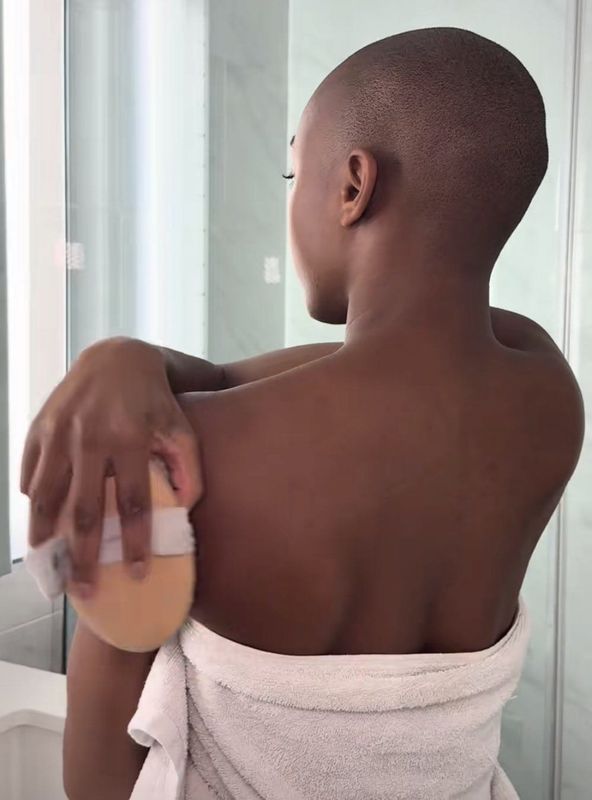
Kai Denise has a ritual: A few days a week, she takes out a hand-sized bristled brush before getting in the shower. She brushes her bare legs and arms, making upward motions toward her heart. On her back and stomach, she makes circular strokes.
The 29-year-old Brooklyn-based content creator is among many who swear by "dry brushing," using a stiff brush for a body massage that social media posts claim exfoliates skin and jump starts the lymphatic system, which protects us from infection and balances the fluids in our bodies.
But does it really offer the health benefits the internet claims?
To an extent, says Bruce Brod, clinical professor of dermatology at the University of Pennsylvania Perelman School of Medicine. The trend supports our bodies' natural systems, but it's not needed for healthy functioning.
Denise has been conscious of how her skin looks since a young age; she has eczema and struggled with "strawberry legs," when dark, clogged pores pit the skin. She heard about dry brushing on social media and ordered a $10 Amazon brush (she's since upgraded to a $50 specialty one). It felt like an accessible solution compared to other skin care treatments that required an appointment.
Right away, she noticed her skin looked brighter. And two years into the routine, the clogged pores on her legs have cleared. She doesn't dry brush if her eczema flares, but she uses the technique to keep her skin glowing year-round.
"It's seven more minutes of stillness and taking care of yourself, I see so much value in that," Denise says. "It's become a kind of therapy."
Despite the social media hype, dry brushing isn't a new practice. Examples of dry body brushing are found across centuries in the Ayurveda practice in India, Ancient Greek and Roman and Chinese cultures, says Aubree Hendershot, a certified manual lymphatic drainage specialist in Kansas City, Missouri. These all feature variations of treating skin with rough fibers for smoothness and stimulation.
And moderation and information are key, Brod says. Ask your doctor if dry brushing is a good idea for you and if you start dry brushing, make sure you aren't overdoing it.
"In patients with underlying skin conditions I would proceed cautiously," Brod says. "It's the type of thing a lot of patients have the mentality of 'more is better,' so patients may get into a compulsion and begin to cause skin problems which will make them less happy than they were prior."
Why is everyone dry brushing all the sudden?
While Denise dry-brushes for mainly cosmetic purposes, she says she sees many online conversations about the benefits underneath the skin.
Dry brushing toward the heart services the lymphatic system, ushering fluid to the two major ducts under our collarbones, Hendershot says. Long-term lymphatic drainage benefits include improved immunity, digestion energy and better sleep, according to the Cleveland Clinic.
People feel a desire to rid their bodies from the many pollutants or toxins we hear about, she says, driving the increasing popularity of lymphatic drainage massages, treatments, and yes, dry brushing in the zeitgeist.
Dry brushing has a large margin of error, though, Hendershot says, leaving many doing misdirected actions with no results. Be wary of misinformation from social media influencers that aren't backed by experts, she says, and consult a professional or check the source of online advice before copying brush guidance.
It's also important to remember our lymphatic systems is autonomous, Brod says. External stimuli like a brush aren't necessary to run this powerful fluid management system in our bodies. So there's no need to worry your body won't function properly without dry brushing; it's just a step you can take in addition. And without robust clinical research on its lymph impacts, Brod suggests taking any viral claims to your doctor before investing in a regimen.
Similarly, our skin exfoliates on its own about every two weeks, Brod says. So dry brushing is more about boosting that natural function than trying to control it, he says. Try a multi-pronged approach with moisturizer or other deep hydrators like hyaluronic acid in addition to brushing. And if your skin feels dull, especially in the winter, be sure you're not over washing as this dries the skin up.
And the practice isn't for everyone. People with congestive heart issues, kidney disease, a history of blood clotting or other active infections shouldn't dry brush or only do so after consulting a doctor, Hendershot says.
The friction could harm some people with underlying skin conditions, too. Rough rubbing can worsen conditions like eczema or psoriasis, Brod says.
But regardless of health outcomes, for some people, it might just feel really good, and they should embrace any relaxing practice that brings calm to their day.
This article originally appeared on USA TODAY: People swear by 'dry brushing'. Does it really work?
Reporting by Nicole Fallert, USA TODAY / USA TODAY
USA TODAY Network via Reuters Connect

 Fit&Well
 Fitness Volt
 Task and Purpose
 ABC30 Fresno Sports
 She Knows
 The Motley Fool
 Associated Press Top News
 AlterNet
 Weirton Daily Times Sports
 People Shopping