

 Daily Voice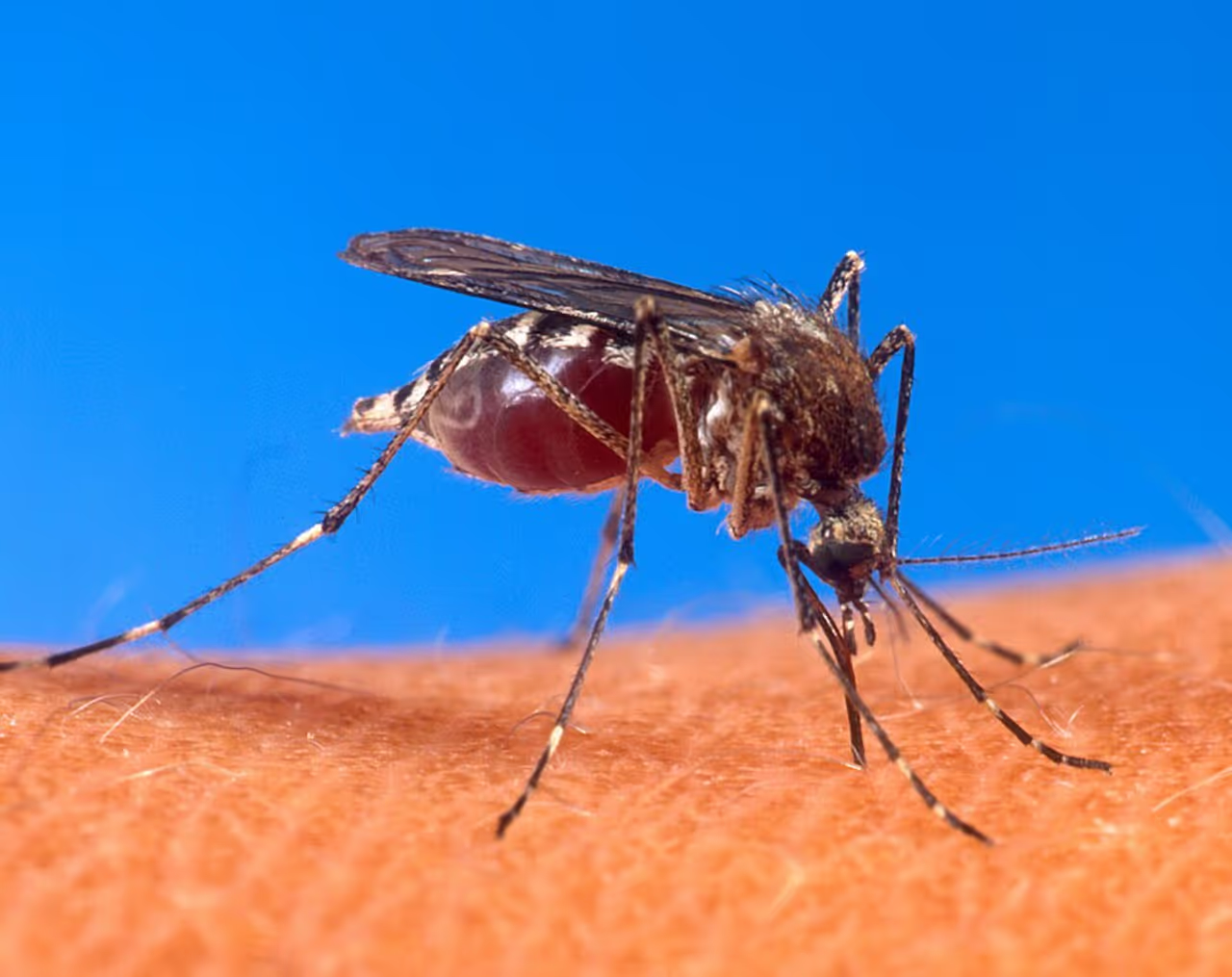
By Joe Lombardi From Daily Voice
A fast-moving mosquito-borne virus is gaining ground in several parts of the world, prompting federal health officials to highlight where risks are rising for travelers.
The Centers for Disease Control and Prevention issued new guidance earlier this month, identifying locations where chikungunya outbreaks are underway and areas where exposure risks remain elevated.
The notice is designed to help travelers understand where infections are increasing and whether vaccination should be considered before a trip.
According to the CDC, current outbreaks have been confirmed in Bangladesh, Cuba, Guangdong Province in China, and Sri Lanka. These regions are experiencing transmission levels high enough to trigger formal travel health notices.
Chikungunya is a viral illness spread through the bite of infected mosquitoes. It is known for causing sudden fever and severe joint pain. Other symptoms can include headache, muscle pain, joint swelling, and rash.
There are no medicines to cure chikungunya, and treatment focuses on rest, hydration, and relieving pain. While most people recover, symptoms can be intense and, in some cases, long-lasting.
Severe outcomes are uncommon but can be more serious for older adults, young children, and people with weakened immune systems.
The CDC notes that chikungunya has appeared in more than 100 countries and continues to circulate in tropical and subtropical regions.
The virus can also spread to new areas when infected travelers are bitten by local mosquitoes, potentially creating new clusters of illness.
Beyond the four outbreak locations, the agency lists several countries where risk remains elevated for US travelers, even in the absence of a current outbreak. These include Brazil, Colombia, India, Mexico, Nigeria, Pakistan, the Philippines, and Thailand. Each has reported ongoing cases among US travelers in recent years.
Vaccination is recommended for people visiting an outbreak area. It may also be considered for travelers planning extended stays in regions with elevated risk. The CDC says decisions should account for the length of travel, timing, mosquito activity, and personal health factors.
The agency emphasizes that multiple factors inform when to issue an outbreak notice, including confirmed testing data, seasonal mosquito patterns, and increases in infections among US travelers. Locally acquired cases have not occurred in the United States since 2019.
Travelers are urged to use insect repellent, wear long sleeves and pants, and stay in screened or air-conditioned lodging to reduce mosquito exposure.
Check back to Daily Voice for updates.

 Associated Press US News
 Columbia Daily Tribune
 ABC News
 AlterNet
 TODAY Health
 East Idaho News
 Associated Press Top News
 KRWG Public Media
 The Baltimore Sun