

 Reuters US Business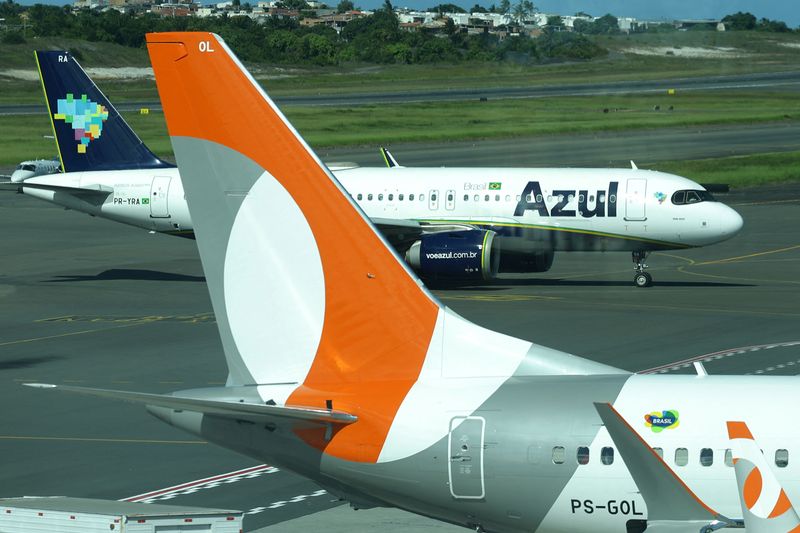
By Gabriel Araujo and Dietrich Knauth
NEW YORK/SAO PAULO, Dec 12 (Reuters) - A U.S. bankruptcy judge on Friday approved Azul's debt restructuring, allowing the Brazilian airline to slash more than $2 billion in debt and raise capital through a new equity rights offering and investment from American Airlines and United Airlines.
Azul had filed for Chapter 11 bankruptcy in New York in May, aiming to cut its debt and make its business more resilient to market challenges like fluctuations in fuel prices and currency exchange rates.
The company's bankruptcy plan converts much of its pre-existing debt into equity and allows it to raise cash by selling new equity shares. As part of it, United and American agreed to invest up to $300 million in Azul's equity.
U.S. Bankruptcy Judge Sean Lane approved Azul's restructuring plan at a court hearing in White Plains, New York.
Azul CEO John Rodgerson told Reuters that Azul expects to formally exit bankruptcy proceedings in February.
"We can now execute the plan, which is to convert all that debt, that burden," he said in an interview. "This debt comes off my balance sheet and turns into equity, so we end up in a much lighter situation."
LOWER INTEREST EXPENSES
Azul, which dominates Brazil's airline industry along with Gol and LATAM, grappled with pandemic-era debt along with high costs, a weaker Brazilian currency, and supply-chain issues delaying aircraft deliveries and maintenance plans.
Its move to file for Chapter 11 followed in the footsteps of fellow Latin American carriers Aeromexico, Avianca, Gol and LATAM, all of which went through bankruptcy proceedings in the aftermath of the COVID-19 crisis.
Rodgerson said he expects Azul to exit Chapter 11 with a leverage ratio of 2.5 times, below the 3.0 times initially forecast. The carrier's debt is set to drop 60%, with annual interest being reduced by about $200 million a year, he added.
Aircraft lease obligations will be lowered by 28%, the executive said. The restructuring process included an agreement with lessor AerCap.
Azul earlier this year held talks with Abra Group on a potential merger with Gol, which Abra controls, but they ended in September as Azul turned its focus to the Chapter 11 process.
"I'm super focused on our stand-alone plan," Rodgerson said when asked about the current market scenario in Brazil. "Everyone has their own plan, and I have to focus a lot on my clients."
(Reporting by Dietrich Knauth in New York and Gabriel Araujo in Sao Paulo; Editing by Chris Reese and Diane Craft)

 Newsday
 The Daily Beast
 Raw Story
 WFMJ-TV Entertainment
 America News
 The List
 WNDU Sports