

 Inside Climate News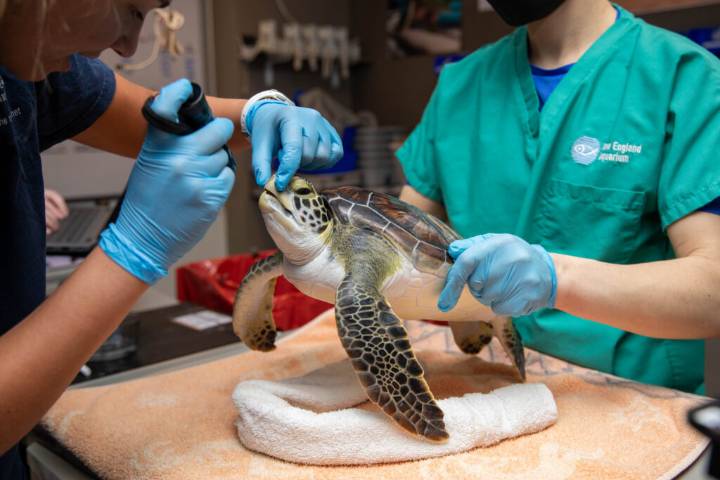
Over the last few weeks, volunteers have braved bitter winds and freezing temperatures to patrol Cape Cod’s bayside beaches at night, sweeping their flashlight beams along the last high-tide line marked with mounds of seaweed, searching for signs of life.
“That’s where you’re most likely to find a turtle,” said Mark Faherty, science coordinator at Mass Audubon’s Wellfleet Bay Wildlife Sanctuary, which runs a sea turtle rescue and research program in Cape Cod.
Every year, from November through early January, hundreds of juvenile sea turtles strand on these beaches when water temperatures drop below 50 degrees Fahrenheit, leaving them cold-stunned—a hypothermic reaction experienced by marine reptiles—and unable to swim.
Disoriented and helpless, the animals drift until the surf deposits t

 ABC News
 Associated Press US and World News Video
 The Bay City Times
 KSL Utah
 Bozeman Daily Chronicle
 Click2Houston
 Florida Politics Blog
 Raw Story
 CourierPress Sports
 AlterNet