

 India Today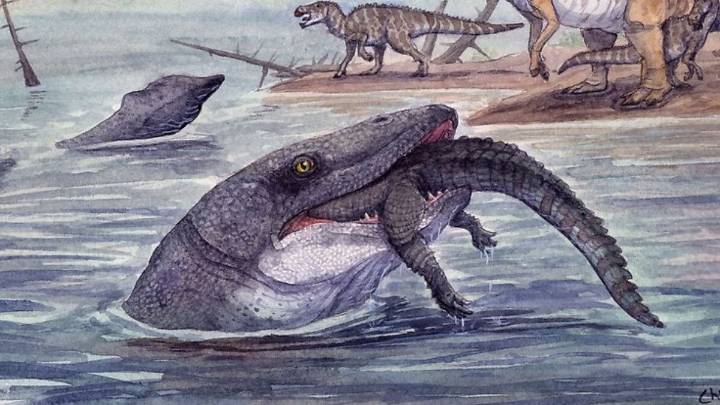
A recent investigation demonstrates that mosasaurs, previously considered solely marine reptiles, managed to flourish in freshwater rivers during their last million years, just before extinction over 66 million years ago.
In 2022, a tooth surfaced from sediment associated with river channels in North Dakota. This marked a trace of a mosasaur that may have reached 11 metres, a scale rivalling today’s largest killer whales.
The discovery recalibrates what is known about the reach and adaptability of these extinct predators, highlighting their success in environments once thought inhospitable to them.
The fossil appeared alongside a Tyrannosaurus rex tooth and a crocodilian jawbone , an assembly combining terrestrial, freshwater, and marine species. This mixture raised immediate questi

 The Washington Post Opinions
 The Daily Beast
 People Top Story
 The Babylon Bee
 The Motley Fool
 NPR
NPR America News
 @MSNBC Video