

 The Atlantic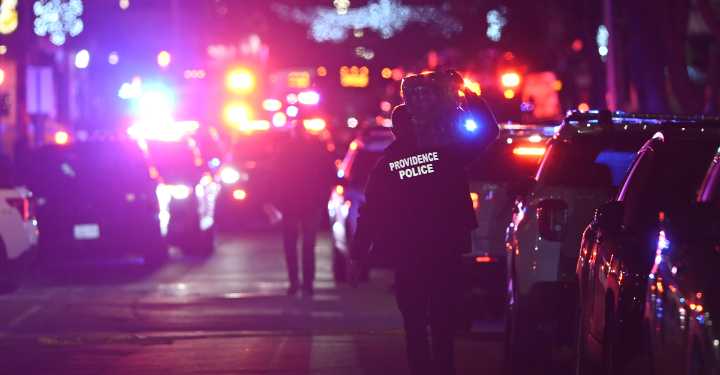
As a homeland-security expert, I often get unexpected calls telling me of some horrible mayhem. Typically these come from television producers or magazine editors who want to know how long I’ll need to get ready and respond. But last night was different. The first call I received didn’t come from a producer or editor but from my daughter, an alum of Brown University, where yesterday a shooter walked into a final-exam review session and killed two students, injuring nine more. My daughter had heard from friends sheltering in place. A TV booker called two minutes later. Instead of saying hello, I responded, “I can be ready in 20.” An editor at this magazine emailed me soon after. I am used to this drill, but not one so personal.
People in my field cover what we sometimes call the “dead people” beat. That kind of humor may seem heartless, but sarcasm is how we deal with the horror of mass shootings, violence, and terrorism. My role is to provide, to the extent I can, some objective way to process the familiar but often inexplicable. If I seem unemotional on television, that is simply a skill honed from experience, not a reflection of what I’m feeling. I am angry—about America’s inadequate gun laws, about the senseless ubiquity of “thoughts and prayers,” about the fact that each of my children had to graduate high school with over a decade of experience with active-shooter drills.
I know Brown well. As an empty-nester, I’ve begun to spend more time at my family’s house in Rhode Island, not far from the university—though nothing is very far in America’s smallest state, only 37 miles wide. No suspect has yet been identified, but authorities took a “person of interest” into custody this morning. When a reporter asked if the “person of interest” was the suspect, a law-enforcement official responded, “It’s a small state. Put the dots together.”
I know the faculty member whose class was holding the review session that the shooter walked into. Some of my neighbors work for Brown, others for local media. Elected officials hang out at the bar down the street. I’m friends with the publisher of a local newspaper chain who was covering the shooting. I started getting texts from these connections almost immediately after the shooting. People asked what I knew and where I was. Some—believing my eldest was still a student—asked if she was okay.
The university remained under lockdown through the evening, as the shooter remained at large. I was on air for much of the night, hearing unverified rumors from friends, neighbors, and a friend of a friend who works at a local hospital. Most of these people were well-meaning. But journalists are the best purveyors of fact, particularly local ones, so on TV I stuck to what had been reported and verified. The mayor of Providence, Brett Smiley, wisely warned people not to relate anything that authorities hadn’t confirmed.
I’ve learned some tricks of the trade on the “dead people” beat. I keep sticky notes around my screen while I’m on air to ensure I pronounce the name of the affected city or town correctly and have a sense of its size and demographics. I do not repost statements or information from social media unless I know the news agency or reporter. I familiarize myself with key political players or law-enforcement leaders.
This time, however, I didn’t need any of those tricks. I knew this one all too well.
As a woman in the security space, I tend to be the friend that other mothers turn to when they’re nervous. I’m used to it; I call my doctor friends when I have a medical question, after all. One of them I have known for decades very often worries about her children’s safety, sometimes to excess, I thought. I respond to her angst calmly with statistics. Her son is at Brown now, though, and I was proved wrong. Is he accounted for? I texted her. He was, but thought later what a strange and clinical phrase—“accounted for”—that was to use with a friend as if her child were a number, as if I didn’t know her son from the day he was born.
Many observers will say that there is nothing new about what happened in Rhode Island this weekend, or that the fear faced by these students is felt everyday by children in certain neighborhoods and countries. Sadly, they’re not wrong. The reality is that we’re all on the “dead people” beat now.

 NECN Providence
 Reuters US Top
 People Crime
 NBC News Crime
 ABC6 Rhode Island
 KRON4 News
 Raw Story
 The Motley Fool