

 The Conversation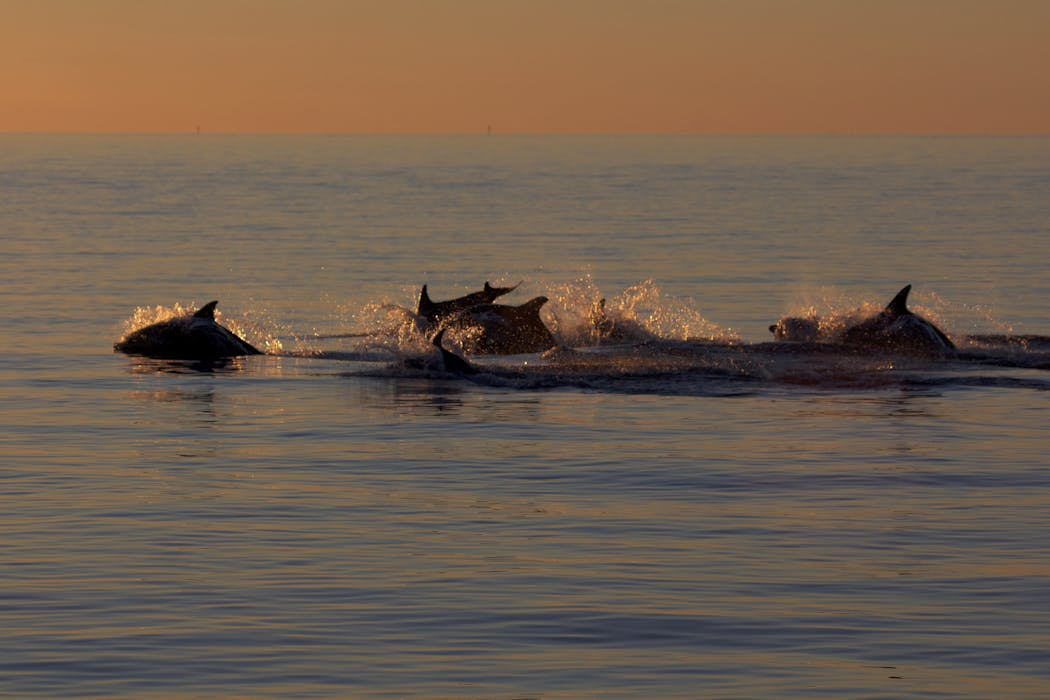
For more than 40 years, researchers in Shark Bay, Western Australia, have been watching the lives of a very unusual group of Indo-Pacific bottlenose dolphins (Tursiops aduncus). The male dolphins in this group form one of the most complex social systems known outside of humans, complete with lifelong friendships, supportive alliances, and cooperative partnerships that shape their entire lives, including how many calves they sire.
Now, our new research shows these friendships may do more than influence social and reproductive success. They may actually slow biological ageing.
Using tools borrowed from human medical research, we found that male dolphins with stronger social bonds appear biologically younger than their less social counterparts. This means their bodies show fewer signs of molecular ageing than expected for their chronological age.
This discovery isn’t just important for dolphins – it could matter for other kinds of social mammals, including humans.

What is biological age – and how is it different from just being ‘old’?
You have probably met people who look younger or older than the number on their birthday cake. Scientists now know that chronological age (how many years you have lived) is not the same as biological age, which reflects how quickly your body is ageing at the cellular level.
The tool we used to measure biological age is called an epigenetic clock.
Epigenetic clocks track predictable changes in tiny chemical tags on our body’s DNA molecules that are gained or lost over time. To date, epigenetic clocks are the most accurate way of estimating biological age and have been used to reveal how factors such as pollution, stress or friendships influence biological ageing in humans.
Our team previously developed the first epigenetic age estimator for Indo-Pacific bottlenose dolphins. In this new study, we asked whether social relationships influence biological ageing in dolphins, the way they seem to in humans.
Why dolphins? Because their friendships are extraordinary
Male dolphins in Shark Bay form long-term alliances that can last decades. These alliances are essential for reproduction, as males cooperate to find, court and defend females. Some alliances team up with other alliances to form strikingly complex multi-level social networks.
These relationships are not just tactical but vital for survival and reproduction. The strength of a male’s social bonds has already been shown to predict how many offspring he sires.

What we found: strong social bonds slow ageing
We analysed skin samples from 38 male dolphins, some sampled multiple times. The social networks of these dolphins are well known from behavioural data collection where we recorded who spends time with whom, and how often.
After controlling for chronological age, we discovered three main things.
1. Males with stronger social bonds had younger epigenetic ages.
Even when comparing dolphins of the same age, those who were more socially connected appeared biologically younger. This closely mirrors findings in humans, where people with strong social networks tend to age more slowly.
2. Simply being in large groups did not slow ageing, in fact, we found the opposite.
Interestingly, males who spent time in larger groups were biologically older, not younger. This suggests the benefits of social bonds come from deep, meaningful relationships, not just being around others. Spending time in large groups can bring competition, stress or increased disease exposure – all factors that may speed up ageing. Consequently, it is the quality of the relationships, not the quantity, that affects biological ageing.
3. Social bonds and ageing seem to be directly linked.
Our analyses suggest the protective effect of social bonds cannot be explained away by simpler factors like group size. Instead, something about strong bonds may be directly influencing molecular ageing.
Why would friendship slow ageing?
Although we cannot yet pinpoint the exact biological mechanism, studies across animals and humans provide strong clues.
Social connection reduces stress. Isolation increases cortisol and inflammation, which are both known accelerators of ageing.
Cooperation lowers energetic costs. Allies help defend, forage, and navigate complex social landscapes, reducing the physiological burden on any one individual.
Good social bonds improve overall health. In primates, meerkats, humans and other social mammals, strong relationships are consistently linked to better survival and resilience, extending lifespan.

Our findings in dolphins suggest that social bonds do not only increase lifespan and therefore chronological age but decrease the pace of ageing. As such, social bonds add quality of life to years lived.
What this means for understanding ageing
This study is one of the first to link sociality and biological ageing in a wild non-primate species, suggesting that the link between social bonds and ageing may be a deeply rooted pattern across mammals. Our findings suggest three more conclusions.
First, ageing is not just an inevitable decline. It is shaped by environment, stress, and social experience.
Second, epigenetic clocks offer powerful new tools for studying ageing in the wild.
And third, long-term field projects such as the Shark Bay Dolphin Project are essential for uncovering these complex, multi-decade patterns.
Most importantly our research highlights that social relationships matter, perhaps more than we ever realised. Just as in humans, friendship may be one of nature’s most powerful anti-ageing tools.
This article is republished from The Conversation, a nonprofit, independent news organization bringing you facts and trustworthy analysis to help you make sense of our complex world. It was written by: Livia Gerber, CSIRO; Katharina J. Peters, University of Wollongong, and Lee A Rollins, UNSW Sydney
Read more:
- ‘Checkout charity’ requests often backfire, leaving shoppers feeling guilty: new study
- Hundreds of iceberg earthquakes detected at the crumbling end of Antarctica’s Doomsday Glacier
- Politicians bank on people not caring about democracy – but research shows we do
Livia Gerber received funding from the Swiss National Science Foundation.
Katharina J. Peters and Lee A Rollins do not work for, consult, own shares in or receive funding from any company or organisation that would benefit from this article, and have disclosed no relevant affiliations beyond their academic appointment.


 HowStuffWorks Animals
 Wausau Daily Herald
 West Seattle Blog
 Cache Valley Daily
 The Daily Beast
 The Babylon Bee
 PBS NewsHour Video