

 The Atlantic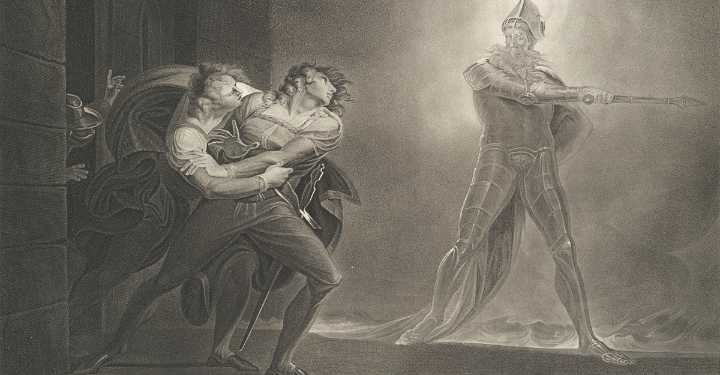
It is a truth universally acknowledged that William Shakespeare wrote Hamlet to memorialize his only son, Hamnet, who died of plague at age 11. This belief, which has reached near-mythic status, drew more adherents after the publication of Maggie O’Farrell’s prize-winning Hamnet: A Novel of the Plague, in 2020. And now that her story has been adapted into a deeply moving film—Hamnet, directed by Chloé Zhao—the idea is sure to attract many more.
O’Farrell and Zhao, who collaborated on the screenplay for Hamnet, employ a narrative that many Shakespeare biographers have promoted. Some key facts are indisputable. Hamnet and Hamlet were spelled interchangeably at that time. Parish records confirm that Hamnet, along with his twin sister, Judith, were baptized in 1585, likely named after neighbors—Hamnet and Judith Sadler. Records also indicate that “Hamnet filius William Shakspere” was buried on August 11, 1596. And Shakespeare’s Hamlet was staged a few years later, around 1600, and appeared in two printed editions by 1604.
That is about the sum of what is actually known; beyond it lies a long history of speculation. The desire to pluck out the heart of the mystery of Shakespeare’s great tragedies, to yoke the life to the works, is understandable. This impulse dates back 250 years, and it has remained constant even as the myths it generates have changed with the times. O’Farrell’s “novel of the plague” may have resonated more strongly because it happened to arrive in bookstores in March 2020, the month when COVID-19 led to lockdowns around the world.
O’Farrell was, of course, writing fiction. She acknowledged to an interviewer that “it isn’t actually known what the real Hamnet Shakespeare died of,” adding, “There was no shortage of anything that could kill you, unfortunately, in Elizabethan times. I mean, there are any number of very dangerous diseases. You could even have just cut your finger and then you could have died of sepsis a couple of days later.”
Plague is, in fact, among the less plausible suspects. Elizabethan parish records rarely indicated the cause of death. But when plague swept through a community, it showed up in the concentrated number of deaths, especially during the hot summer months. In 1564, the year that Shakespeare was born, 196 people (or roughly one in 10 inhabitants) died in Stratford-upon-Avon from the beginning of June to the end of October (84 of them in September alone). But there doesn’t seem to be any sign of pestilence in his hometown in the summer of 1596: Just 22 people were buried during the same period, and only four others the month that Hamnet died. That doesn’t sound like an outbreak of the highly transmittable bubonic plague. Yet plague makes for a more emotionally wrenching story than an infected cut, and it felt especially timely during the coronavirus pandemic, in which more than 7 million have died worldwide.
This imaginative leap leads to others in Hamnet. Both the novel and the film show Shakespeare at his son’s burial, but the speed with which plague killed its victims and the slowness of Elizabethan travel would have made it nearly impossible for him to return in time from London (or distant Kent, where his playing company was touring that August). These works also suppress an even more uncomfortable fact: Shakespeare did not invent the story of Hamlet, nor was he the first playwright to stage it. Elizabethan playgoers were familiar with Hamlet well before Hamnet’s death. In 1596, the playwright Thomas Lodge joked about the old play of that name, staged at the London theater where Shakespeare’s company performed, singling out “the ghost which cries so miserably at the Theatre, like an oyster-wife, ‘Hamlet, revenge.’”
Just as Hamlet preceded Shakespeare, just-so stories of how a life-changing experience inspired the great playwright long preceded O’Farrell and Zhao. The history of these myths can be traced back to the decision made by editors of the 1623 First Folio to arrange Shakespeare’s plays by genre—comedies, histories, and tragedies—rather than by chronology. By the late 18th century, the search was on for evidence that might cast light on when each play was written. When Edmond Malone, who played a major role in the effort to date the plays, learned that Hamnet had died in 1596, he proposed that the loss inspired Shakespeare “soon after” to write the speech in King John in which a mother laments the death of her son, Arthur: “Grief fills the room up of my absent child, / Lies in his bed, walks up and down with me, / Puts on his pretty looks, repeats his words.”
Malone considered his circumstantial case to be irrefutable. “That a man of such sensibility, and of so amiable disposition, should have lost his only son, who had attained the age of twelve years, without being greatly affected by it,” he writes, “will not be easily credited.” The connection between life and work was so compelling that it didn’t much matter that when King John was written, Hamnet was likely still alive and well. Malone also argued that Shakespeare’s wife had been unfaithful; why else would “Sonnet 93” begin: “So shall I live, supposing thou art true, / Like a deceived husband”?
One consequence of Malone’s approach was that, from this time forth, Shakespeare would be read as an autobiographical writer: He had to live it to write it. In the 1850s, the German critic Karl Elze, while editing a new edition of Hamlet, took the next and decisive step (though he was never really credited for it). Admitting surprise that no one had noted it before, Elze linked Shakespeare’s mourning for Hamnet to the creation of Hamlet several years later, which explained the play’s “deep-seated melancholy and distaste for the vanity of the world.” “Who can estimate,” he asked, the effect of “grief for his only son”? Elze’s speculation proved irresistible, and since then, it has become entrenched in Shakespeare biography—and in fiction too, most famously in James Joyce’s Ulysses: “His boyson’s death is the deathscene of young Arthur in King John. Hamlet, the black prince, is Hamnet Shakespeare.”
For a brief moment at the end of the 20th century, an alternative notion of what inspired Shakespeare’s greatness took hold, via the blockbuster 1998 film Shakespeare in Love, written by Marc Norman and Tom Stoppard. That film’s explanation was entirely fictional: Shakespeare’s creativity was unleashed by a torrid extramarital affair with a rich merchant’s daughter, Viola de Lesseps, played by Gwyneth Paltrow. In this characteristically pre-#MeToo moment, in a film produced and closely overseen by Harvey Weinstein, Shakespeare’s wife and children were an afterthought.
Times have changed, and so have the ways we prefer to imagine the man and the artist: When it comes to literary inspiration, philandering has proved no match for sorrow. In Zhao’s film, Shakespeare is a devoted father and a loving husband (whose wife, Agnes, lets us know that he loves her for who she is). Yes, he commutes a long way to work—a three-day journey—and is home irregularly, but he is eager to move his family to London (the real obstacle to this plan is Agnes, who prefers country life). When he does get home, he strolls with his family in the countryside, provides scripts for his kids to perform (they dress up as witches and speak lines from Macbeth), and even teaches young Hamnet stage-fighting. He is, in short, a very modern dad, torn between the demands of work and family, as perfectly captured by Paul Mescal. Much like a modern husband, Mescal’s Shakespeare is at a loss when he finds his marriage unraveling; his free-spirited wife, convincingly played by Jessie Buckley, blames him for not being there when their child dies. The only way to repair the rift and deal with the incapacitating grief is through art.
So Shakespeare writes and then performs in Hamlet, and in so doing brings that son back to life. In an inspired piece of casting, the actors who play Hamlet and Hamnet are brothers who look remarkably alike (Noah and the much younger Jacobi Jupe, respectively). Without giving away too much, in an unforgettable scene, Agnes finds her way to the theater, where, watching Hamlet unfold, she comes to see that her husband has dealt with the grief in the only way he can. Through his art, she also finds the closure and catharsis she has so desperately sought. And in this rendering of artistic genius, a culture awash in grief memoirs sees itself reflected.

 Local News in Florida
 Local News in New York
 Local News in D.C.
 America News
 WNNY-TV
 Daily Voice
 Raw Story
 Law & Crime
 OK Magazine