

 Daily Voice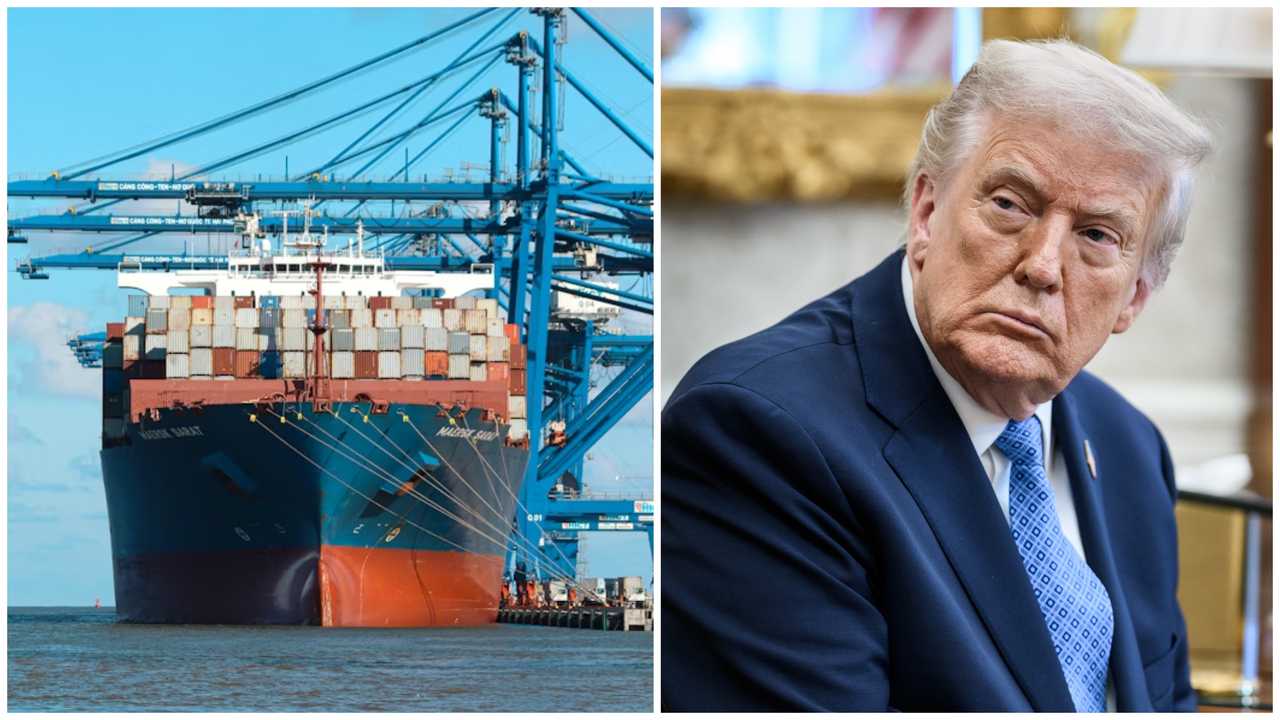
By Chris Spiker From Daily Voice
Fewer imported cargo shipments are expected to flow through major US ports in 2026 as President Donald Trump's tariffs and rising consumer prices grip the economy.
The nation's import cargo volume is expected to keep declining in 2026, according to a report from the National Retail Federation and Hackett Associates released on Monday, Dec. 8. The Global Port Tracker estimates that ports handled 1.91 million twenty-foot equivalent units (TEUs) in November, down 11.6% from the same month in 2024.
While importers rushed to bring in goods before Trump's tariffs went into effect in April, momentum has fallen.
"Stores are stocked up and ready for a record holiday season, but there is still a great deal of uncertainty about what will happen in 2026 with trade policy," said Jonathan Gold, NRF's vice president for supply chain and customs policy. "Regardless of what develops, retailers will adjust their supply chains accordingly and strive to ensure that consumers have affordable options when they shop."
Ben Hackett, founder of international trade consulting firm Hackett Associates, said the impact will continue as Trump's duties remain.
"We are seeing the results of the tariffs in weakening cargo demand going forward from the fourth quarter of this year and likely into the first half of next year," Hackett said. "Container shipping rates are already declining on both coasts due to less need for cargo space for goods from both Asia and Europe."
The warning comes as many families are facing what economists describe as a "K-shaped economy" during the holidays. Wealthier customers are spending more, but lower-income households are slashing their budgets.
Trump's tariffs have also worried shoppers throughout 2025.
Consumer confidence plunged in November to its lowest level since Trump's "liberation day" tariff announcement in April, according to the latest data from The Conference Board. Many Americans cited Trump's tariffs, inflation, higher costs, and the record-long federal government shutdown among their biggest concerns.
Trump's tariffs face an unclear future as the Supreme Court considers whether they're constitutional. Costco is among many companies suing the Trump administration, asking for a full refund on the duties they've paid.
The Supreme Court case centers on Trump using the International Emergency Economic Powers Act to impose his widespread tariffs, which he has constantly changed. The 1977 law bypasses Congress, and Trump has invoked the law for his broad "reciprocal" and "fentanyl" duties.
During the first hearing in the case on Wednesday, Nov. 5, many Supreme Court justices appeared skeptical about the legality of Trump's tariffs. Chief Justice John Roberts, a conservative, noted that the IEEPA "has never before been used for that purpose," and that the idea of the law allowing the President to set tariffs "seemed to be misfit."
Even if the justices rule against Trump's tariffs, his administration is expected to pursue other ways of implementing his duties.

 CBS News
 Raw Story