

 The Atlantic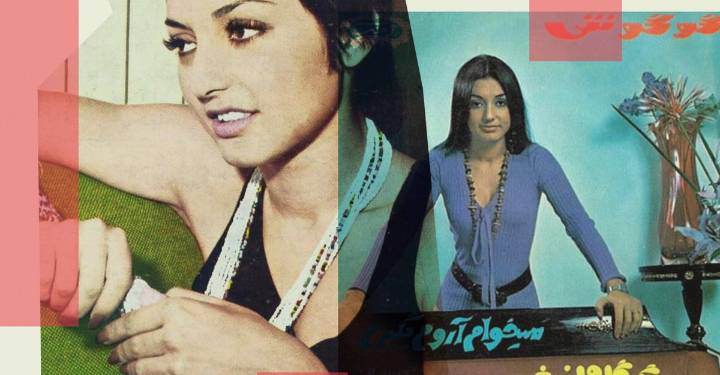
Publicity material for Googoosh: A Sinful Voice, a new memoir by the Iranian singer in exile, calls her a predecessor to Beyoncé and Madonna—a comparison that might seem over-the-top to American readers but in fact sells her short. Googoosh, born Faegheh Atashin, is indeed the greatest pop star in Iranian history, but for her compatriots, she has long represented something more: In a country highly polarized over politics, religion, and education, she straddles all divides. Shiite clerics, Baluch fishermen, and Tehrani teenagers have all spent hours listening to Googoosh. It’s hard to find an Iranian who wouldn’t know the lyrics to one of her songs.
What makes this truly remarkable is that she was banned for 21 years from singing, beginning with the Islamic Revolution in 1979 and ending when she was allowed to leave the country in 2000. I grew up in the 1990s in Tehran, the same city she was living in, and in spite of the ban, her music never felt far away. She was a favorite of mine and also of my parents, grandparents, and younger cousins. Each of us had our own touchstone songs, but every generation had time for Googoosh.
One source of her persistent fame is pervasive nostalgia for the relative prosperity that preceded the revolution. This longing for a supposed golden age has generated many memes and online spoofs, but like most things Iranian, it’s often misunderstood by outsiders. Many of her compatriots don’t miss the repressive rule of the shah; they yearn specifically for the benefits of the 1970s: double-digit economic growth, a dramatic rise in living standards and international esteem, unprecedented social liberalism, and a sense of cultural effervescence, of which Googoosh is a prime example.
On one level, she was associated with the leadership that would be displaced by the fundamentalists. A darling of the state broadcaster and a regular at the imperial court, Googoosh sang for the shah’s family and was dispatched to Oman to perform for troops fighting a left-wing insurgency there (a picture of that performance is in the book). But Googoosh was also taken up by urban intellectuals who sympathized with the shah’s opponents. Behrouz Vossoughi, a new-wave actor loved by anti-shah rebels, was her co-star in many films and eventually her second husband. Some of her songwriters were committed lefties. The notorious secret police, SAVAK, asked her to take “certain abstract lyrics” out of her songs, fearing that they “could have been interpreted with anti-regime undertones,” she recounts. These lyrics were erased from recordings, but she still sang them defiantly in live performances, even for the royal family.
In the book, Googoosh makes clear her lack of interest in politics: “All I cared about was poetry, the emotions and the sensations that allowed me to release whatever I had pent up.” This line might ring hollow in a country as politically charged as Iran, but it strikes me as not only sincere but also key to her fame. Her broad popularity is owed to her genuine disinterest in partisanship, coupled with an authentic love of her homeland. In her memoir, the story of her life converges with the story of her country—a tale at once triumphant and tragic. Co-written with Tara Dehlavi, the book is charmingly modest and accessible, even for those who know little about her. It is not trying to be a primer on Iranian music history; instead, Googoosh recounts her tumultuous life in an unpretentious confessional style.
Both of Googoosh’s parents grew up in Iran’s large Azeri Turkic community, and Azeri was her first language. Her father, Saber Atashin, spoke Persian with a thick Turkic accent that she believes might have limited his prospects as an actor. Her maternal grandfather had served as a colonel in the Azerbaijan People’s Republic, a short-lived autonomous statelet backed by the Soviets. Its collapse, in 1946, led to his execution and his family’s banishment to Tehran, where Googoosh was born, in 1950.
Her rise to stardom was painful at every stage. Googoosh’s father had her perform risky acrobatic tricks onstage from the age of 3. After her parents separated, she lived with her father and his new wife, Mouness—a stepmother she portrays as a monster. It didn’t help that her mother initially vanished without a goodbye; the girl was told she was dead. (She returned when her daughter was 5, Googoosh writes, “without any explanation.”)
She describes being mocked at school because she was “in the entertainment business, which was considered lower class,” and because she was the only child appearing in Tehran’s legendary cabarets. As she writes, “Even New Yorkers would be shocked by a child that young performing late at night in a sophisticated nightclub.” But like many kid performers, she found solace in her world on the stage. As she describes it, she became Iran’s best-known pop star “not because I wanted to but because I had to”; her voice was “the only thing I had some control over.” It was, in short, “my therapy.” She was not yet 10 when she played the lead role in the 1960 film Fear and Hope, and she would go on to star in 29 movies.
Scandal and torment trailed her adult career from the start. At 17, she married Mahmoud Ghorbani, a struggling cabaret director; had a child; and was ceaselessly scrutinized—baseless rumors alleged that she was a bad mother or a drug addict. It would be hard for anyone to endure such public notoriety, never mind a young woman with little family to fall back on. She writes that Ghorbani’s infidelities doomed their marriage. (Ghorbani didn’t respond to requests for comment, but in the past few days, he has released videos in support of Googoosh.) Then she married Vossoughi, seemingly the love of her life—but according to Googoosh, he was jealous and controlling, which doomed their marriage. Her third husband, Homayoun Mesdaghi, suffered from a freebase-cocaine addiction, she writes. Unbeknown to many, she was often penniless, betrayed by husbands and managers. As she tells it, her marital life became an all-too-familiar story; exploitative men surrounded her and took advantage.
Although she recounts her suffering with confidence and dignity, the contrast between her public image and her private life is shocking. Even as she sang of heartbreak, she often sounded joyful—the Dua Lipa of her day. In 1972, she shaved her head and then kept her hair short, launching a fashion revolution. The style instantly became known as Googooshi, and the name has stuck to this day. Her look and her lyrics inspired envy. “I want to sing right here, only for my own heart,” she crooned, testifying to a life of liberation. But in the memoir, she gives us the backstory: The fabled haircut was “a direct result of my feelings of hopelessness towards the end of my first marriage,” she writes, “my way of punching a wall.”
For all her pain, Googoosh doesn’t sound bitter on the page. She recounts with excitement the emergence of Tehran in the 1960s and ’70s as a cosmopolitan hub. Iranians flocked to see films such as Federico Fellini’s La Dolce Vita and Billy Wilder’s Some Like It Hot. Street life flourished and intellectuals gathered at new universities and cafés. Googoosh got to perform in Italy, Tunisia, and France with the likes of Ray Charles, Tina Turner, and Charles Aznavour. She regaled King Juan Carlos of Spain when he visited Iran in 1978.
All of that came to an abrupt end in 1979 as the Islamic Republic, in its quest to build a puritan new man, severely restricted the arts. Solo singing by any woman, even of a religious song, was banned (and remains so today). Googoosh represented what the mullahs hated most: a free woman doing what she liked, wearing what she liked, even appearing nude in a film. Ludicrous stories spread, alleging that she had worked with SAVAK and even personally tortured a cleric.
Googoosh, who was in New York when the shah’s regime was overthrown, decided to return to Iran a few months later; she recalls telling Mesdaghi that she would “rather die in my homeland at the hands of zealot revolutionaries than dying little by little, day after day, in exile.” In her homeland, she faced not only unemployment but also government harassment. In 1980, she was arrested and held for a month in a dingy basement, together with her fellow pop singer Marjan and a number of sex workers. The regime wanted to make a point about how it saw female singers. She made friends with them and took inspiration from their strength in facing the goons of the new regime.
 WTOP Sports
 Cover Media
 AlterNet
 Raw Story
 The Daily Beast
 The Babylon Bee