

 Daily Voice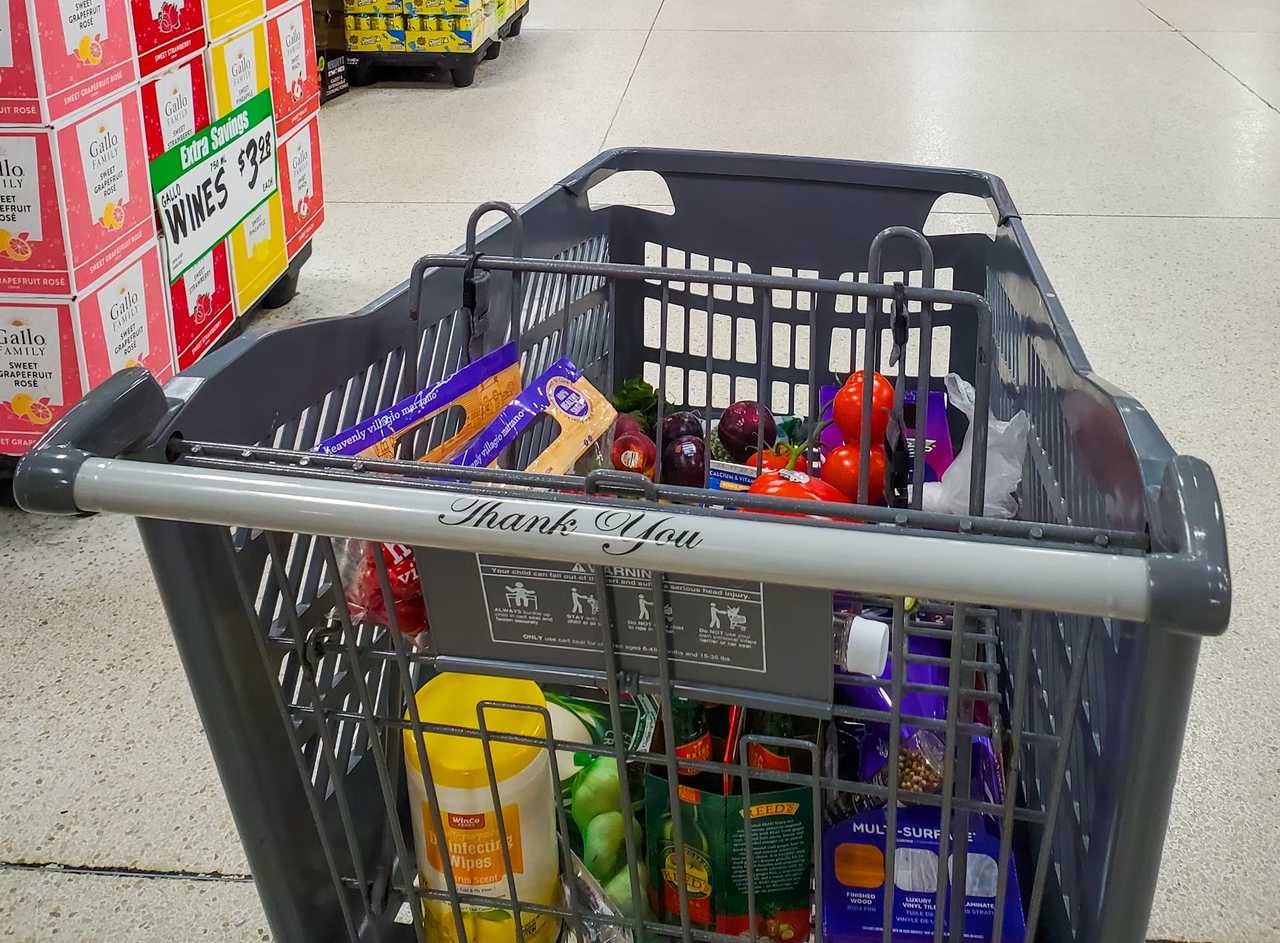
By Chris Spiker From Daily Voice
Instacart users across the country may be paying more for the same groceries because of secret price tests powered by artificial intelligence, according to a new study.
Consumer Reports released its findings from a monthslong investigation into dynamic pricing algorithms on Tuesday, Dec. 9. The probe was done in partnership with advocacy nonprofits More Perfect Union and Groundwork Collaborative.
The study found that AI-enabled systems raised the prices on some identical products by up to 23% between two shoppers. CR discovered that AI pricing experiments were used by Instacart at several major supermarket chains, including Costco, Kroger, Safeway, Sprouts Farmers Market, and Target.
The variations ranged from just 7 cents per item to as much as $2.56.
"About three-quarters of the products we checked were offered at different prices to different customers," CR's investigative reporter Derek Kravitz wrote. "Some products were offered at as many as five different prices."
Even the smallest price increases can quickly add up over an entire grocery order.
In a September test at a Safeway supermarket in Seattle, a basket of 20 items showed five different prices, showing an 8.4% swing between $114.34 and $123.93. That can result in about $1,200 a year in higher grocery costs, based on Instacart's estimates of what a typical family buys.
Instacart confirmed CR's findings but didn't name which supermarkets were running the pricing tests.
"Just as retailers have long tested prices in their physical stores to better understand consumer preferences, a subset of only 10 retail partners — ones that already apply markups — do the same online via Instacart," the company said in a statement. "These limited, short-term, and randomized tests help retail partners learn what matters most to consumers and how to keep essential items affordable."
A smartphone displaying the Instacart logo.
Experts say that Instacart is testing how much retailers can raise prices before customers decide not to buy an item. Costco accidentally forwarded an internal Instacart email to CR that describes the pricing tactic called "smart rounding."
Instacart previously told shareholders that smart rounding "helps retailers improve price perception and drive incremental sales."
"By thoughtfully pricing certain items with high or low price sensitivity, retailers have seen customers' overall price perception improve and their engagement increase as a result," the 2023 letter read. "For some of our major grocery partners, this has led to millions of dollars in annual incremental sales."
In several tests, Instacart raised or lowered prices in 10-cent increments across large groups of shoppers. One test at Target in Ohio showed that shopping carts varied by $6.04 for the same items.
Instacart claimed that retailers set and control their own prices on the delivery app, but the experiments still happened at Target. The big-box giant owns rival service Shipt and has no business relationship with Instacart.
Most shoppers don't want dynamic grocery prices. In a nationally representative survey, 72% of Instacart customers said they opposed individualized pricing for any reason.
The volunteers in the investigation were upset when they saw CR's findings.
"We're already paying 10% to 20% more for the convenience of delivery," said Alex Tolley, a retired teacher from California who uses Instacart because he's disabled. "We just assumed that the listed price was the price for everyone. It's eye-opening... All prices should be the same for everybody, whether you're rich or poor."
"I just didn't think that I, or a neighbor, would pay less for the same grocery product based on an algorithm," said Lynn Folk, an Ohio mother. "I'm not as trusting of a company that practices that."
An aerial view of a produce section at a supermarket.
Economists and legal experts warn that algorithmic systems could lead to "surveillance pricing." That practice is when companies alter what each shopper pays based on their shopping history.
A recent law in New York state requires retailers to display a warning if a price was set by an algorithm.
"All of us, without our knowledge, are being conscripted in this enormous and growing social experiment being conducted by companies across a wide range of industries," said Len Sherman, an adjunct business professor at Columbia University. "Every step that we take as a consumer is being bundled together in these massive databases and being analyzed so that the next time we confront a purchase decision, everything we've ever done is going to factor into the price we see."
Former Federal Trade Commission chair Lina Khan also criticized the dynamic pricing tests.
"This isn't new," she said. "It's the age-old dream of retailers to charge every person their absolute maximum price, now supercharged by data. We are moving from a transparent market with public prices to an opaque world where we are alone against secret algorithms. We must stop asking if this is okay and start asking if we should ban these practices entirely before it's too late."

The yogurt section in a supermarket.
Instacart denies using personal data to set grocery prices, but admits that food brands may use behavioral data to offer discounts or promotions through its Eversight software. While patent applications for Instacart and Eversight reference factors like purchasing history and a user's demographic information, the company said that the applications can use "all-encompassing" phrases to "protect innovation and preserve optionality."
CR's investigation was released as Instacart partners with OpenAI to allow ChatGPT users to shop for groceries within a chatbot conversation.
"Instacart and ChatGPT are redefining what’s possible in AI-powered shopping," Instacart chief technology officer Anirban Kundu said in a news release. "Built on Agentic Commerce Protocol, this experience brings intelligent, real-time support to one of the most essential parts of daily life: getting groceries to feed your family."
The findings also come as inflation and rising costs have been especially hurting families since the start of the COVID-19 pandemic. Grocery prices have climbed more than 30% since 2020, and nearly half of US households say food is harder to afford than in 2024, according to a Harris/Axios poll.
Consumer Reports is urging the Federal Trade Commission and state attorneys general to investigate Instacart’s pricing practices.

 Los Angeles Times Business
 Fortune
 CBS News
 Eyewitness News 3
 AlterNet
 The Daily Beast
 Roll Call
 CBS19 News Crime
 ABC News