

 Reuters US Business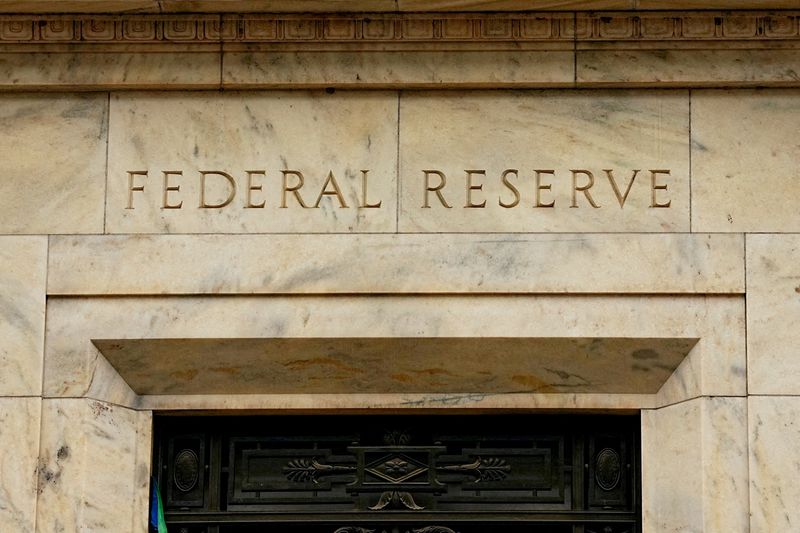
NEW YORK, Dec 10 (Reuters) - The Federal Reserve cut interest rates on Wednesday in another divided vote, but signaled it will likely pause further reductions in borrowing costs as officials look for clearer signals about the direction of the job market and inflation that "remains somewhat elevated."
New projections issued after the U.S. central bank's two-day meeting showed the median policymaker sees just one quarter-percentage-point cut in 2026, the same outlook as in September, with inflation expected to slow to around 2.4% by the end of next year even as economic growth accelerates to an above-trend 2.3% and the unemployment rate remains at a moderate 4.4%.
Fed Chair Jerome Powell, in a press briefing after the rate decision, said the U.S. central bank's next move is unlikely to be a rate hike, given that is not the base case reflected in new projections from policymakers.
MARKET REACTION:
STOCKS: S&P 500 rose after the Fed rate cut, closed up 0.7% .
BONDS: U.S. Treasury yieldsfell, with the 10-year yield last down at 4.15%.
FOREX: The dollar index dropped 0.6%.
COMMENTS:
JAKE DOLLARHIDE, CHIEF EXECUTIVE OFFICER, LONGBOW ASSET MANAGEMENT, TULSA, OKLAHOMA:
"Today's rate cut was music to both the bond market and the stock market's ears."
"The guidance for possibly one cut in 2026 is better than many dire predictions of no cuts in 2026, so there's a lot of good news to parse through here for investors.”
"There were tremendous fears the bond vigilantes were going to hijack this bull market rally."
UTO SHINOHARA, SENIOR INVESTMENT STRATEGIST, MESIROW CURRENCY MANAGEMENT, CHICAGO:
"Although the market entered the day fully priced for a rate cut, the dollar’s whipsaw reaction following the expected decision underscores the data gaps and shifting narratives driving markets today. While Powell indicated that the Fed is well-positioned to wait, growing labor concerns and a tariff-induced view on inflation brought the dollar under pressure."
"The 9-3 vote showed more division than the previous 10-2 split, with two hawkish dissents offering an early look at a potentially less consensus-driven Fed. The dot plot's median for next year held at 3.375%, but the distribution was unusually wide, with seven projections above and eight below, with one as low as 2.125%. Market pricing largely looked through the Fed's projections, maintaining expectations for two cuts in 2026, highlighting the disconnect between market pricing and the dot plot."
"With policy decisions a 'close call,' the broader data fog hasn't completely lifted, as more current readings continue to lag following the shutdown. Upcoming NFP and inflation reporting will offer more clarity than what was known heading into today’s meeting."
MATTHIAS SCHEIBER, HEAD OF THE MULTI-ASSET TEAM, ALLSPRING GLOBAL INVESTMENTS, LONDON:
"The committee, along with market participants, continues to face challenges from the U.S. government shutdown, with various agencies trying to catch up on the data publishing schedule. As a result, it had to make this decision using stale data and balancing risks. The FOMC also commented on balance sheet management, announcing Treasury bill purchases to begin again in 2026, which are expected to maintain ample reserves."
"Dispersion among the FOMC on where the terminal rate lies is revealing. As 2026 begins, we believe the makeup of the board's voting members will come into greater focus and that, while the market is relatively optimistic, pricing in two more rate cuts by the end of 2026, we expect cuts will come after June, with the FOMC on pause starting in January."
"The paradox remains. With a deteriorating labor market accompanied by better growth, the FOMC must balance its dual mandate and how it communicates its views. Over the long term, we believe the Fed will tolerate inflation above 2% - if growth remains resilient - acknowledging the risks of overly precise inflation targeting, but the labor market is a greater political challenge. Labor markets have experienced a structural shift this year, driven by a combination of demographics and migration. We believe fiscal stimulus would be a more impactful tool to address these challenges."
NATE THOOFT, CHIEF INVESTMENT OFFICER FOR EQUITY AND MULTI-ASSET SOLUTIONS, MANULIFE INVESTMENT MANAGEMENT, BOSTON:
"There's going to be enough data points and enough narratives for Fed members to use to be able to articulate for lower rates if they so desire while not deviating from the mandate of what the Fed is supposed to be focused on. And so I don't really buy too much into the idea that the Fed is going to come across as overly swayed or influenced by the Trump administration just because the Trump administration is saying 'cut rates more.' But there will likely be more members of the Fed that are comprised or that have a mindset that is similar to the arguments that members of the Trump administration would make. Keep in mind there's only one Fed member right now advocating for greater cuts, and meanwhile there's several that are arguing for no and there's probably a few that were a bit more on edge."
“The market, so far seems to be taking it as marginally more dovish and I think that's because there's fewer dissenters than some people expected, including myself. And I do think the likelihood of another cut in January is fairly low unless we get some really bad data in that period of time. But we are still expecting another two or three quarter point cuts next year, of which at least one of those cuts will happen before Powell's exit."
CHRIS GRISANTI, CHIEF MARKET STRATEGIST, MAI CAPITAL MANAGEMENT, NEW YORK:
"My initial reaction was no surprises, rates were cut as expected, but when you look further down the road there is a lot of uncertainty. And when we move past today’s rate cut and into 2026, the tailwind from rate cuts is a lot less reliable. That could be a problem.
"Play this out – with the revised Fed language about ‘the extent and timing’ of future rate cuts being uncertain, the Fed is signaling that the market should not take such cuts for granted. That means, it seems to me, that the only way we get more rate cuts is if the economy slows meaningfully, and if that’s the case, do you really want to be owning stocks?"
"I don’t think it’s any accident that healthcare is the second-best performing sector today (Industrials is first). Healthcare sports low valuations and cash flows that can continue in a slowing economy. Now that the Fed has changed out of its superman costume, and won’t support the market going forward, investors are looking for sectors that are reliable and cheap. Healthcare fits both those criteria."
"I don’t know if there will be rate cuts in 2026, but I will say, as an equity investor, I hope there aren’t rate cuts in ’26 because that will mean the economy is weakening. I’d rather have a solid economy and no more cuts."
"When is a rate cut not a happy event? When it leads to a neutral Fed instead of a dovish Fed."
MICHAEL ROSEN, CHIEF INVESTMENT OFFICER, ANGELES INVESTMENTS, SANTA MONICA, CALIFORNIA:
"The rate cut was expected, so no surprise there. The 9-3 vote for a 25 basis point cut was also expected, with Schmid and Goolsbee favoring no cut and Miran wanting 50 basis points. Again, no surprise."
"The statement emphasized weakness in the labor market as the principal rationale for the 25 basis point cut, and this detail is what the market has picked up on, suggesting the Fed could continue easing policy, even though the expectations for easing in 2026 haven’t changed with one 25 basis point priced in."
"The initial reaction was modest rise in stocks and bond prices, modest drops in the U.S. dollar and gold, but these are likely to be reevaluated after Powell's press conference."
EUGENE EPSTEIN, HEAD OF TRADING AND STRUCTURED PRODUCTS, MONECORP, NEW JERSEY:
"The decision is interesting. It is interesting to see not only a three-person dissent but a dissent among the dissenters because two of them voted for no cut and Stephen Miran voted for a 50-basis point cut. I don't really think that in itself is moving the market substantially because everybody is looking at this as a 'hawkish cut.' Everybody expected there to be some dissent."
JP POWERS, CHIEF INVESTMENT OFFICER, RWA WEALTH PARTNERS, BOSTON:
"I had two questions coming in - who was going to dissent this time after last time? We had two folks, although Stephen Miran, I mean, he's kind of the Trump's guy on the inside. so you have to take that a little bit with a grain of salt, but I thought we would see some, at least him and probably Schmid again. So it was interesting to get Goolsbee in the mix of having three dissents for the first time since what, maybe 2019, I think. And having them on both sides. But again, Miran, I would probably discount a little bit just because he's going to be gone more than likely after his January term is up. But that was the big one to me."
"And then the dot plot, it's such a poor forecasting tool and I've heard (Fed Chair) Powell say the same thing, but it does give you a lot of insight in how they're thinking. And so that's what I was just looking at when you called. So it looks like about seven of them are saying we should hold rates steady for all of 2026 and then eight of them are saying let's cut at least twice next year, so there's no consensus. And that's really interesting because Powell has been all about getting consensus for his entire time in there and at least kind of rounding up the troops before the meeting so that when they get there, they're sort of rubber-stamping a decision that they've made behind the scenes. And that has just not been the case really since the summer here. And I think we're probably headed for more of the same for the first half of next year until Powell is officially on his way out."
"I'm interested to see, because the headline is obviously a hawkish cut, but let's see what (Powell) says maybe about that dot plot. If he discounts it and says we're just kind of getting our heads around some of the data, the government's reopening and things could change in a hurry if we see things moving, maybe he'll downplay it a little bit and the market might like that."
ART HOGAN, CHIEF MARKET STRATEGIST, B RILEY WEALTH, NEW YORK:
"It's definitely a hawkish cut, not so much in the fact that we had two dissenters that wanted to stand pat, but if you look at the dot plot, there were six of them that penciled in no rate cut at this meeting. So the dot plot is even more hawkish than the two dissenters."
"I think they just took the bar up a notch for the next meeting for a rate cut."
PETER CARDILLO, CHIEF MARKET ECONOMIST, SPARTAN CAPITAL SECURITIES, NEW YORK:
"The quarter percent rate cut was in line with expectations. Three dissents were a little bit better than the previous voting."
"The 25 basis-point rate cut was widely expected and the economic projections remain optimistic. I would view this as a semi-dovish, cautious statement."
"Markets are gaining now. All three indices are on the plus side. The markets are applauding this decision."
"(The Fed) is being cautious. Of course, you know, they're still waiting for more economic news to come out and waiting to see how the labor market is shaping up and there's still elevated inflation."
BRIAN JACOBSEN, CHIEF ECONOMIST, ANNEX WEALTH MANAGEMENT, MENOMONEE FALLS, WISCONSIN:
"The divisions on the FOMC aren't as deep as feared. Cutting 25 bps and doing some end-of-year balance sheet management isn't surprising. What's surprising is that the statement removed 'remained low' in reference to the unemployment rate. Low is the new normal given the demographic and immigration trends, so they have to be more concerned about the changes in the unemployment rate than the level of the unemployment rate now until they figure out what is or isn’t low. The median inflation forecast for 2026 fell to 2.6%. The inflation-effects of tariffs might not be as much as they originally feared."
"Although the dot plot indicates there could possibly be one more cut in 2026, it's not like they'll fade into the background quietly."
MICHELE RANERI, VICE PRESIDENT AND HEAD OF U.S. RESEARCH AND CONSULTING, TRANSUNION, CHICAGO: (via email)
"The Federal Reserve's 25-basis point rate cut signals a measured stance that could encourage renewed credit engagement among some consumers, particularly when considering the cumulative impact of all recent small rate reductions. Consumers who have delayed borrowing may find this environment more favorable. Lower borrowing costs can begin to ease household budgets, providing relief from inflationary pressures and reducing financial stress."
"While the decrease is incremental, improved affordability may help stabilize delinquency trends. Lenders should prepare for potential growth while maintaining disciplined underwriting and account management strategies to mitigate risk."
(Compiled by by the Global Finance & Markets Breaking News team)

 WGN Radio 720 Business
 WMBD-Radio
 NBC Southern California
 WIVB Politics
 Raw Story
 Reuters US Top
 AlterNet
 The Northern Virginia Daily
 Associated Press Top News
 ESPN Soccer