

 NBC News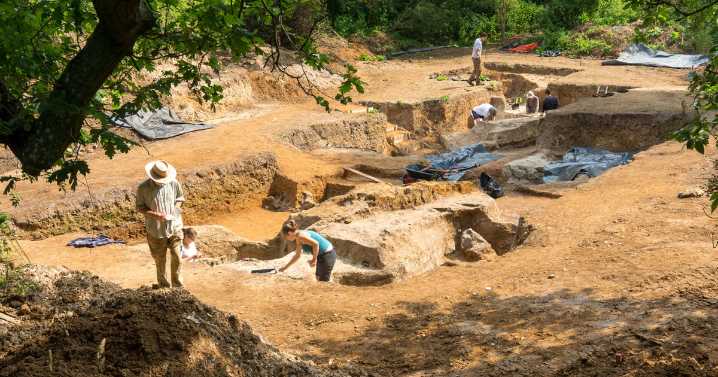
Something about a warm, flickering campfire draws in modern humans.
Where did that uniquely human impulse come from? How did our ancestors learn to make fire? How long have they been making it?
Researchers say they’ve uncovered new evidence in present-day England that could reshape our understanding of those questions.
In a study published Wednesday in the journal Nature , the researchers describe how they found 400,000-year-old evidence of a hearth, flint tools and fragments of iron pyrite buried at what used to be a woodland and pond site where Neanderthals lived or camped. The researchers think they have sufficient evidence that human ancestors were striking the pyrite with flint to light up sparks and start blazes.
The discovery, at what researchers call the Barnham site, is the

 Associated Press US and World News Video
 People Human Interest
 WBAY TV-2
 Post Register
 Raw Story
 Totalprosports Basketball
 5 On Your Side Sports