

 Reuters US Politics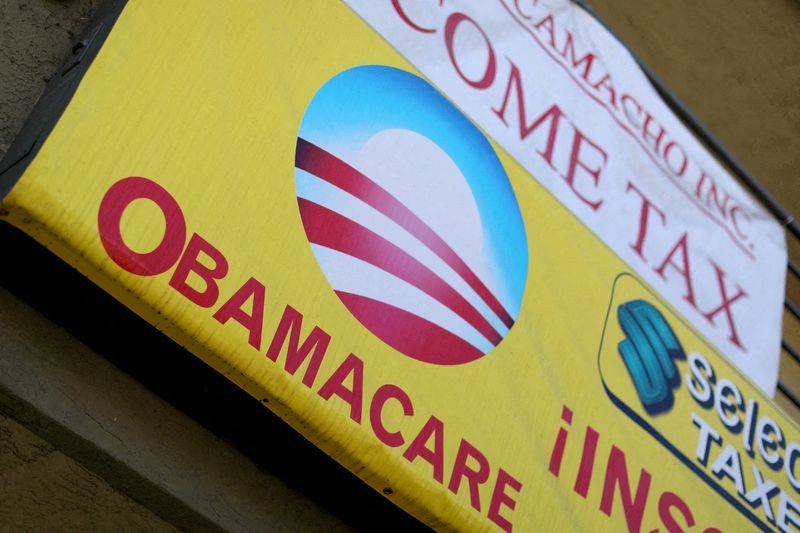
By Nolan D. McCaskill and Richard Cowan
WASHINGTON, Dec 11 (Reuters) - The U.S. Senate on Thursday rejected competing proposals by Republicans and Democrats to address a looming healthcare crisis, leaving some 24 million Americans vulnerable to significantly higher insurance premiums beginning on January 1 when a federal subsidy expires.
Barring any late breakthroughs, Congress will begin an end-of-year holiday recess sometime next week and not return until January 5, after new premiums are locked in for those who had relied on the Affordable Care Act enhanced subsidy.
In back-to-back votes largely along party lines, Democrats and Republicans blocked each other's bill.
The House of Representatives might attempt to pass some sort of legislation next week, which has not yet been unveiled. Even if it were to pass, Senate Democrats, and possibly some Republicans, would oppose it and they could use their votes to kill that effort.
"After today's vote, the American healthcare crisis is 100% on their shoulders," Senate Democratic leader Chuck Schumer said of Republicans.
Senate Republican leader John Thune dismissed the Democratic bill as "a political messaging exercise" and said "Republicans are ready to get to work. I'm not sure yet that Democrats are interested."
The bitter battle in Congress has left some Americans uncertain over renewing their health insurance under the federal healthcare program.
The percentage of returning customers in the Obamacare exchanges is slightly down from a year ago, with the government reporting 19.9% of people enrolled this year opting to renew their plans so far, down from 20.5% this time last year.
The Republican bill by U.S. Senators Bill Cassidy of Louisiana and Mike Crapo of Idaho would have sent up to $1,500 to individuals earning less than 700% of the federal poverty level — about $110,000 for an individual or $225,000 for a family of four in 2025. Those funds could not be used for abortion or gender transition procedures and would require verification of beneficiaries' immigration or citizenship status — provisions Democrats reject.
The Democratic proposal on the subsidies under the Affordable Care Act, popularly known as Obamacare, would have extended COVID-era subsidies for three years to keep insurance premiums from soaring for many. Without action by Congress, those premiums could more than double in cost on average, according to KFF, a health policy organization.
Sixty votes were needed to pass either measure in a Senate that Republicans control 53-47. Four Republicans voted for the Democratic proposal. No Democrats backed the Republicans' bill.
President Donald Trump has largely sat out the brawl over healthcare, although he ultimately embraced the Cassidy-Crapo approach.
The $1,500 payments in the Republican bill were meant to cover some of the out-of-pocket costs that people in the "Bronze" or "Catastrophic" categories - the lower-cost Obamacare plans - need to pay before their insurance kicks in.
However, it is far below the plans’ deductibles, meaning that even after that payment, a patient would be on the hook for up to $7,500 in out-of-pocket medical expenses before their insurance would start to pay for part of their care.
Those costs can rack up quickly for people with lower-cost plans, with a visit to a U.S. emergency room costing between $1,000 and $3,000, while an ambulance ride can cost anywhere from $500 to over $3,500.
MIDTERM ELECTIONS LOOM
With 2026 congressional elections coming into focus, many Republicans are nervous about the prospect of stiff premium increases hitting every state, including many that backed Trump's 2024 re-election. Polling indicates voters could mostly punish Republicans, who control Congress and the White House.
Republican U.S. Senator Josh Hawley of Missouri, a state that Trump carried by 18 points in his 2024 re-election, said his constituents have been telling him, "We can't afford our premiums now, let alone if they would go up by 50 or 100%."
Insurance companies warned customers of the rising premiums in the new year, and Democrats argued there was not enough time to do anything but a clean extension of the tax credits they sought.
A new Reuters/Ipsos poll found Americans back a healthcare subsidy continuation. Some 51% of respondents — including three-quarters of Democrats and a third of Republicans — said they support extending the subsidies. Only 21% said they were opposed.
Moderate Republican Representative Brian Fitzpatrick of Pennsylvania is spearheading a bipartisan bill to extend the subsidy through 2027. He is hoping to garner enough support to circumvent leadership and force votes on the measure by the full House.
(Reporting by Nolan D. McCaskill and Richard Cowan; Additional reporting by David Morgan, Jason Lange, Ahmed Aboulenein and Amina Niasse; Editing by Scott Malone, Bill Berkrot and Aurora Ellis)

 104FM WIKY
 Political Wire
 The Hill Healthcare
 Reuters US Domestic
 Arizona's Family
 The Herald-Times Online
 Post Register
 Lootpress
 Associated Press Elections
 Raw Story
 Las Vegas Sun
 Associated Press US and World News Video