

 USA TODAY National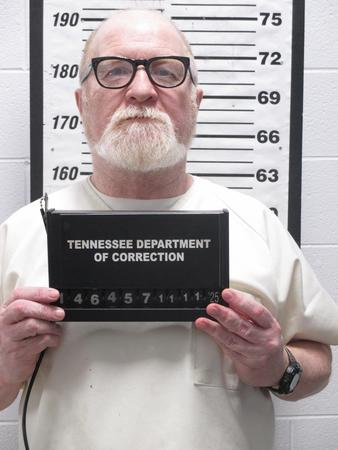
Tennessee has executed a serial rapist, dubbed the "red-headed stranger," for the brutal murder of a promising young college student attacked in her bed.
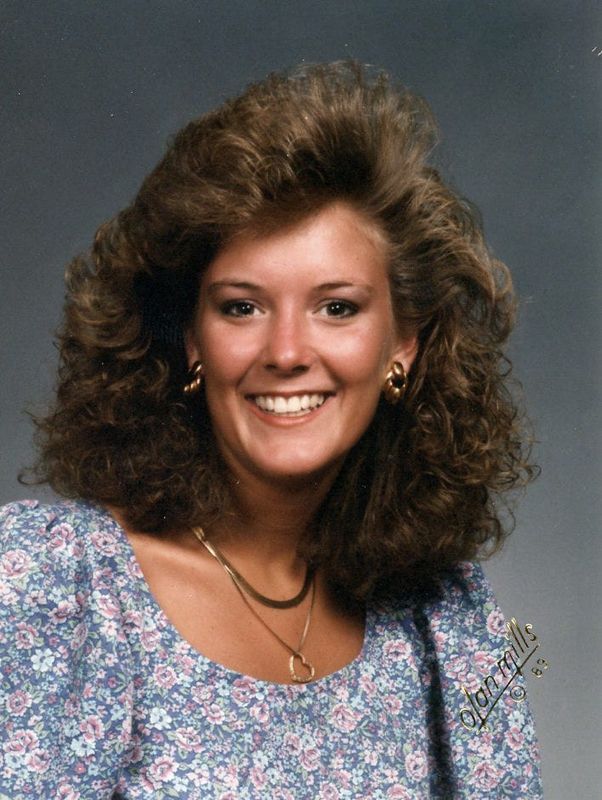
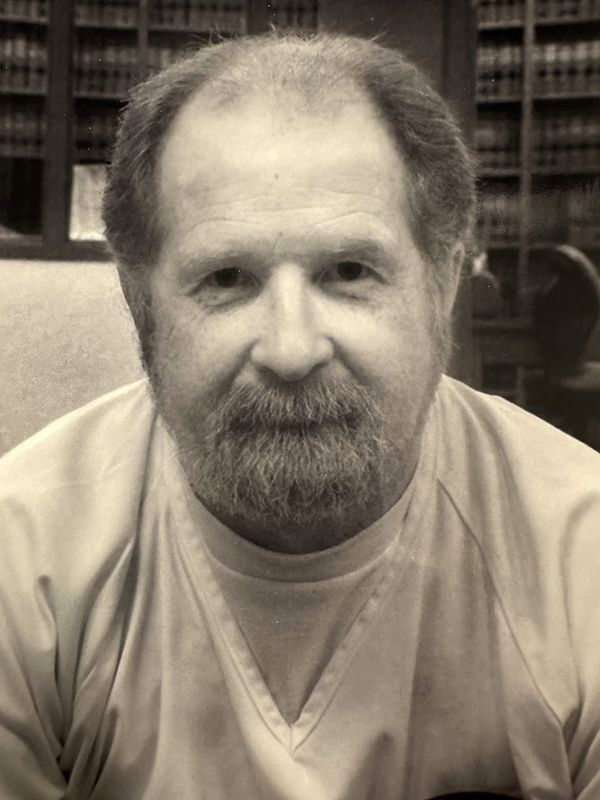
Harold Wayne Nichols, 64, was executed by lethal injection on Thursday, Dec. 11, for the 1988 rape and murder of 20-year-old Karen Pulley, who was bludgeoned, raped, and left for dead. It's the 46th execution in the U.S. this year −a number not seen since 2010 − and the third in Tennessee.
"To the people I've harmed, I'm sorry," Nichols said in his last words while strapped to the execution gurney. "To my family, know that I love you ... I know where I'm going so I'm ready to go home."
Nichols was pronounced dead at 10:39 a.m. CT just after the U.S. Supreme Court denied his final appeal.
Jeff Monroe, Pulley's brother-in-law, said after the execution that Pulley's family has been waiting for justice for 37 years.
"The victims, and there were many, were carefully stalked and attacked," he said. "The crimes, and there were many, were deliberate, violent and horrific. Our family was destroyed by evil that night in September 1988 when Karen was raped and violently beaten to death in her own bedroom, left to die alone, terribly injured, broken, bleeding and terrified."
He added that no punishment can ever atone for Pulley's murder or the damage done to Nichols' surviving victims.
"But this is a start," he said. "We are relieved that the nightmare is over and take comfort knowing he never again will be able to hurt anyone else."
Nichols was living a double life in Chattanooga at the time of his capture. By all appearances, he was a loving husband whose wife adored and doted on him by day. By night, he was a serial predator who ruthlessly attacked women at their most vulnerable, including on his own wedding anniversary.
Nichols confessed to his crimes, saying that he got a "strange energized feeling" when he attacked women, according to an archived Associated Press story.
Nichols' attorneys, who have been arguing that he deserved clemency because he had pleaded guilty and became a reformed man behind bars, said in a statement that the execution served only one goal: "retribution."
"In this moment, we should not attempt to take solace in the hollow excuse that executing Wayne somehow delivered justice when we all know it did not," they said. "Instead, our state sent the message that no one can rise beyond the crimes they committed decades earlier and that redemption deserves no mercy."
Here's what you need to know about the execution, the crime, and more about who Karen Pulley was.
USA TODAY Network reporter describes execution
When the blinds opened in the death chamber on Thursday morning, Nichols' executioners had already strapped him to a gurney, inserted an intravenous line into his right arm and placed a sheet up to his belly button, reported Kristen Fiscus, a media witness for The Tennessean, part of the USA TODAY Network.
After delivering his final words, the fatal chemicals started flowing into Nichols' body. He repeated Psalm 23 and the Lord's Prayer with his tearful spiritual advisor. Fiscus said Nichols' breath quickened and he groaned at 10:30 a.m., and that there were no more obvious signs of breath at 10:31. She said his face became red during the execution and was a purple color by 10:36.
Fiscus reported that Nichols' sister was in the witness room and was very emotional.
What was Harold Wayne Nichols' last meal?
Nichols' last meal was beef brisket, a baked potato, onion rings, coleslaw, deviled eggs and cheese biscuits with fruit tea, The Tennessean previously reported.
What was Harold Wayne Nichols convicted of?
On Sept. 30, 1988, 20-year-old Karen Pulley was in bed when Nichols climbed through a bathroom window and attacked her with a 2-by-4-inch piece of wood, hitting her over the head and then raping her.
"Afterwards, Nichols hit her in the head several more times with the 2-by-4, crushing her skull, and left her on the floor, bleeding and unconscious," a federal appeal opinion said.
Pulley's roommate found her the next morning lying in a pool of blood but still alive. She died later that day at a nearby hospital.
It was the first of at least a dozen attacks attributed to Nichols in Chattanooga between September 1988 to the beginning of 1989. Police say Nichols targeted and stalked women who were single or simply home alone.
About a month after Pulley's murder, Nichols struck again, attacking a 23-year-old woman who had left a door unlocked for her husband at night. Nichols came in, hit her over the head with a candlestick and raped her.
On Nov. 1, 1988, which was his second wedding anniversary with his wife, Nichols attacked another woman, raping her at knifepoint after forcing her to wear an outfit he had picked out.
On Jan. 3, 1989, he raped three separate women − including two single mothers whose children he threatened − and tried to rape a fourth woman, all within four hours of each other, court records say.
Prosecutors indicted Nichols on charges of murder, rape, burglary and assault. He was sentenced to death for killing Pulley and 200 years for his other crimes.
Killer's wife says she he had no idea about attacks
Nichols' wife said that she was "smitten" with her husband up until his arrest, according to court records.
She said that Nichols, an assistant manager at Godfather's Pizza, began staying out all night during the summer of 1988 and that she suspected an affair.
When police questioned her, she at first said that Nichols couldn't have committed a rape on their anniversary because they had been together. "But later she realized that he had left in the middle of the night," according to a federal appeal opinion.
Court records show that Nichols gave his wife varying excuses for his absences, including once telling her he was leaving to go get hamburgers.
His wife testified for the defense and said that Nichols eventually confessed his crimes to her. He admitted to her he was dangerous and "should not be out on the streets," according to a court record.
Nichols testified that he knew the rapes were wrong, but he felt compelled. "On cross-examination," a federal judge wrote, Nichols "conceded that if he had not been arrested, he would have continued prowling at night and raping women."
Who was Karen Pulley?
Pulley, a former high school cheerleader, had just finished Bible school and was studying to become a paralegal at Chattanooga State Community College when she was murdered.
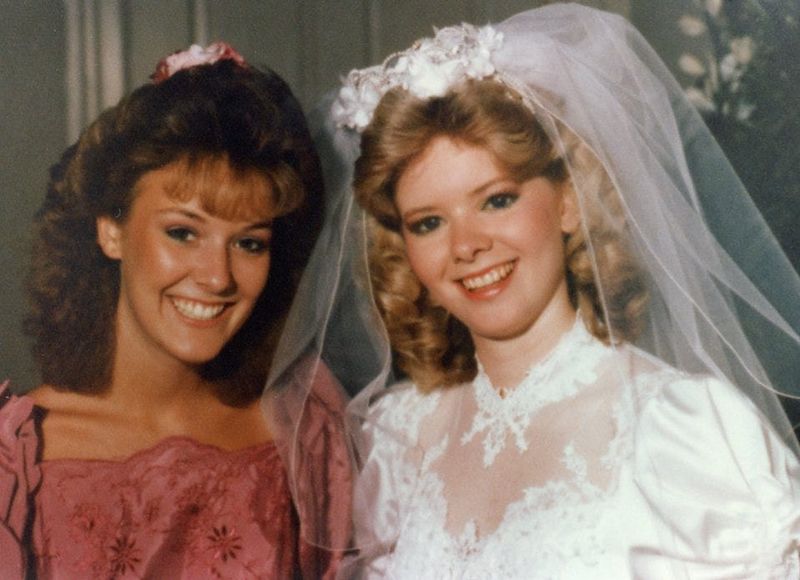
Karen Pulley's older sister and last living immediate relative, Lisette Monroe, was 23 and living in Colorado with her husband, Jeff Monroe, at the time. The couple had been planning a trip to Chattanooga so they could introduce their 18-month-old daughter to her aunt.
“She was a young, innocent, good Christian woman,” Lisette Monroe told The Tennessean. “A young girl who never hurt anyone."
Jeff Monroe told reporters on Thursday that Pulley "was bubbly, happy, selfless."
"She was looking forward to the life in front of her," he said.
Lisette Monroe recalled how as girls, the sisters would have fights over makeup or a hairbrush but that they were always close. As adults they traded dozens of handwritten letters while she and Jeff were stationed in the Philippines in the Air Force. Pulley would discuss a boy she was dating or the beginning stages of her studies at Chattanooga State.
If she could write one more letter to her sister, she said she'd start with "I love you."
"And I miss you more than I know how to express" she continued. "I wish that you had been here to see your nieces grow up and what beautiful, strong women they’ve become, in her footsteps."
The process to bring Nichols to justice has been slow with a slew of appeals over the decades, she said, adding that her parents died long before the execution. Her father died in February 1995 and her mother died on Christmas Day in 2012.
Now, Jeff Monroe said, the family is going to "concentrate on the happy memories of Karen and will never again be traumatized by this monster."
Who was Harold Wayne Nichols?
Harold Wayne Nichols had a chaotic childhood in Tennessee. His mother died of cancer when he was 10 and his father was a “mean, abusive and an outright vile man,” according to a federal judge’s order.
Nichols and his sister suffered repeated physical abuse at the hands of his father, according to court records. The kids eventually were turned over to an orphanage run by their church and experienced abuse at the hands of foster parents, court records say.
Following his arrest, clinical psychologist Eric Engum diagnosed Nichols with intermittent explosive disorder, largely caused by his childhood.
On the day he was sentenced to death, Nichols described in a clemency video how Pulley’s mother Ann asked to speak with him on on one and handed him a Bible with an inscription sending him prayers for salvation.
“She told me that, ‘I forgive you because I don’t want to carry that with me. Karen wouldn’t want that,’” he said, adding that she told him he could prove he deserves forgiveness by changing his life.
“To be given the opportunity to earn that forgiveness, it will forever be a part of me,” Nichols said through tears as he held the Bible.
Nichols’ attorneys say that he took the message to heart and that they've been "inspired by his incredible spirit."
“Through years of difficult self-work and coming to terms with his own trauma and the pain he caused others, Wayne became, against all odds, a trustworthy, responsible, and compassionate person, greatly respected and loved by many,” they said. "He transformed into the man that Ann Pulley, Karen Pulley’s mother, had challenged him to become 35 years ago."
They added: “Wayne will forever remain in our hearts."
When is the next execution?
There are two more executions scheduled this year, both next week.
Georgia is set to execute Stacey Humphreys on Wednesday, Dec. 17, for the double murder of two real estate agents whom he forced to strip naked, robbed and shot in 2003.
And on Thursday, Dec. 18, Florida is set to execute Frank Athen Walls, who was a teenage serial killer responsible for killing four women and a man between 1985 and 1987 in attacks that police say were sexually motivated.
If those executions move forward, the U.S. will have put 48 men to death this year, a number not reached since 2009. Death penalty experts attribute the uptick to the political climate under pro-death penalty President Donald Trump and a more conservative U.S. Supreme Court.
This article originally appeared on USA TODAY: Serial rapist, 'the red-headed stranger' who stalked women at night, executed in Tennessee
Reporting by Kirsten Fiscus and Amanda Lee Myers, USA TODAY / USA TODAY
USA TODAY Network via Reuters Connect

 The Washington Times
 WRCB-TV
 CBS News
 People Top Story
 America News
 WEIS Radio
 Law & Crime
 New York Post
 AlterNet
 The Daily Beast Entertainment