

 Space.com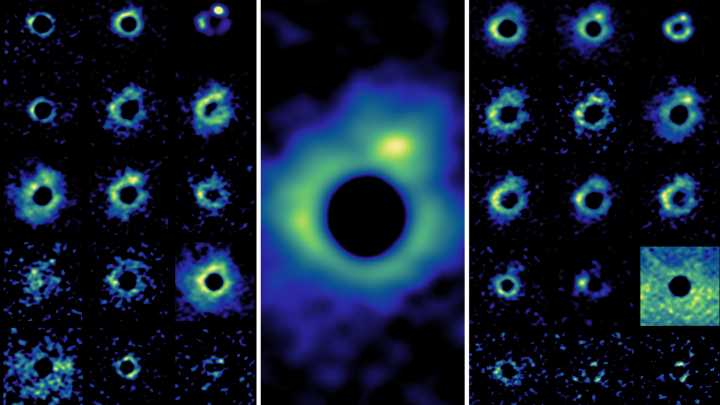
Astronomers have observed 57 different "faces" of a distant exploding star using different molecules to capture a varying picture of stellar death and its impact on its environment. The research could give us a more complete prediction of what will happen to the sun in around 5 billion years when it begins its own death throes and swells out as a red giant star, consuming its inner planets, including Earth.
The observations were made using the Atacama Large Millimeter/submillimeter Array (ALMA), a collection of 66 radio antennas in northern Chile that come together to comprise the largest astronomical project in existence.
The dying star being investigated by ALMA, with assistance from the Very Large Telescope (VLT), is W Hydrae, a red giant or AGB star, located 320 light-years from Eart

 People Top Story
 America News
 WEIS Radio
 Law & Crime
 New York Post
 Newsweek Top