

 Space.com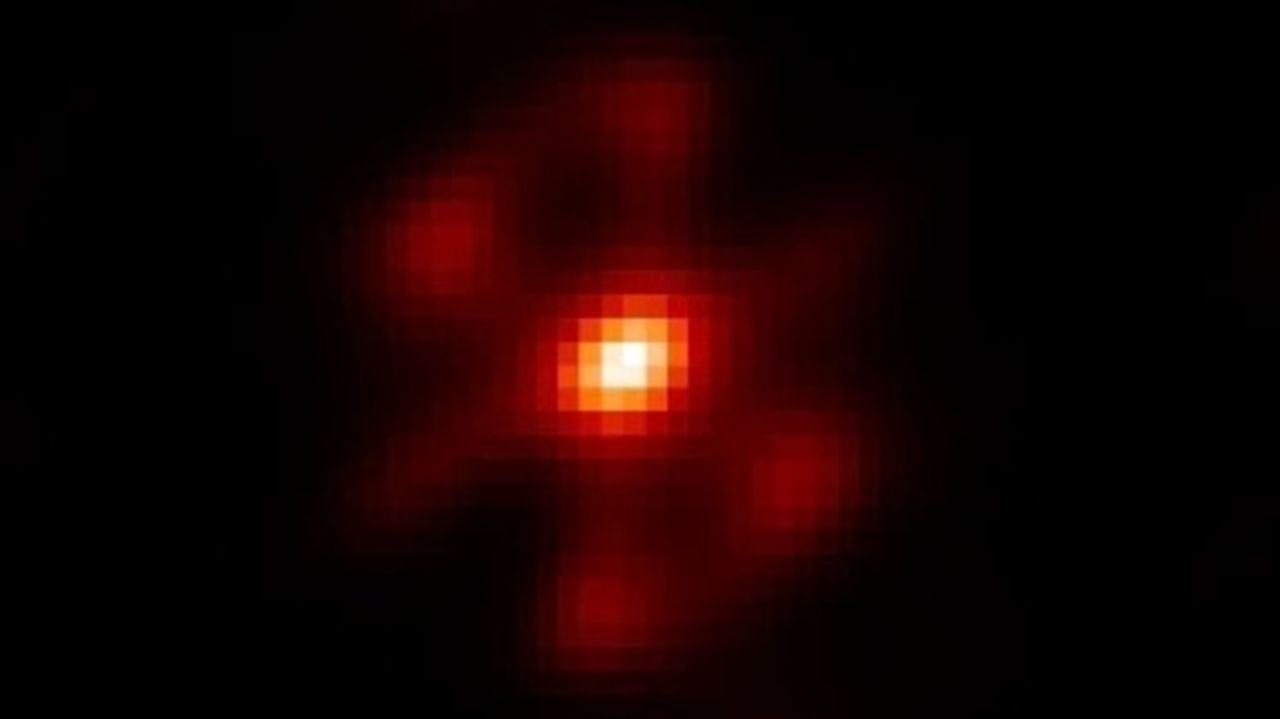
The powerful thermonuclear explosions on the surfaces of two white dwarfs have been resolved in detail for the first time, revealing that these eruptions are more complex than previously thought.
The findings are courtesy of the Center for High Angular Resolution Astronomy (CHARA) array, which is an optical interferometer that combines the light of six telescopes on Mount Wilson in California. CHARA targeted two events of this kind, which astronomers call nova eruptions.
A nova doesn't destroy the white dwarf like a Type 1a supernova does, but rather occurs when the white dwarf siphons too much matter from a companion red giant star. This matter builds up on the surface of the white dwarf until the temperature and pressure grows so great that a localized thermonuclear detonates and exten

 People Top Story
 America News
 WEIS Radio
 Law & Crime
 New York Post
 IndyStarSports